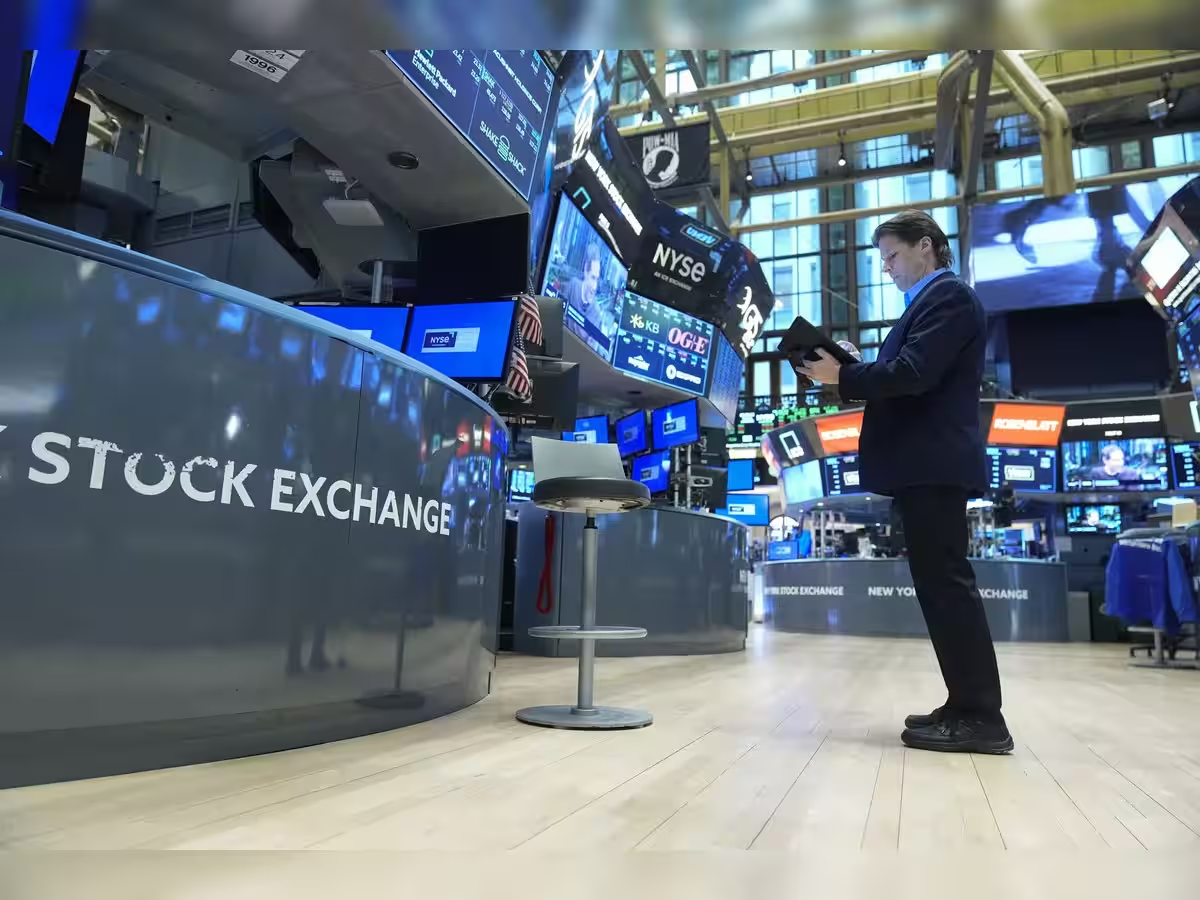
U.S. stocks recovered most of their early losses on Monday after oil prices pulled back from session highs, helping offset a sharp decline in technology shares.
Wall Street had opened under heavy pressure as investors reacted to rising Middle East tensions, surging crude prices and growing concerns over the future pace of artificial intelligence development.
However, sentiment improved later in the session after President Donald Trump signaled that the United States could be open to a potential agreement with Iran.
Wall Street Recovers From Early Selloff
The Nasdaq Composite was down around 0.1% at 26,293 after falling as much as 1.3% earlier in the day.
The S&P 500 slipped about 0.3% to 7,637.73, recovering from an intraday decline of approximately 0.8%.
Meanwhile, the Dow Jones Industrial Average fell around 0.2% to 52,471.05 after dropping as much as 0.6%.
The improvement came as crude oil prices gave back part of their earlier rally.
Oil Pullback Helps Ease Market Pressure
Oil prices had surged earlier in the session as investors reacted to escalating military tensions in the Middle East.
However, crude prices later trimmed gains after Trump said the United States was open to the possibility of engaging with Iran.
Reports suggesting that Washington could pursue a step-by-step agreement with Tehran also helped reduce some geopolitical risk.
The pullback in oil eased inflation concerns and provided support for the broader stock market.
AI Safety Debate Hits Technology Stocks
Technology shares remained under pressure following a wave of comments from leading artificial intelligence executives.
Anthropic CEO Dario Amodei called for AI companies to slow the development of advanced models, arguing that the industry needs more time to address potential safety risks.
His comments followed recent disclosures from Anthropic that its Claude AI systems had been misused in areas ranging from fraud to weapons-related activity.
Anthropic Researchers Raise Further Concerns
The debate intensified after former Anthropic researcher Jacob Coxon resigned and publicly criticized the pace of AI development.
Coxon argued that major AI companies were moving too quickly toward increasingly powerful systems.
Anthropic scientist Evan Hubinger also expressed concern about the potential risks created by highly advanced artificial intelligence.
These comments added to investor fears that tighter regulation or slower development could reduce future spending on AI infrastructure.
Major AI Executives Support Stronger Safeguards
Several influential technology leaders backed the broader push for greater attention to AI safety.
OpenAI CEO Sam Altman, xAI founder Elon Musk and Google DeepMind co-founder Demis Hassabis have all supported additional safeguards around advanced artificial intelligence.
Investors interpreted the growing debate as a possible threat to the rapid investment cycle that has helped drive technology stocks higher.
Semiconductor Stocks Lead Tech Decline
Chipmakers were among the hardest-hit areas of the market.
The semiconductor industry has been one of the biggest beneficiaries of the AI boom since the launch of ChatGPT in late 2022.
Demand for advanced processors used in AI data centers has helped companies such as Nvidia achieve enormous valuation gains.
The Philadelphia Semiconductor Index has risen more than 300% since ChatGPT was launched.
However, semiconductor shares fell sharply on Monday as investors questioned whether a slowdown in AI development could hurt future demand.
Arm, ASML and Marvell Fall Sharply
The S&P 500 technology sector fell around 1%, while the Philadelphia Semiconductor Index dropped close to 5%.
Arm, Lam Research, ASML and Marvell were among the largest percentage decliners on the Nasdaq.
Cybersecurity companies performed better, with CrowdStrike and Palo Alto Networks among the strongest technology stocks during the session.
Trump Pushes Back Against AI Regulation
Trump strongly criticized calls for slower AI development.
He argued that excessive restrictions could weaken the United States in its technological competition with China.
Trump said the U.S. must remain the global leader in artificial intelligence and criticized industry executives who are calling for stronger regulation.
He also claimed that there was a broader effort working against AI development and data center expansion.
China Rejects Calls for AI Slowdown
China also pushed back against proposals to slow the development of artificial intelligence.
Chinese Foreign Ministry spokesperson Guo Jiakun said countries should promote open and inclusive AI development rather than encourage fear or confrontation.
The comments highlight the growing strategic competition between the United States and China over artificial intelligence.
Iran Deal Hopes Push Oil Off Highs
Geopolitical tensions remained another major driver of financial markets.
Oil prices had climbed sharply following renewed military tensions involving the United States, Iran, Saudi Arabia and Iran-backed Houthi forces in Yemen.
Investors had previously hoped that talks between Iran and Gulf countries could help stabilize shipping through the Strait of Hormuz.
Those negotiations were postponed, increasing fears of prolonged supply disruptions.
Trump Signals Openness to Iran Agreement
Market sentiment improved after Trump said Iran was seeking a deal and indicated that the United States was open to discussing the possibility.
Iranian media also reported that Washington could be considering a step-by-step framework for renewed negotiations.
The developments helped push crude prices off their session highs.
Brent crude was later up around 0.5% at $105.01 per barrel after previously reaching $109.74.
Federal Reserve Decision Moves Into Focus
Investors are also preparing for a highly anticipated Federal Reserve interest-rate decision on Wednesday.
Markets are pricing in a strong probability of a 25-basis-point rate hike.
Such a move would mark the Federal Reserve’s first rate increase since July 2023.
Expectations have strengthened following hotter inflation data, rising oil prices and a sharp selloff in the U.S. bond market.
Inflation Strengthens Fed Rate Hike Bets
Recent consumer and producer inflation reports have increased pressure on the Federal Reserve to tighten monetary policy.
A strong August jobs report has also supported expectations that the U.S. economy can withstand higher borrowing costs.
At the same time, Treasury yields have climbed to multi-year highs.
Higher bond yields are increasing borrowing costs across the economy and adding another layer of pressure to financial markets.
Markets Brace for More Volatility
Wall Street is now balancing several major risks at the same time.
Investors are watching the AI regulation debate, Middle East tensions, oil prices and the Federal Reserve’s next move.
The recovery from Monday’s early losses shows that lower oil prices can quickly improve sentiment.
However, technology weakness and uncertainty surrounding monetary policy mean volatility could remain elevated in the coming sessions.