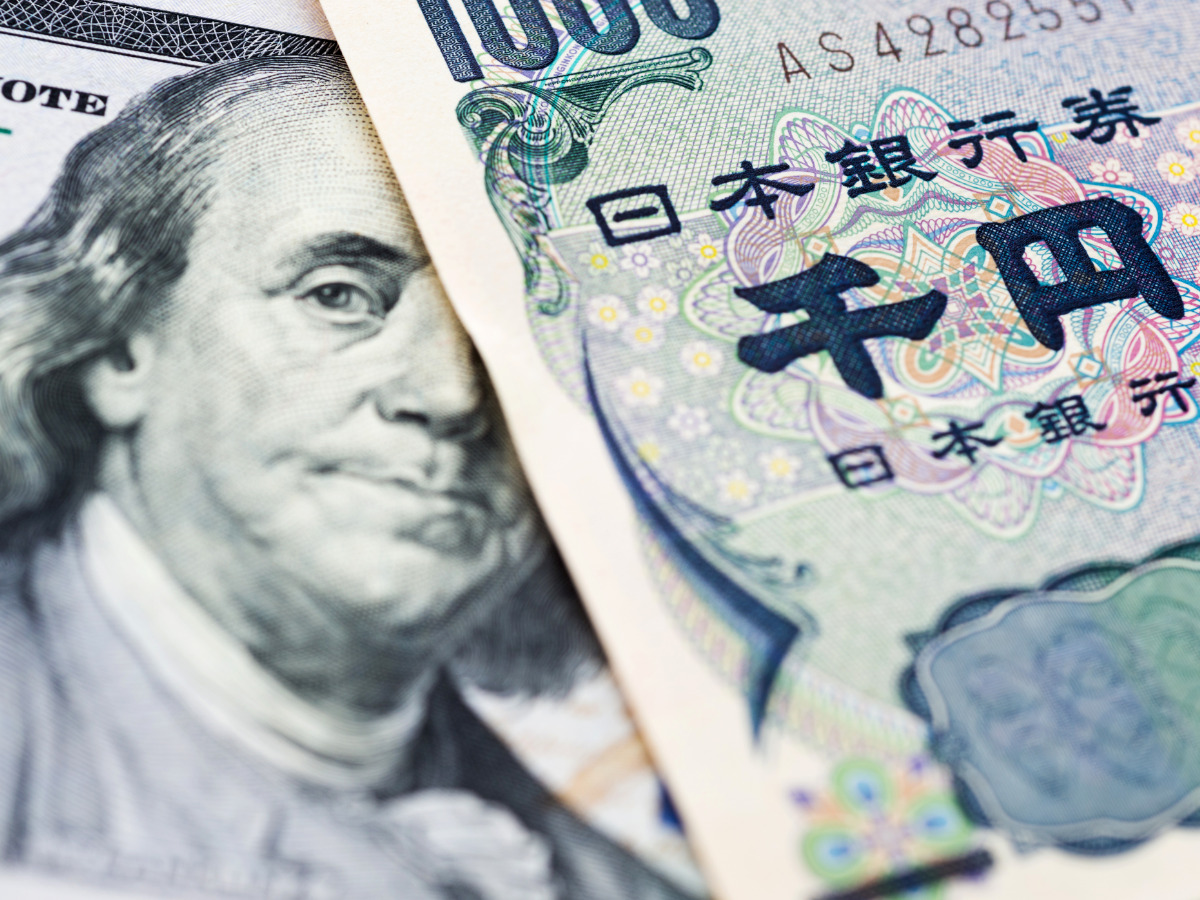
The Japanese yen strengthened sharply against the US dollar on Wednesday, recovering part of the losses it had suffered after the rare joint US-Japan currency intervention at the end of July.
The move came as investors reacted to more hawkish signals from the Bank of Japan, although analysts were unsure whether officials had directly intervened in the market.
Japanese Yen Rallies Against the US Dollar
The yen rose strongly after previously giving back roughly half of the gains made following the July intervention.
Before that intervention, the Japanese currency had weakened to around 163.98 per dollar, its lowest level in roughly 40 years.
It later strengthened to around 155.21 before losing some of that recovery.
On Wednesday, the yen was last trading about 0.94% stronger at approximately 158.67 per dollar.
Traders Question Whether Officials Conducted a Rate Check
Analysts said the sharp move may have been linked to a possible rate check by Japanese or US authorities.
A rate check occurs when a government or central bank asks financial institutions to provide current exchange-rate quotes without actually buying or selling currencies.
Such a move can still influence markets because traders may interpret it as a warning that authorities are considering intervention.
Chris Scicluna, head of economic research at Daiwa Capital Markets Europe, said the timing would make sense following the latest comments from Bank of Japan officials.
Bank of Japan Sends More Hawkish Signals
Bank of Japan board member Hajime Takata said the central bank should remain flexible and raise interest rates when needed to address stronger inflation pressures.
His comments suggested the BOJ should not feel restricted by the slower rate-hike schedule that markets had previously expected.
That message strengthened expectations that Japan could tighten monetary policy more aggressively if inflation remains elevated.
BOJ Governor Ueda Signals Possible Rate Hike
Bank of Japan Governor Kazuo Ueda also indicated that an interest rate increase this month remains a strong possibility.
The comments added to expectations that the BOJ could take another step toward normalizing monetary policy.
US Treasury Secretary Scott Bessent also expressed support for stronger action to address persistent yen weakness during discussions with Ueda.
Those comments increased speculation that policymakers in both countries were becoming more concerned about the exchange rate.
Analysts Remain Unsure About Direct Intervention
Despite the sharp move in the yen, analysts said the size of the rally did not clearly point to direct currency intervention.
Official intervention often causes much larger movements, particularly when markets are thin.
Hank Calenti, chief strategist for global markets at SMBC EMEA, said thinner trading conditions could make intervention more effective.
However, other analysts remained skeptical.
Takafumi Onodera of Mitsubishi UFJ Trust and Banking said the yen would likely need to strengthen much further before the move could be considered consistent with direct intervention.
Wide Interest Rate Gap Continues to Pressure the Yen
The yen has struggled for much of the year because of the wide gap between US and Japanese interest rates.
Higher US yields have made dollar-denominated assets more attractive compared with Japanese assets.
Earlier on Wednesday, the yen weakened back to around 160.39 per dollar, its lowest level since the July intervention.
That move suggested investors still see limited fundamental support for the Japanese currency.
US Dollar Pulls Back From Recent High
The US dollar had strengthened earlier in the session as rising oil prices and higher Treasury yields supported demand for the currency.
However, the dollar later gave back some of those gains.
The dollar index, which tracks the greenback against a basket of major currencies, fell around 0.16% to approximately 99.52.
The euro remained broadly unchanged near $1.1591, while sterling weakened slightly to around $1.35.
Oil Prices Increase Inflation Concerns
Oil prices also remained an important factor for currency markets.
Crude prices initially climbed to more than one-month highs after renewed US-Iran military strikes raised concerns about potential supply disruptions.
Prices later eased as traders weighed geopolitical risks against evidence that oil supplies were still reaching global markets.
Higher oil prices remain a concern because they can increase transportation and production costs, feeding into broader inflation.
Fed Rate Hike Expectations Rise
The possibility of higher inflation has also increased expectations for another Federal Reserve rate hike.
Hawkish comments from Federal Reserve Chair Kevin Warsh recently pushed traders to increase bets on tighter monetary policy.
Fed funds futures were pricing in roughly a 65% chance of a September rate increase.
That was up significantly from around 35% before the latest Fed comments.
Higher US interest rates could continue to support the dollar, particularly against currencies backed by lower-yielding economies.
Canadian Dollar Strengthens After Bank of Canada Decision
The Canadian dollar gained after the Bank of Canada kept its benchmark interest rate unchanged at 2.25%.
The decision was widely expected.
However, the central bank warned that inflation risks had increased while new US tariffs were creating additional uncertainty for economic growth.
The Canadian dollar strengthened to around C$1.384 per US dollar.
New Zealand Dollar Falls Despite Rate Hike
The New Zealand dollar moved in the opposite direction.
The Reserve Bank of New Zealand raised interest rates for a second consecutive meeting and indicated that further tightening could still be necessary.
However, policymakers also stressed that future moves would likely be gradual.
The central bank warned that risks to the economic outlook were increasing, which weighed on the currency.
The New Zealand dollar fell around 0.7% to approximately $0.585.
Yen Outlook Depends on BOJ and US Rate Policy
The sharp yen rally highlights how sensitive USD/JPY remains to monetary policy expectations.
More aggressive Bank of Japan tightening could provide stronger support for the yen.
However, rising US Treasury yields and expectations for additional Federal Reserve rate hikes continue to favor the dollar.
Investors will therefore be watching closely for signs of direct currency intervention, further BOJ policy tightening, and changes in US interest-rate expectations.