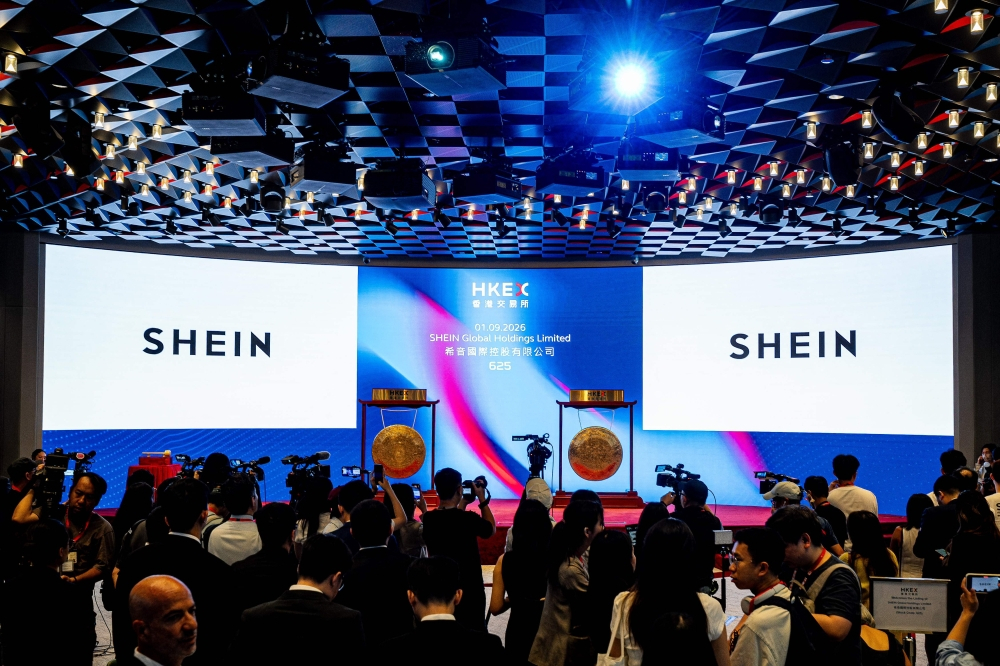
Shein Global shares dropped sharply during their long-awaited Hong Kong stock market debut on Tuesday, raising fresh concerns about the fast-fashion retailer’s growth outlook.
The decline highlighted investor doubts over whether Shein can maintain its expansion as tariffs, tighter trade rules and stronger competition weaken the advantages of its low-cost business model.
Shein shares were recently down around 9% at HK$44.18, after falling as low as HK$43.72.
The stock opened at its HK$48.56 IPO price before quickly moving below the level paid by investors in the offering.
Meanwhile, Hong Kong’s Hang Seng Index fell around 0.7%.
Limited Share Supply Fails to Support Shein Stock
The weak debut was particularly notable because only around 6.6% of Shein’s enlarged share capital was offered to investors.
A limited public float can often support a newly listed stock because fewer shares are available for trading.
However, Shein shares still declined, suggesting investors remain cautious about the company’s valuation and future growth prospects.
Josh Gilbert, lead Asia-Pacific analyst at eToro, said investors appear to be separating Shein’s popularity with consumers from its attractiveness as an investment.
He noted that the stock’s decline despite the relatively small public float indicated that concerns surrounding slowing growth and the sustainability of Shein’s business model remain significant.
Shein Valuation Falls Far Below 2022 Peak
Shein is now valued at approximately $26.5 billion, far below the nearly $100 billion valuation it reached in 2022.
However, the steep discount does not necessarily mean Shein shares are inexpensive.
The previous valuation was established during the pandemic-era e-commerce boom, when online retailers benefited from unusually strong consumer demand.
Investor expectations for online retail companies have changed considerably since then.
Shein Revenue Growth Slows Sharply
One of the biggest concerns surrounding the Shein IPO is the company’s rapidly slowing revenue growth.
Shein’s revenue increased 41.1% in 2023, before growth slowed to 20.7% in 2024.
Growth weakened further to around 8% in 2025 and then slowed to just 1.1% during the first quarter of 2026.
The slowdown represents a major challenge for a company that built its valuation around rapid global expansion.
Shein Swings to First-Quarter Loss
Profitability has also weakened.
Shein reported a $99 million loss during the first quarter of 2026, compared with a $395 million profit during the same period a year earlier.
The deterioration comes as the retailer faces higher costs and regulatory changes across several major markets.
These pressures could make it more difficult for Shein to maintain the extremely low prices that helped fuel its international growth.
Trade Rules Pressure Shein’s Low-Cost Model
Changes to global trade rules are creating another challenge for Shein.
The United States has removed the de minimis exemption for low-value imports, increasing costs for retailers that ship inexpensive products directly to consumers.
The European Union has also introduced charges on low-value parcels.
These measures affect a core part of Shein’s business model, which relies heavily on shipping large numbers of low-cost products directly to customers.
Shein Expands Beyond Fast Fashion
Shein is trying to diversify its operations as growth in its core fashion business slows.
The Singapore-based, Chinese-founded company is expanding its third-party marketplace and moving into product categories beyond clothing.
Shein has also pursued acquisitions, including Everlane and Missguided, as part of its broader expansion strategy.
The company hopes these initiatives can create new sources of revenue and reduce its reliance on traditional fast fashion.
Temu and AliExpress Increase Competitive Pressure
Competition in the low-cost e-commerce market has also intensified.
Shein faces growing pressure from rivals including Temu and AliExpress, which compete for many of the same price-sensitive consumers.
At the same time, investors in Chinese equity markets have increasingly favored technology, artificial intelligence and robotics companies over consumer-focused businesses.
That shift in investor preferences could create additional challenges for Shein’s stock market performance.
Shein IPO Raises $1.7 Billion
Shein’s Hong Kong IPO raised approximately HK$13.6 billion, or $1.7 billion, valuing the company at around $26.5 billion.
The retail portion of the offering was subscribed 5.63 times, while the international tranche was subscribed 2.59 times.
Cornerstone investors committed approximately $383 million.
However, the structure of the transaction means not all proceeds represent new capital available for growth.
Preferred Shares Converted Into Equity
As part of the listing, Shein is converting approximately $17.3 billion of preferred shares into ordinary shares.
Up to roughly $3.5 billion may also be paid to certain existing investors.
As a result, investors may view only part of the overall transaction as fresh funding that can be used to expand the business.
Existing investors participating in the offering included Willett Advisors, Xavier Niel, Microsoft, Reliance Industries, Claure Group and SoftBank Vision Fund.
Shein Plans Technology and Global Expansion
Shein plans to allocate around 80% of its IPO proceeds toward technology investment and international expansion.
The company intends to strengthen its technology infrastructure, expand its global presence and invest further in its brand.
However, control of the company will remain heavily concentrated among its founders.
Shein Founders Retain Around 90% Voting Control
Shein’s four co-founders are expected to retain approximately 90% of the company’s voting rights following the listing.
Shares offered to public investors carry substantially fewer voting rights, according to the IPO prospectus.
This governance structure gives the founders significant control over major corporate decisions even after the public listing.
Grey-Market Trading Signaled Weak Demand
Concerns over Shein’s valuation were already visible before the official Hong Kong debut.
Shein shares fell more than 10% in grey-market trading on Monday.
The early weakness suggested investor concerns surrounding slowing growth, profitability and valuation were already affecting demand before the stock officially began trading on the Hong Kong Stock Exchange.
The disappointing debut now puts greater focus on whether Shein can restore growth, improve profitability and convince investors that its low-cost global retail model remains sustainable.