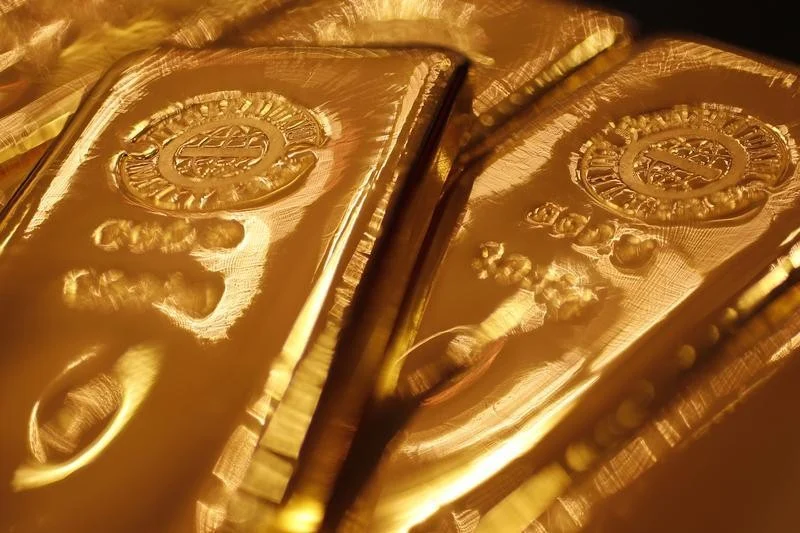
Gold prices traded near unchanged levels on Tuesday after earlier reaching their highest point in more than two months.
The move came as fading hopes for a Middle East diplomatic breakthrough pushed oil prices higher. This renewed concerns that inflation could stay elevated and keep further interest rate hikes on the table.
Gold Holds Near Recent Highs
By 10:15 ET, spot gold slipped 0.1% to $4,385.72 an ounce.
Meanwhile, gold futures rose 0.6% to $4,444.30 an ounce.
The pullback was limited, but rising U.S. Treasury yields added pressure. Yields climbed to a one-week high, making non-yielding assets like gold less attractive compared with interest-bearing investments.
Safe-Haven Demand Supports Gold
Despite the pressure from higher yields, gold remained resilient.
Tony Sycamore, senior market analyst at IG, said gold’s strength may reflect renewed fear-of-missing-out buying. Some investors may be entering after missing gold’s earlier decline toward the $4,000 level.
He also pointed to short-covering by speculative traders and a return of safe-haven demand.
China Adds to Gold Reserves
China remains another key source of support for gold prices.
The People’s Bank of China increased its gold reserves in July by the largest amount since October 2023.
Central bank buying has been an important long-term driver for gold, especially during periods of geopolitical uncertainty and currency-market volatility.
U.S. CPI Data Becomes the Next Test
Investors are now focused on Wednesday’s U.S. Consumer Price Index report.
The inflation data could give markets a clearer view of the Federal Reserve’s next move.
Higher interest rates usually reduce gold’s appeal because bullion does not pay interest. If inflation remains sticky, the Fed may have more reason to keep policy tight.
Fed Rate Hike Odds Rise
The latest jump in oil prices has already shifted market expectations.
According to the CME FedWatch Tool, traders now see a 52% chance that the Federal Reserve will raise rates in September.
That is up from around 44% on Monday.
The change shows how quickly energy prices and geopolitical risk can affect rate expectations.
Hormuz Deal Hopes Fade
Hopes for a quick agreement between the U.S. and Iran over the Strait of Hormuz have weakened.
According to Reuters, only six vessels passed through the strait on Monday. That is below the recent 10-day average of around 11 vessels.
Before the Iran war began in late February, around 130 to 140 ships typically moved through the strait.
Shipping Traffic Remains Severely Disrupted
Shipping data from Kpler showed that four commodity vessels passed through the route. These included two empty oil product tankers.
A small tanker carrying liquefied natural gas and another vessel carrying residual fuels also exited the strait.
The low traffic levels highlight how severely the waterway has been disrupted. The Strait of Hormuz remains one of the world’s most important energy transit routes.
U.S.-Iran Talks Show Little Progress
Recent hopes for a diplomatic breakthrough have faded.
U.S. President Donald Trump rejected new Iranian demands over the weekend. Tehran reportedly wanted Washington to pay reparations for damage caused by the more than five-month war.
Trump said this demand had not been raised before by Iranian negotiators.
He also argued that Iran should be the side paying compensation for people killed or injured in regional conflicts.
Gold Outlook Remains Tied to Oil and Rates
Gold remains caught between two powerful forces.
On one side, higher Treasury yields and rising rate hike expectations create pressure. On the other, geopolitical risk, central bank buying, and safe-haven demand continue to support prices.
For now, gold traders are watching three key drivers: the U.S. CPI report, oil prices, and any sign of progress around the Strait of Hormuz.