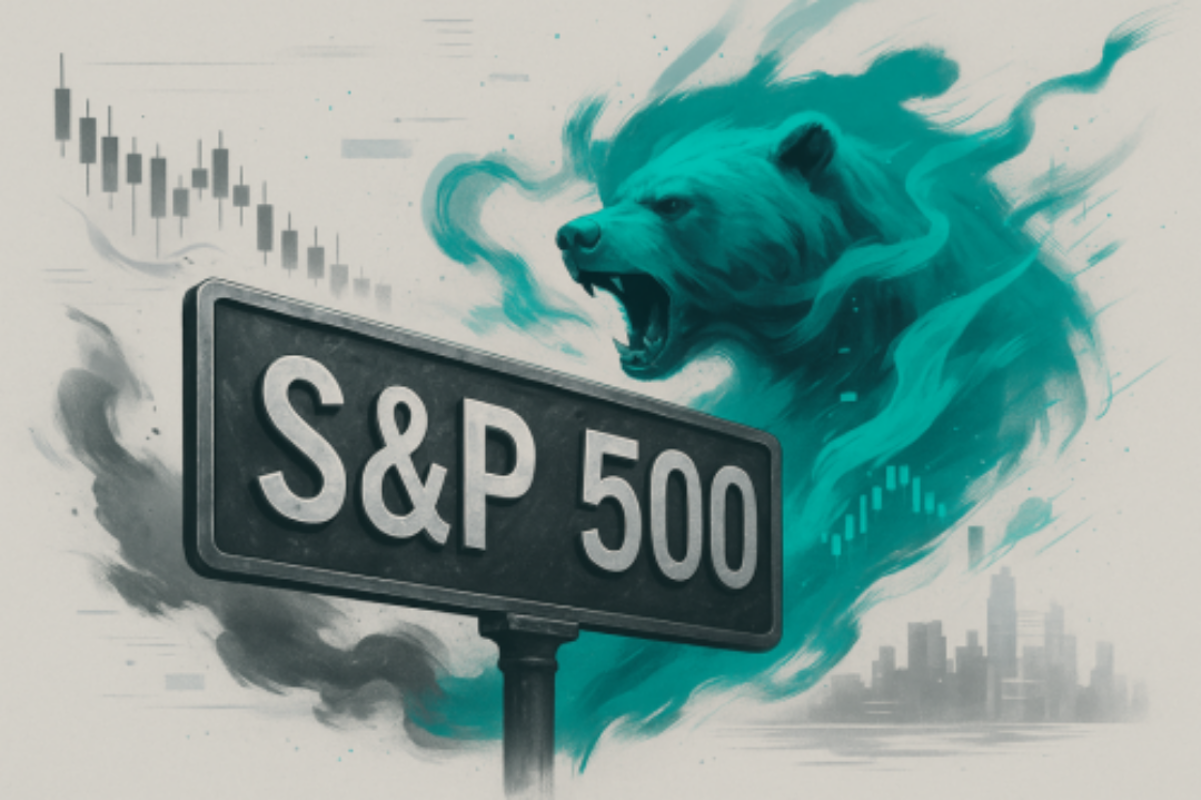
Strong second-quarter corporate earnings are helping support the S&P 500, even as artificial intelligence stocks continue to experience sharp price swings, according to Goldman Sachs.
The investment bank believes the recent volatility in AI-related shares follows a familiar historical pattern. After powerful momentum rallies, market leaders often enter a period of consolidation before their next major move.
AI Stocks Enter a Period of Consolidation
Goldman Sachs strategists, led by Ben Snider, said recent AI stock volatility resembles previous market cycles.
Historically, the strongest momentum rallies have often been followed by temporary pullbacks or sideways trading. The latest decline in AI shares may therefore represent a normal consolidation rather than the end of the broader investment trend.
The strategists said corporate earnings will ultimately determine the direction of AI stocks. However, historical patterns and the recent reduction in investor leverage suggest the outlook may be improving.
S&P 500 Earnings Exceed Expectations
By July 31, approximately 61% of S&P 500 companies had published their second-quarter results.
Of those companies, 64% exceeded consensus earnings-per-share estimates by at least one standard deviation. Goldman Sachs described this as one of the strongest earnings-beat rates on record.
Excluding other income generated by rising equity investments held by mega-cap technology companies, S&P 500 earnings are growing by approximately 26% from the previous year.
When those investment gains are included, headline earnings growth rises to around 45%.
The Average Company Is Also Performing Well
The earnings strength is not limited to the largest technology businesses.
The median S&P 500 company is on track to increase earnings per share by approximately 12% during the quarter. That is higher than the 9% growth analysts expected before the earnings season began.
AI infrastructure companies account for roughly one-third of the overall earnings expansion.
This contribution highlights the growing influence of data centers, semiconductors, cloud computing, and other AI-related investments on corporate profitability.
Technology Stocks Receive a Weak Market Reaction
Despite strong earnings, investors have not rewarded every company that exceeded expectations.
Goldman Sachs noted that earnings beats among technology, media, and telecommunications companies produced relatively disappointing share-price reactions.
The median TMT stock that beat earnings estimates underperformed the S&P 500 by 192 basis points on the day after reporting.
By comparison, the median company in other sectors that exceeded expectations outperformed the index by approximately 75 basis points.
This suggests that investors have already priced considerable optimism into major technology and AI stocks.
Equal-Weight S&P 500 Continues to Rise
While the largest technology shares have faced volatility, the equal-weight S&P 500 has continued to advance alongside steady earnings growth.
An equal-weight index gives every company the same influence, rather than allowing the largest businesses to dominate performance.
Its strength suggests that the earnings recovery is becoming more broadly distributed across the market.
This wider participation could improve the sustainability of the stock market rally, particularly if companies outside the technology sector continue delivering solid results.
Earnings Forecasts Are Moving Higher
The strong second-quarter reporting season has also encouraged analysts to raise future profit estimates.
Since the beginning of the third quarter, the bottom-up consensus estimate for S&P 500 earnings in 2027 has increased by approximately 1%.
Most sectors have received positive earnings revisions.
However, Goldman Sachs warned that rising input costs remain an important threat to corporate margins. Higher labor, energy, materials, and financing expenses could limit future earnings growth.
AI Capital Spending Continues to Accelerate
Reports from major hyperscale technology companies showed that spending on AI infrastructure continues to rise rapidly.
These companies are increasing investment in data centers, chips, cloud capacity, and computing networks. They are also showing more evidence that these investments are beginning to produce financial returns.
However, the scale of the spending is placing pressure on cash flow and increasing the need for external financing.
During the quarter, hyperscalers reported approximately $182 billion in capital expenditure.
At the same time, the group generated only around $5 billion in free cash flow and issued approximately $101 billion in debt and equity.
AI Companies May Need More External Financing
Analysts now expect AI-related capital expenditure to exceed $1 trillion in 2027.
That estimate is more than $100 billion higher than previous forecasts.
Capital spending is also expected to exceed cash flow from operations between 2026 and 2028.
This imbalance suggests major technology companies may need to rely more heavily on debt issuance, equity financing, or other sources of capital to fund their AI expansion.
Although these investments could support long-term growth, they also create financial risks if expected returns take longer to materialize.
Cloud Growth Supports the AI Investment Case
One encouraging signal is the continued acceleration in cloud revenue.
Cloud revenue grew by approximately 48% during the quarter, exceeding Wall Street expectations.
Stronger cloud demand suggests companies are increasing their use of AI tools, computing services, and digital infrastructure.
This growth provides evidence that major technology companies are beginning to generate measurable returns from their AI investments.
However, investors will continue to compare revenue growth with the enormous cost of building the required infrastructure.
Can Earnings Protect the S&P 500?
Strong second-quarter earnings are currently providing important support for the S&P 500.
Corporate profits are growing faster than expected, analyst forecasts are improving, and the earnings recovery is expanding beyond the largest technology companies.
Nevertheless, AI market volatility remains a major risk.
Technology valuations are high, capital spending is accelerating, and many companies may need additional financing to maintain their investment plans.
Final Outlook
Goldman Sachs believes the recent AI stock pullback is consistent with the type of consolidation that often follows a strong momentum rally.
The broader earnings picture remains positive. S&P 500 profit growth is exceeding expectations, while the median company is performing better than analysts forecast before the quarter began.
The next phase of the market will depend on whether AI companies can turn record capital expenditure into sustainable revenue, profits, and free cash flow.
Strong earnings may continue to protect the wider S&P 500. However, rising costs and the enormous scale of AI investment could keep technology stocks volatile.