SK Hynix reported a record operating profit for the second quarter as strong demand for artificial intelligence memory chips and higher memory prices boosted its performance.
However, the South Korean chipmaker’s shares fell sharply after both revenue and operating profit missed analysts’ elevated forecasts. Investors also remained concerned about whether current levels of AI infrastructure spending can continue.
SK Hynix Profit Reaches a Record High
SK Hynix recorded an operating profit of 60.54 trillion won, equivalent to approximately $41.6 billion.
The figure was more than six times higher than a year earlier. Nevertheless, it fell short of the 64 trillion won estimate compiled by LSEG SmartEstimate.
Revenue increased by 257% to 79.32 trillion won. Meanwhile, net profit climbed more than twelvefold to 93.92 trillion won.
The stronger results were supported by higher prices for dynamic random-access memory, commonly known as DRAM, and NAND flash products.
AI Demand Supports Memory Chip Growth
SK Hynix said the adoption of artificial intelligence is expanding across a growing number of industries.
This trend is creating long-term demand for high-bandwidth memory, server DRAM and enterprise solid-state drives.
The company expects growth to strengthen further as supply constraints gradually ease and major cloud service providers continue investing heavily in AI data centres and computing infrastructure.
SK Hynix Shares Plunge After Earnings Miss
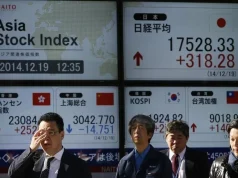
Despite posting record results, SK Hynix shares fell sharply in Seoul.
The stock dropped by as much as 20% to 1,246,000 won, reaching its lowest level since May 4. It later reduced part of the decline but remained approximately 17% lower during the session.
Investors focused on the company’s failure to meet aggressive market expectations rather than the significant year-on-year growth.
The selloff also reflected wider concerns that AI-related companies may struggle to justify their high valuations as infrastructure spending continues to rise.
DRAM and NAND Demand Expected to Increase
SK Hynix expects global DRAM bit demand to grow in the mid-20% range during 2026 compared with the previous year.
The company also forecasts NAND demand growth in the high-teens percentage range.
For the third quarter, SK Hynix expects DRAM bit shipments to increase by around 10% from the previous quarter.
NAND shipments are forecast to rise by a low-single-digit percentage over the same period.
HBM4 Production Set to Accelerate
SK Hynix said it began shipping its HBM4 products during the second quarter.
The company plans to increase full-scale HBM4 production during the second half of the year. It has also started supplying HBM4E samples to a major customer.
High-bandwidth memory is an essential component in AI accelerators because it allows processors to access large quantities of data at high speeds.
Demand for these products has grown faster than supply, making SK Hynix one of the biggest beneficiaries of the global AI investment boom.
Nvidia Partnership Expands
SK Hynix is a major memory supplier to Nvidia, one of the world’s leading producers of artificial intelligence processors.
The two companies recently expanded their strategic partnership through a long-term agreement to jointly develop next-generation AI memory products.
The cooperation forms part of a wider AI infrastructure initiative valued at more than $500 billion.
This partnership could strengthen SK Hynix’s position in the high-bandwidth memory market as demand for increasingly powerful AI systems grows.
Investors Question the AI Semiconductor Rally
The latest results arrived as investors continued to assess whether the AI-driven semiconductor rally can be sustained.
SK Hynix has experienced significant share-price volatility following its Nasdaq listing earlier this month.
Although the company continues to benefit from strong demand for AI memory products, the market is placing greater pressure on chipmakers to exceed increasingly ambitious expectations.
Future share-price performance may therefore depend not only on earnings growth, but also on HBM4 production, cloud spending and the sustainability of global AI investment.