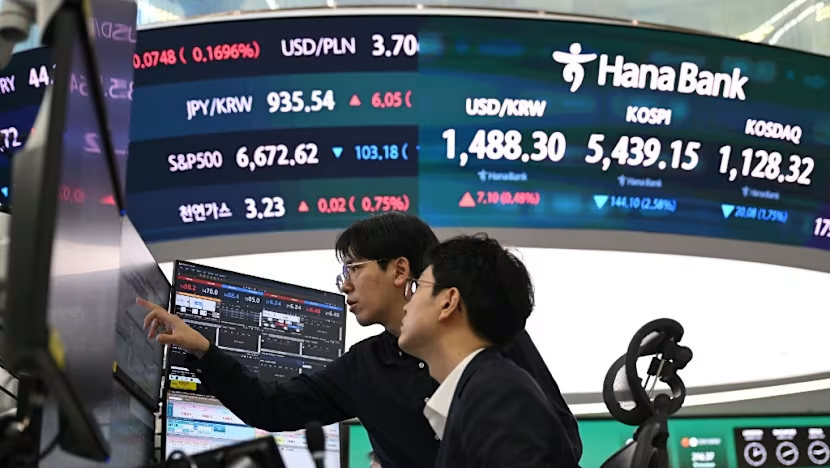
Asian stock markets fell sharply on Friday after new U.S. tariffs on imports from 60 trading partners came into force.
Japan and South Korea led the regional losses as investors worried about the impact on export-driven economies. Higher oil prices and concerns about heavy artificial intelligence spending also weakened market sentiment.
U.S. Stock Futures Edge Higher
Nasdaq 100 futures rose by 0.3%, while S&P 500 futures gained 0.1%.
Positive quarterly results from Intel provided some support. However, gains remained limited after Alphabet and Tesla shares fell sharply following their earnings reports.
The results renewed concerns that major technology companies are spending too aggressively on artificial intelligence infrastructure without delivering equally strong returns.
Oil Above $100 Raises Inflation Risks
Brent crude remained above $100 per barrel as tensions in the Middle East continued to threaten global energy supplies.
Iran-backed Houthi forces attacked Saudi oil tankers in the Red Sea, increasing fears of disruption across a major shipping route.
Renewed U.S. strikes on Iran and threats of further military action also raised concerns that the conflict could escalate.
Higher oil prices have added to inflation worries and could make central banks more cautious about cutting interest rates.
New U.S. Tariffs Pressure Asian Exporters
Washington’s new tariffs on imports from 60 trading partners took effect on Friday.
The measures replaced temporary 10% duties that expired overnight. The new tariff rates range between 10% and 12.5% and cover almost all U.S. imports.
Oil, natural gas and certain food products are among the items exempt from the new rules.
The tariffs created another challenge for Asian economies that depend heavily on manufacturing and exports to the United States.
Japan and South Korea Lead Market Losses
Japan’s Nikkei 225 dropped 3.2%, extending its decline for a third consecutive week.
South Korea’s KOSPI fell 5.8% and risked losing all the gains recorded earlier in the week.
Hong Kong’s Hang Seng and China’s CSI 300 each declined by around 1.3%.
Australia’s S&P/ASX 200 lost approximately 1%, while Singapore’s Straits Times Index slipped by 0.5%.
Tariffs Threaten Regional Trade
Japan, South Korea and Taiwan are among the economies facing effective U.S. tariff rates of between 10% and 12.5%.
The measures have increased uncertainty surrounding Asian exports, industrial production and regional trade growth.
Companies with strong exposure to the American market may face higher costs or weaker demand as the new tariff system takes effect.
Japan Inflation Remains Below BOJ Target
Japanese stocks declined despite data showing that core inflation increased in June.
However, inflation remained below the Bank of Japan’s 2% annual target.
The figures supported expectations that the central bank will move cautiously before raising interest rates again.
Investors continue to monitor inflation, wages and consumer demand for clues about the direction of Japanese monetary policy.
Chipmakers Drag South Korean Stocks Lower
South Korea recorded some of the steepest losses in the region.
Major semiconductor stocks followed the decline in U.S. technology shares as investors reacted cautiously to recent earnings reports.
Concerns about high AI spending weighed heavily on chipmakers, which have benefited significantly from demand for memory and computing infrastructure.
The KOSPI had risen earlier in the week after stronger-than-expected second-quarter economic growth. However, further losses could erase that advance.
Chinese Stocks Remain Higher for the Week
Despite Friday’s decline, China’s CSI 300 remained on course to end a four-week losing streak.
The index was up approximately 3.2% for the week as investors prepared for an upcoming Politburo meeting.
Markets expect Chinese policymakers to announce additional measures to support the economy following weaker second-quarter data.
China May Increase Economic Support
DBS economist Samuel Tse said investors will look for stronger policies to support employment and household consumption.
Markets are also waiting for further details about China’s long-term consumption strategy under the country’s 15th Five-Year Plan.
Purchases by state-backed investors have supported mainland Chinese stocks in recent weeks and limited the impact of wider regional weakness.
Australia Awaits Inflation Data
Australia’s S&P/ASX 200 remained within its broad trading range of between 8,500 and 9,000 points.
Tony Sycamore, senior market analyst at IG, said the index had struggled to break out despite stronger labor market figures.
Attention has now shifted to Australia’s second-quarter inflation report and comments from Reserve Bank of Australia Governor Michele Bullock.
These developments could provide new signals about the future direction of interest rates.
Asian Central Banks Enter Focus
The Monetary Authority of Singapore will begin a busy week for regional central banks.
Citi expects Singapore’s central bank to steepen its exchange-rate policy band by 50 basis points, although this view differs from the broader market consensus.
The bank believes higher energy prices and resilient underlying inflation continue to create upside risks.
Regional Economic Data Could Drive Markets
Investors will closely monitor China’s July manufacturing purchasing managers’ index for signs of improvement in factory activity.
Taiwan is expected to report another quarter of export-led economic growth.
South Korea’s July trade figures will also provide an early indication of regional demand after exports performed better than expected in June.
The outlook for Asian stocks will remain closely linked to U.S. tariff policy, oil prices, technology earnings and upcoming central bank decisions.