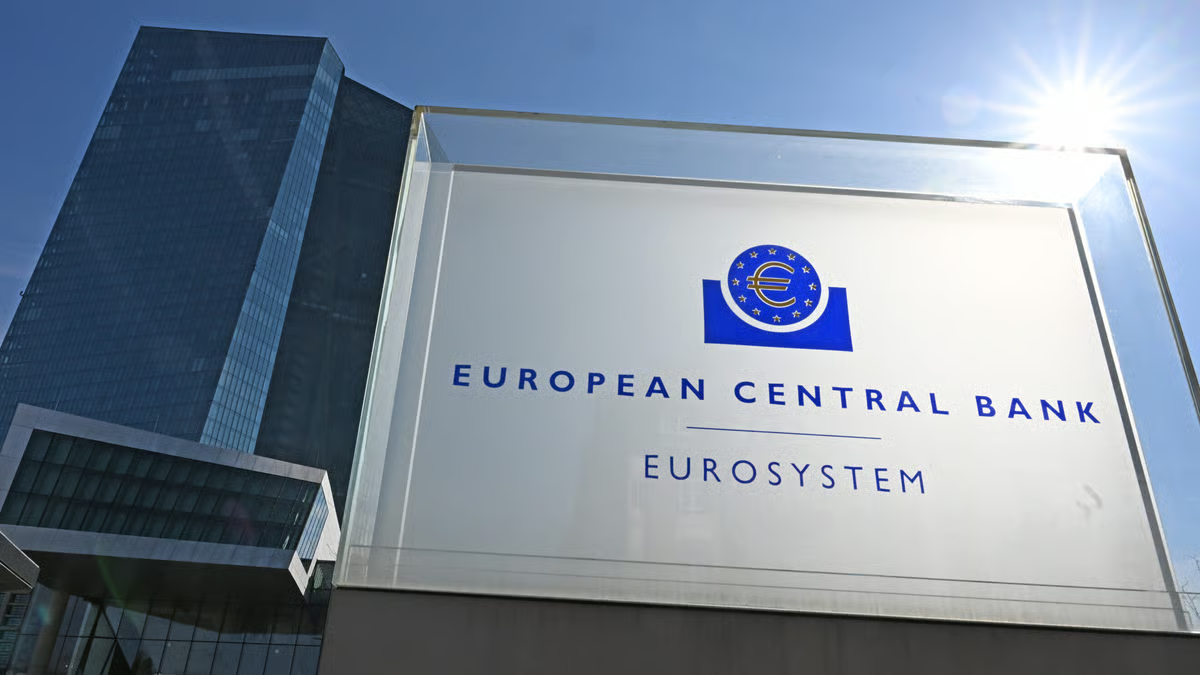
The European Central Bank kept interest rates unchanged on Thursday, as widely expected. However, policymakers warned that the ongoing conflict in the Middle East could keep energy prices elevated and intensify inflation pressures.
The ECB left its key deposit facility rate at 2.25%. At the same time, the central bank kept the door open to another interest-rate increase later this year.
ECB Warns of Volatile Energy Prices
The ECB said the outlook for energy prices remains highly uncertain and volatile.
Current energy prices are close to the baseline included in the central bank’s June forecasts. Nevertheless, they remain well above the levels seen before the Middle East conflict began.
Policymakers warned that the full impact of the energy shock has not yet appeared in inflation data.
As a result, the ECB will closely monitor how severe and long-lasting the shock becomes. Officials will also examine whether higher energy costs spread into wages, services and other consumer prices.
Deposit Rate Remains at 2.25%
The ECB’s decision followed a 25-basis-point interest-rate increase in June.
That move lifted the deposit facility rate to 2.25% and made the ECB the first major central bank to raise borrowing costs in response to inflation risks linked to the conflict involving Iran.
The June increase was designed to reassure markets that policymakers were prepared to act if higher oil and gas prices threatened price stability.
For now, however, the ECB has chosen to wait for more economic data before making another policy adjustment.
Strait of Hormuz Disruptions Threaten Energy Supplies
Concerns about global energy supplies have increased as Iran has once again attempted to restrict tanker traffic through the Strait of Hormuz.
The waterway, located near Iran’s southern coastline, carries around one-fifth of the world’s oil and liquefied natural gas supplies.
Any prolonged disruption could reduce energy exports and push global prices even higher.
Meanwhile, Iran-backed Houthi forces in Yemen claimed responsibility for attacks on two Saudi oil tankers in the Red Sea.
The attacks came shortly after the group announced a blockade targeting Saudi vessels.
Brent Crude Climbs Above $100
Brent crude futures rose above $100 per barrel on Thursday as traders reacted to the growing threat of supply disruptions.
The increase in oil prices has placed additional pressure on the ECB because higher energy costs can quickly affect transportation, manufacturing and household expenses.
If oil prices continue rising, the central bank may face stronger pressure to increase interest rates again.
However, if energy prices retreat over the coming months, the ECB could keep rates unchanged for the rest of the year.
Analysts See Another Rate Hike as Possible
Analysts at Capital Economics said the ECB’s next move will largely depend on the direction of energy prices.
Should oil and gas prices fall as expected, policymakers may avoid further rate increases this year.
On the other hand, another sustained rise in energy costs could significantly increase the likelihood of an additional ECB rate hike.
Therefore, future monetary policy decisions are expected to remain closely tied to developments in the Middle East and global commodity markets.
Iran Conflict Has Changed the Inflation Outlook
During its June policy meeting, the ECB said the conflict had already created additional inflation pressure.
The fighting began after a joint U.S.-Israeli attack on Iran in late February. Since then, concerns about energy supplies and regional stability have intensified.
The ECB described its June rate increase as a strong response that could remain effective under several possible economic scenarios.
Policymakers were particularly concerned about how the energy shock could affect inflation over the medium term.
Eurozone Inflation Remains Above Target
Annual consumer price inflation across the 21-member Eurozone is currently close to 3%.
That level remains well above the ECB’s official 2% target.
Officials are concerned that persistently higher prices could encourage workers to demand larger wage increases. Businesses may then pass those higher labor costs on to consumers.
Such a development could create a more persistent cycle of rising wages and prices.
ECB Raises Inflation Forecasts
The ECB now expects headline inflation to average 3% this year.
Inflation is then forecast to slow to 2.3% in 2027 before returning to the 2% target in 2028.
The central bank’s previous projections had placed inflation at 2.6% this year, 2% in 2027 and 2.1% in 2028.
The updated forecasts show that policymakers now expect stronger short-term inflation pressure than previously anticipated.
Eurozone Growth Forecast Is Lowered
While the inflation outlook worsened, the ECB also reduced its forecast for Eurozone economic growth.
Gross domestic product is now expected to expand by 0.8% this year. The previous estimate called for growth of 0.9%.
This creates a difficult policy challenge for the ECB.
Higher interest rates may help control inflation, but they can also weaken borrowing, consumer spending and business investment.
Lagarde Sees Some Economic Improvement
ECB President Christine Lagarde said recent data suggested that economic activity improved slightly during the second quarter.
However, she acknowledged that the continuing Middle East conflict remained a significant obstacle to growth.
The ECB is therefore likely to remain cautious and data-dependent in the months ahead.
Its next decision will depend on energy prices, inflation trends, wage growth and the broader strength of the Eurozone economy.