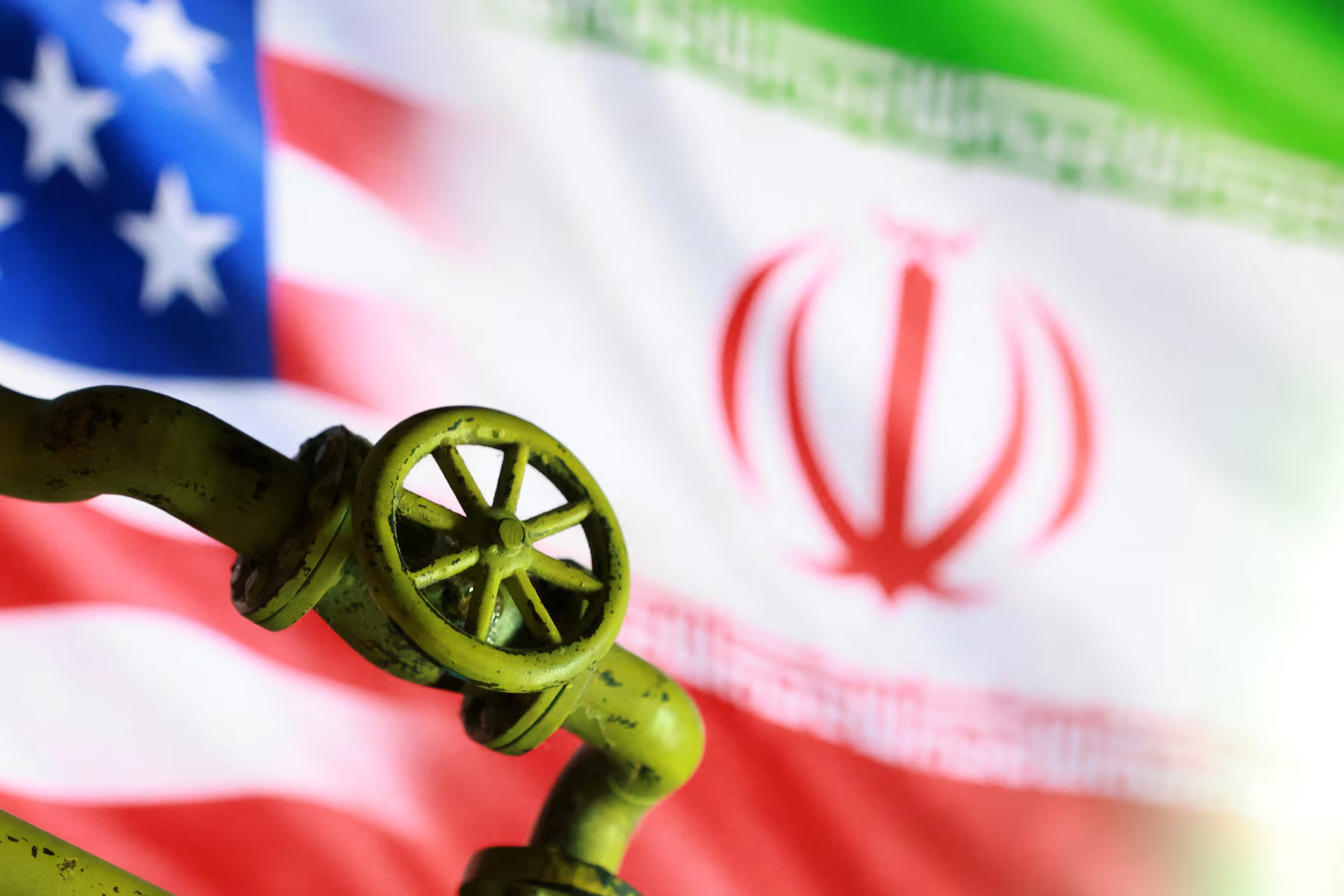
Oil prices moved higher on Friday and remained on course for strong weekly gains as escalating attacks between the United States and Iran increased concerns about Middle East supply disruptions.
Some traders took profits after the recent rally. However, fears surrounding regional production and shipping routes continued to support crude prices.
Brent and WTI Oil Prices Rise
As of 02:53 ET, September Brent crude futures gained 0.4% to trade at $84.54 per barrel.
West Texas Intermediate crude futures rose 0.7% to approximately $79.52 per barrel.
Both major oil benchmarks were heading for weekly gains of more than 11%. The latest escalation in the US-Iran conflict added a significant geopolitical risk premium to energy markets.
Prices had declined slightly during the previous session as some investors secured profits following the rapid advance.
Iran Launches New Strikes on US Facilities
Iran’s military said early on Friday that it had launched another series of attacks against US facilities across the Middle East.
The operation reportedly included Iran’s first direct attack on a US facility in Syria during the latest phase of the conflict.
The strikes followed a sixth consecutive night of US military action against Iran. Washington said the operations were intended to weaken Iran’s military capabilities.
The continuing exchange of attacks has increased concerns that the conflict could spread further across the region.
Strait of Hormuz Supply Risks Grow
Iran has repeatedly threatened shipping through the Strait of Hormuz, one of the world’s most important energy transport routes.
Around one-fifth of global oil and fuel supplies pass through the narrow waterway.
Any prolonged disruption could restrict global energy exports and push oil prices significantly higher.
Shipping activity through the strait has already slowed. Vessel traffic fell sharply during the week following the renewed US naval blockade of Iranian ports.
Oil Market Avoids Another Explosive Rally
Despite the increased supply risks, oil prices have not repeated Monday’s dramatic 10% surge.
Traders are assessing whether the conflict will lead to a prolonged disruption or whether other oil producers could compensate for part of any lost supply.
This uncertainty has kept the market volatile. Geopolitical developments remain the main driver, but investors are also considering global production capacity and demand conditions.
Diplomatic Efforts Continue
Investors are also monitoring diplomatic developments in the region.
Reports indicated that Qatar, Egypt and Pakistan were continuing efforts to restart negotiations after the collapse of the previous ceasefire.
Any progress toward renewed talks could reduce the risk premium currently supporting crude oil prices.
However, further military escalation or threats to shipping routes could trigger another sharp move higher.
US Crude Inventories Decline
US inventory data released during the week also pointed to tighter conditions in the oil market.
The Energy Information Administration said US crude stockpiles fell by 1.7 million barrels during the week ending July 10.
Total crude inventories declined to approximately 409.7 million barrels.
Gasoline stockpiles also dropped by 1.5 million barrels, suggesting that fuel demand remained firm.
API Data Shows Smaller Inventory Draw
Earlier figures from the American Petroleum Institute also showed a decline in US crude inventories.
According to the industry group, crude stockpiles fell by around 564,000 barrels during the same period.
However, the decline was smaller than analysts had expected.
The combination of falling US inventories and rising Middle East supply risks has strengthened the short-term outlook for oil prices.
Markets will now focus on developments in the US-Iran conflict, shipping activity through the Strait of Hormuz and any progress toward renewed diplomatic negotiations.