Asian Stocks Fall as Semiconductor Shares Sell Off
Asian stock markets moved lower on Thursday, led by steep losses in South Korea.
A sharp decline in semiconductor shares and renewed concerns about tensions between the United States and Iran weakened investor confidence across the region.
Markets also remained focused on the Strait of Hormuz. Any disruption to shipping through the key energy route could push oil prices higher and increase inflation risks.
Investors Await TSMC Earnings
Traders turned their attention to quarterly results from Taiwan Semiconductor Manufacturing Company, also known as TSMC.
The world’s largest contract chipmaker was due to report earnings later in the day. Investors were looking for fresh signals about the strength of artificial intelligence demand.
TSMC supplies advanced chips to major technology companies, including Nvidia and Apple.
US stock index futures were broadly unchanged during Asian trading after Wall Street ended the previous session with modest gains.
South Korea’s KOSPI Drops More Than 6%
South Korea recorded the region’s largest decline.
The KOSPI index fell by more than 6%, which briefly triggered a trading halt. Heavy selling in major semiconductor companies drove most of the losses.
SK Hynix and Samsung Electronics dropped between 8% and 11%, placing significant pressure on the wider market.
The sharp fall reflected growing concerns about semiconductor valuations and the sustainability of AI-related investment.
Bank of Korea Raises Interest Rates
The Bank of Korea increased its benchmark interest rate by 25 basis points to 2.75%.
The central bank pointed to persistent inflation, rising household debt, and continued strength in the domestic economy.
Higher interest rates can place additional pressure on stock valuations, particularly in growth-focused sectors such as technology and semiconductors.
Japan’s Nikkei Slides as Chip Stocks Weaken
Japanese shares also declined.
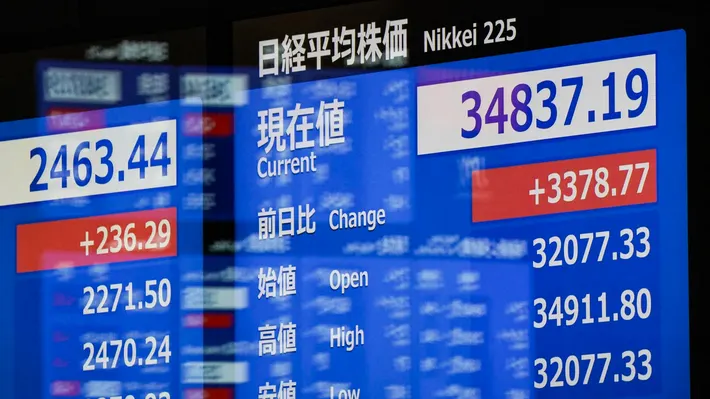
The Nikkei 225 fell by around 2.7% as memory-chip manufacturers and other semiconductor-related companies came under pressure.
The broader TOPIX index dropped approximately 1.1%.
Technology shares remained vulnerable as investors reduced their exposure to companies linked to the global AI investment cycle.
US-Iran Tensions Add to Market Risks
Investor caution increased after the United States expanded its attacks on Iran.
The developments renewed fears about shipping disruptions through the Strait of Hormuz, one of the world’s most important energy transport routes.
Higher crude oil prices could raise costs for businesses and consumers. They may also reduce the ability of central banks to lower interest rates.
Persistent energy inflation could therefore weaken corporate earnings and slow economic growth.
Chinese Stocks Edge Lower While Hong Kong Rallies
Mainland Chinese markets recorded moderate losses.
The Shanghai Composite and the CSI 300 each fell by around 0.5%.
However, Hong Kong’s Hang Seng Index rose approximately 1.7%, outperforming the broader region and moving against the negative market trend.
Australian and Singapore Markets Decline
Australia’s S&P/ASX 200 slipped by around 0.3%.
Singapore’s Straits Times Index also moved lower, falling approximately 0.5%.
Meanwhile, futures linked to India’s Nifty 50 showed little movement.
TSMC Expected to Report Another Record Profit
Analysts expected TSMC to deliver a fifth consecutive quarter of record earnings.
Strong demand for artificial intelligence chips was forecast to support revenue and profit growth.
Investors were also watching for possible increases to the company’s full-year revenue and capital expenditure guidance.
Any stronger outlook could provide reassurance that AI-related demand remains healthy.
AI Spending Concerns Pressure Semiconductor Stocks
Despite expectations for strong TSMC results, the semiconductor sector remained under pressure.
Some investors have started questioning whether the current pace of AI infrastructure spending can continue.
A positive earnings report and stronger guidance from TSMC could help improve sentiment. However, weaker forecasts could deepen concerns about the future of the AI-driven semiconductor cycle.