The US military said on Monday evening that it had completed a third consecutive night of strikes against Iran.
The latest operation followed President Donald Trump’s decision to restore a US naval blockade and propose a 20% charge on cargo moving through the Strait of Hormuz.
The renewed military campaign has intensified concerns about regional security, global shipping and energy supplies.
CENTCOM Targets Military Sites Across Iran
US Central Command said American forces struck military targets across Iran during a five-hour operation.
According to CENTCOM, the strikes were designed to further weaken Iran’s ability to attack commercial ships.
The command also said more than 50,000 US military personnel had been deployed in areas surrounding Iran.
The latest attacks began shortly after Trump warned that the United States planned to strike Iran heavily over the following two days.
Trump Proposes 20% Strait of Hormuz Fee
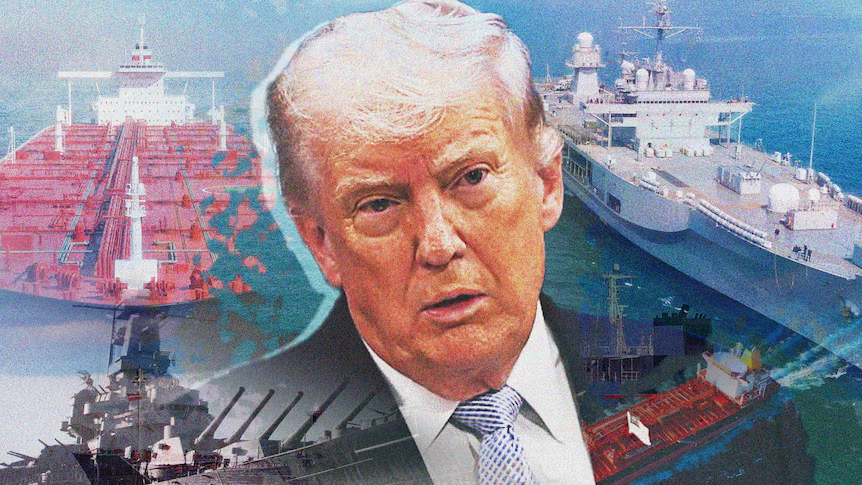
Earlier on Monday, Trump described the United States as the future “Guardian of the Hormuz Strait.”
He argued that companies using the strategic shipping route should help cover the cost of American security operations.
Trump proposed a 20% reimbursement charge on all cargo transported through the waterway.
According to the president, the fee would compensate the United States for protecting ships in what he described as an increasingly dangerous corridor.
Iran Reports Attacks on Tankers and US Bases
Iran said it had attacked and disabled two supertankers in the Strait of Hormuz.
Tehran was also reported to have launched missiles toward US military bases across the Middle East.
Meanwhile, Saudi Arabia and Yemen’s Iran-backed Houthi movement exchanged a new series of strikes.
The broader escalation showed that the confrontation was spreading beyond direct US-Iran military action.
Strait of Hormuz Becomes Main Conflict Zone
The latest hostilities have focused heavily on the Strait of Hormuz.
Iran reportedly attacked several vessels attempting to cross the waterway earlier in July. Those incidents contributed to the renewed US military response.
Trump said Washington intended to keep the strait open and could take a leading role in managing its security.
The narrow shipping route has become the central flashpoint in the rapidly escalating conflict.
Iran Rejects US Role in Managing the Strait
Iran quickly rejected Trump’s proposal.
The country’s senior joint military command said Tehran would not accept US involvement in managing the Strait of Hormuz.
Iran also warned that cooperation between regional governments and Washington could be treated as an act of war.
The response raised concerns that other Gulf countries could become increasingly involved in the conflict.
Global Oil Supply Faces Growing Risk
Around one-fifth of global oil consumption passes through the Strait of Hormuz.
As a result, any disruption to shipping can have a major effect on global energy markets.
Iran’s effective blockade of the waterway has reduced shipping activity and contributed to a sharp increase in oil prices.
MarineTraffic data showed that only a limited number of vessels were moving through the strait.
Oil Prices Surge as Conflict Escalates
Oil prices jumped by more than 9% on Monday as markets prepared for further supply disruptions in the Middle East.
Higher crude prices have increased concerns about energy-driven inflation.
Rising fuel and transportation costs could place additional pressure on households and businesses worldwide.
They could also weaken global economic growth if consumers are forced to reduce spending in other areas.
US-Iran Negotiations Become Less Likely
The latest exchange has reduced expectations for renewed negotiations between Washington and Tehran.
Iran accused the United States of violating a recent ceasefire agreement.
Iranian Foreign Minister Abbas Araghchi said any future agreement would require both sides to comply with their obligations.
The United States, meanwhile, continued to demand guarantees that commercial vessels would be able to pass safely through the Strait of Hormuz before wider talks could resume.
Higher Fuel Prices Create Political Pressure
The conflict has increasingly spread across the Gulf, raising new concerns about regional stability.
Higher oil and fuel prices could also become a political challenge for Trump ahead of the November congressional elections.
A prolonged rise in energy costs may increase household expenses and strengthen public concerns about inflation.
Iran’s New Supreme Leader Vows Retaliation
Separately, Iran’s new Supreme Leader, Ayatollah Mojtaba Khamenei, pledged to avenge the death of his father and predecessor, Ayatollah Ali Khamenei.
He said Iran would continue seeking retaliation regardless of future developments.
The statement followed Trump’s warning that the US military was prepared to launch a major response if Iran attempted to assassinate him.
The exchange added another layer of tension to an already rapidly escalating confrontation.