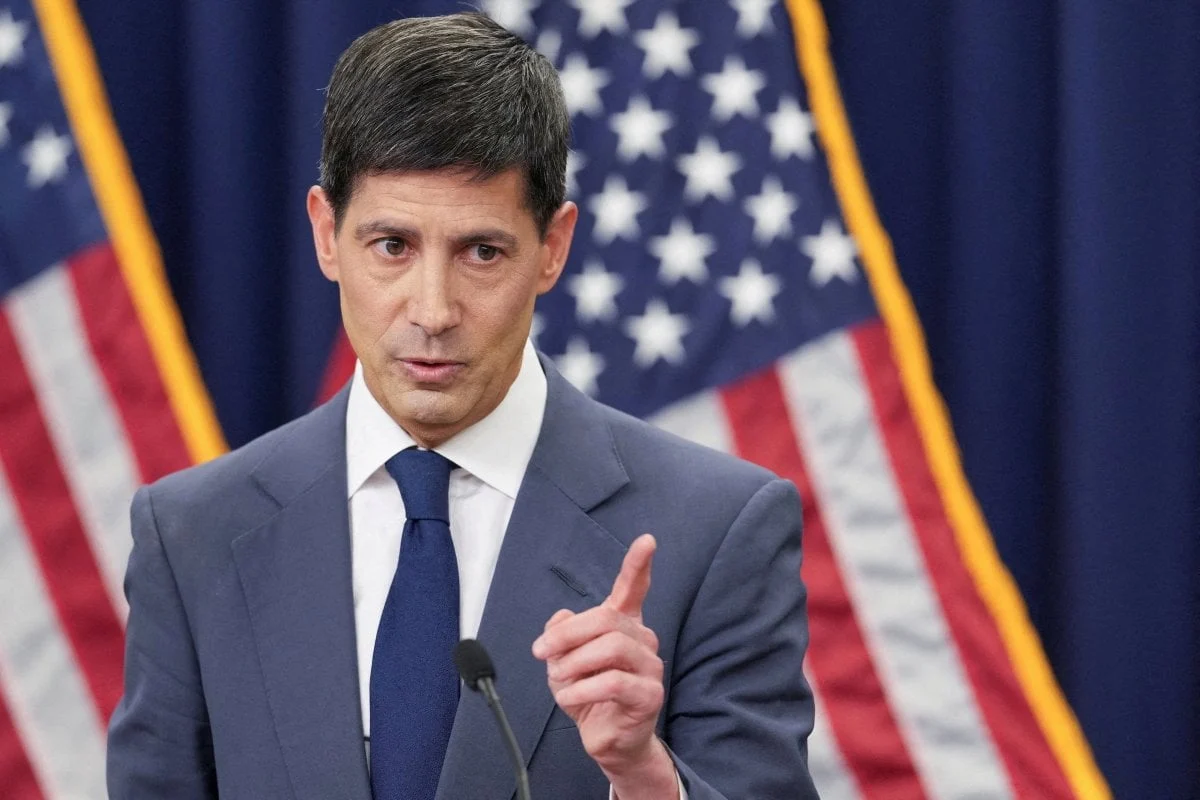
Warsh Announces Major Fed Policy Review
Federal Reserve Chairman Kevin Warsh has announced the leadership of five independent task forces that will conduct a broad review of the central bank’s monetary policy operations.
The move marks a major structural step as the Fed looks to update its policy framework for a changing U.S. economy.
Fed’s Dual Mandate Remains in Place
Warsh stressed that the Federal Reserve’s dual mandate of price stability and maximum employment remains unchanged.
However, he also said the U.S. economy has changed significantly over the past generation, especially in recent years. As a result, the Fed needs a more modern approach to policy decisions.
Warsh said the task forces have been instructed to follow the evidence and deliver detailed findings to the Federal Open Market Committee.
Outside Experts to Lead the Review
Each task force will be co-led by a group of outside experts.
The leadership teams include academics, technology executives, business leaders, and former central bank officials. This is designed to bring a wider range of views into the Fed’s policy review.
Productivity and Jobs Task Force
The Productivity and Jobs task force will examine how artificial intelligence and new technologies could affect the broader economy.
The group will be led by Marc Andreessen of Andreessen Horowitz, Charles I. Jones of Stanford, and Asha Sharma of Microsoft.
Its work will focus on how innovation may change productivity, employment, and long-term growth.
Inflation Frameworks Task Force
The Inflation Frameworks group will review how the Fed understands and responds to modern inflation pressures.
It will be led by Greg Mankiw of Harvard, Thomas Sargent of NYU, and William White of the C.D. Howe Institute.
The task force will examine whether current inflation models are still useful in an economy shaped by global supply chains, fiscal policy, and fast-changing demand patterns.
Balance Sheet Policy Task Force
The Balance Sheet Policy team will study the costs, benefits, and long-term risks of the Fed’s current balance sheet strategy.
This group will be led by Karen Dynan of Harvard, Raghuram Rajan of the University of Chicago, and Jeremy Stein of Harvard.
Its goal is to assess whether the Fed’s balance sheet approach supports financial stability and effective monetary policy.
Communications Task Force
The Communications task force will focus on how the Fed explains its decisions to markets and the public.
It will be led by former Bank of England Governor Mervyn King, Peter R. Fisher of the University of Washington, and Arminio Fraga of Gávea Investimentos.
The group will review how the Fed can manage expectations more effectively during periods of economic uncertainty.
Data Task Force
The Data task force will work on improving the speed and quality of the economic indicators used in policy decisions.
It will be led by Raj Chetty of Harvard, former Walmart CEO Doug McMillon, and Kevin Murphy of the University of Chicago.
This group will focus on giving policymakers better real-time information about the economy.
Warsh Signals a New Fed Philosophy
The task force announcement is more than a routine internal review.
It offers a clear look at Warsh’s approach to central banking. He has previously criticized the Fed for relying too heavily on academic models, slow-moving data, and internal consensus.
By bringing in leaders from technology, business, academia, and global central banking, Warsh appears to be pushing the Fed toward a broader and more practical policy framework.
Fed Looks Beyond Traditional Models
One major shift is the move away from relying only on traditional economic models.
The inclusion of figures such as Thomas Sargent and Greg Mankiw suggests the Fed may re-examine older frameworks, including models that failed to fully anticipate the inflation surge of the early 2020s.
Warsh appears to want a policy system that better reflects modern supply chains, fiscal pressures, and changing inflation dynamics.
AI and Supply-Side Growth Take Center Stage
Another important signal is the creation of a dedicated task force on productivity, jobs, and artificial intelligence.
Central banks usually focus on managing demand through interest rates. However, Warsh’s structure suggests the Fed also wants to better understand the supply side of the economy.
If AI significantly raises productivity, the U.S. economy could potentially grow faster without creating the same level of inflation pressure.
Fed Seeks Real-World Economic Signals
The appointment of business and technology leaders also suggests that Warsh wants the Fed to use more real-world data.
Executives such as Doug McMillon and Marc Andreessen may help the central bank better understand business investment, labor trends, technology adoption, and consumer behavior.
That could give the Fed a clearer view of the economy than traditional lagging indicators alone.