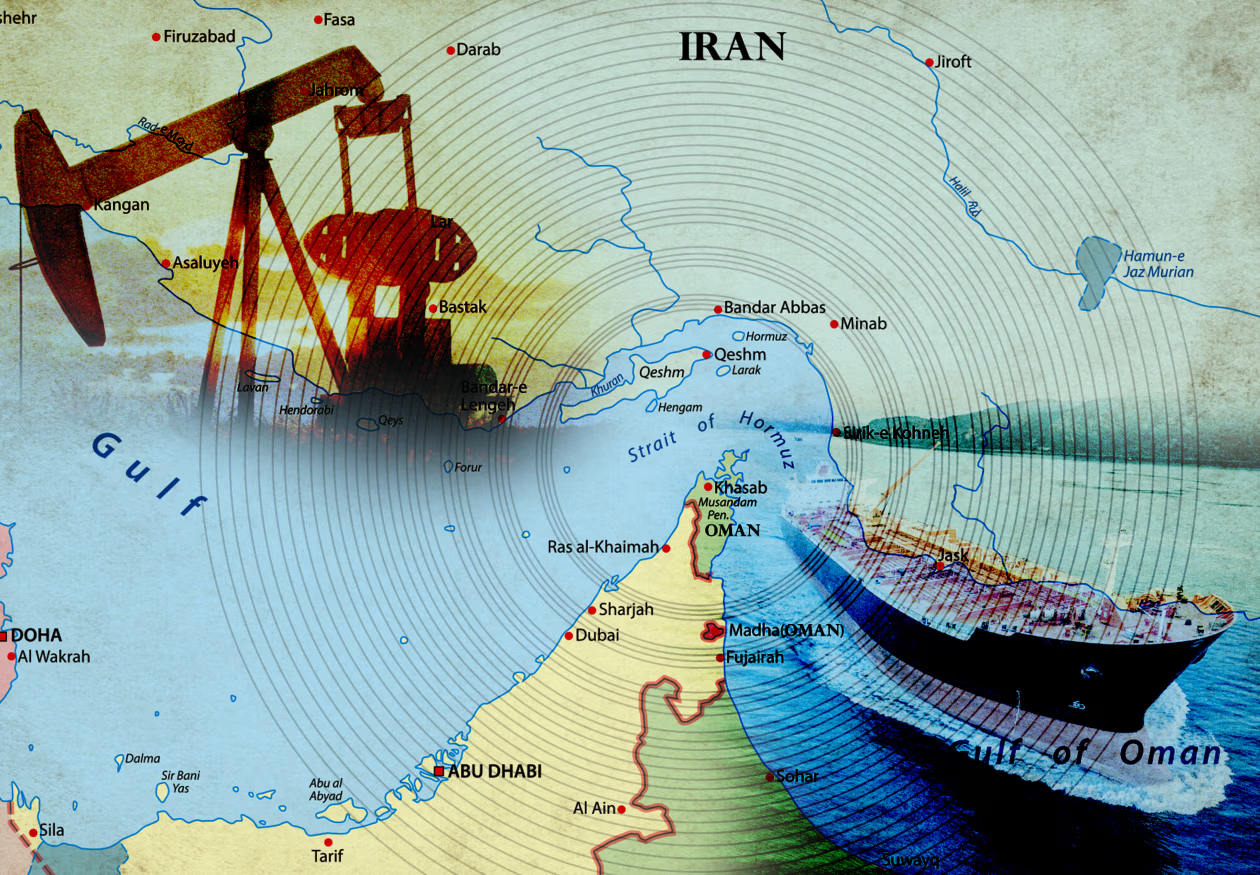
Oil prices moved higher on Tuesday as renewed security risks in the Strait of Hormuz outweighed expectations of stronger global crude supply.
Oil Prices Rise on Hormuz Security Concerns
Crude prices gained after fresh concerns emerged over shipping safety near the Strait of Hormuz.
At 01:25 ET, or 05:25 GMT, WTI crude oil futures rose 0.76% to $69.07 per barrel.
Brent crude futures climbed 0.81% to $72.57 per barrel.
Strait of Hormuz Risks Support Crude
Market support increased after reports said a tanker near the Strait of Hormuz was hit by a projectile off the coast of Oman.
The incident caused a fire, but no casualties were reported.
The attack reminded traders that shipping risks remain high, even as commercial traffic through the key waterway slowly recovers.
Gulf Shipping Remains Below Normal
The Strait of Hormuz has reopened to commercial traffic.
Recent crossings have included Japan-linked vessels. However, shipping volumes remain below levels seen before the conflict.
Traders are still watching for isolated security incidents that could delay the recovery of Gulf exports.
Any disruption could help maintain a geopolitical risk premium in oil prices.
Supply Growth Limits Oil Gains
Despite the rise in crude prices, the broader market outlook remains focused on higher supply.
Saudi Aramco recently cut the August official selling price of its flagship Arab Light crude for Asian buyers.
The price was moved to a discount against the regional benchmark for the first time since 2020.
This suggests stronger competition for market share as Gulf exports recover.
OPEC+ Output Increase Adds Pressure
Saudi Arabia’s price cut followed OPEC+’s weekend decision to raise August production targets.
The move reinforced expectations that more barrels could return to the global oil market as regional conditions improve.
This higher supply outlook continues to limit the upside for crude prices.
Product Markets Remain Tighter
ANZ said product markets remain much tighter than crude markets.
Strong refining margins and relatively low fuel inventories are helping support oil prices.
These factors have softened the impact of rising crude supply.
The bank also noted that improving Gulf export flows point to a looser crude market over the medium term.
However, recovering product demand has helped prevent a sharper fall in prices.
Traders Await EIA Energy Outlook
Markets are now waiting for the U.S. Energy Information Administration’s Short-Term Energy Outlook.
The report is expected to provide updated forecasts for oil production and demand.
For now, crude prices remain driven by two main factors: developments in the Strait of Hormuz and the pace of recovering Gulf exports.