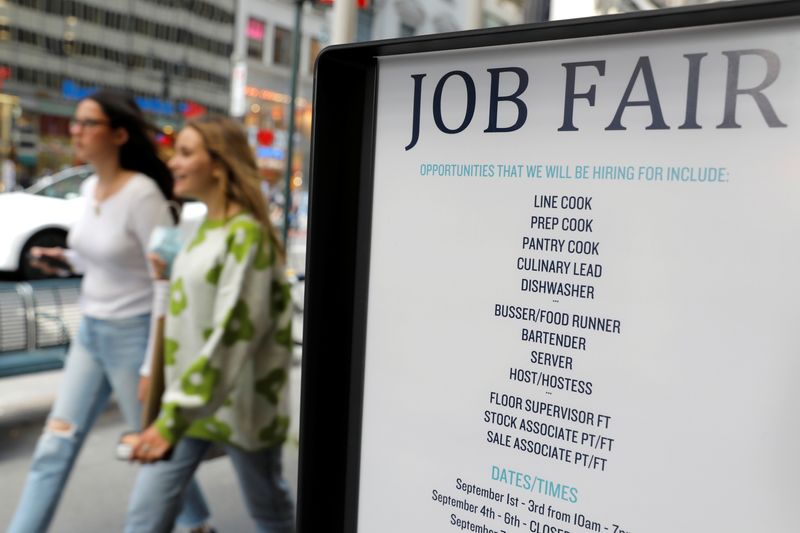
U.S. job openings increased more than expected in May, according to the latest Labor Department data.
The figures suggest that demand for workers remains resilient, even as hiring activity shows signs of stabilizing.
Job Openings Reach a Two-Year High
The number of available positions rose to 7.594 million in May.
That was slightly higher than the downwardly revised April total of 7.585 million. It also comfortably exceeded economists’ forecast of 7.280 million.
The May reading marked the highest level of U.S. job openings in two years.
Job vacancies are closely monitored because they provide an important measure of labor demand across the economy.
Hiring Activity Remains Stable
The number of hires was unchanged from a year earlier at approximately 5.2 million, according to the Bureau of Labor Statistics.
The hiring rate also remained steady at 3.3%.
These figures were published in the Labor Department’s Job Openings and Labor Turnover Survey, commonly known as the JOLTS report.
U.S. Quits Rate Holds at 1.9%
The quits rate remained unchanged at 1.9%, matching the level recorded in April.
This measure tracks the number of workers who voluntarily leave their jobs.
A higher quits rate usually indicates that employees feel confident about finding new opportunities. A lower rate can suggest that workers are becoming more cautious.
Labor Market Remains Broadly Balanced
The ratio of job openings to unemployed workers remained at 1.0.
However, analysts at CIBC Economics noted that the ratio has gradually increased since February.
The vacancy-to-unemployment ratio is widely used to assess whether the labor market is experiencing worker shortages or excess capacity.
CIBC analysts said the latest report confirms that the U.S. labor market remains broadly balanced.
Attention Turns to the U.S. Jobs Report
The JOLTS data arrived ahead of the closely watched U.S. employment report due later in the week.
Economists expect the U.S. economy to have added around 114,000 jobs in June.
That would represent a slowdown from the 172,000 jobs reportedly created during the previous month.
The employment report could influence expectations for Federal Reserve interest-rate policy over the coming months.
Federal Reserve Monitors Inflation and Employment
Federal Reserve policymakers left interest rates unchanged at their latest meeting.
Officials are closely monitoring inflationary pressure linked to higher energy costs following the conflict involving Iran.
The central bank has a dual mandate to maintain price stability and support maximum employment.
Markets currently expect the Federal Reserve could raise interest rates before the end of 2026 if inflation remains elevated.
U.S. Consumer Confidence Improves Slightly
Separate data from the Conference Board showed that U.S. consumer confidence edged higher.
The confidence index rose to 91.2 from 90.6 in the previous reading.
The improvement reflected growing optimism that the longer-term economic impact of the Iran conflict may be easing.
Moderating gasoline prices also helped support consumer sentiment.