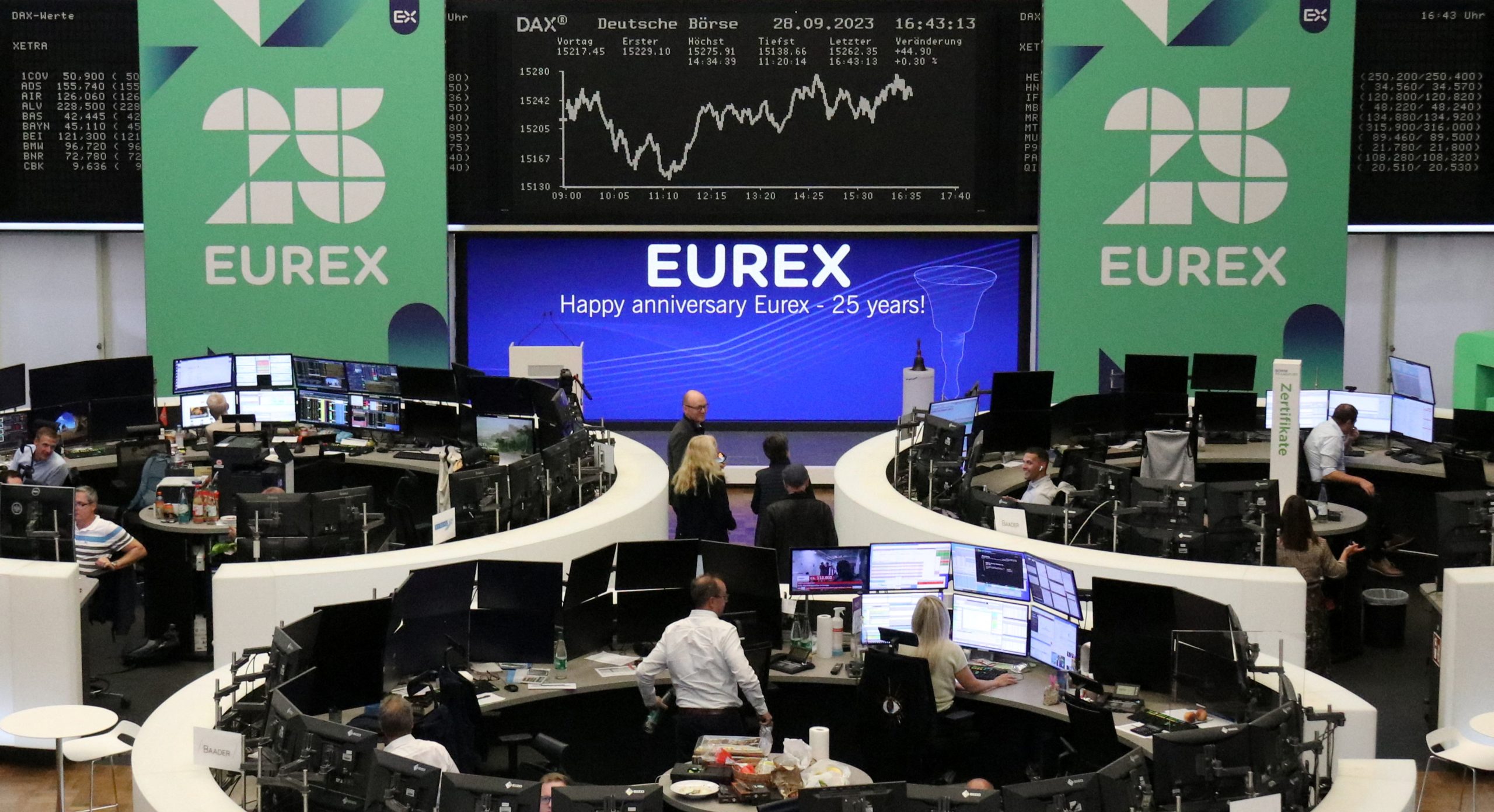
European stocks moved lower on Friday, quickly reversing the record close recorded during the previous session.
Concerns about OpenAI’s potential IPO delay, higher U.S. inflation, Apple’s product price increases and renewed tensions in the Middle East encouraged investors to reduce their exposure to riskier assets.
European Stocks Retreat From Record High
The pan-European STOXX 600 opened 0.4% lower after closing at a record high on Thursday.
The earlier rally had been supported by strong results and optimistic outlooks from U.S. semiconductor companies Micron Technology and Qualcomm.
However, confidence weakened again as investors focused on risks facing the technology sector and the prospect of higher U.S. interest rates.
France’s CAC 40 declined 0.2%, while the FTSE 100 in London fell 0.4%. Germany’s DAX recorded a larger drop of 0.7%.
OpenAI IPO Delay Weighs on Technology Stocks
Reports that OpenAI may postpone its highly anticipated initial public offering until 2027 added pressure to market sentiment.
The possible delay raised questions about investor demand for highly valued artificial intelligence companies.
Technology shares had benefited significantly from enthusiasm surrounding AI. However, the OpenAI report encouraged investors to reconsider whether current valuations remain sustainable.
European Semiconductor Shares Fall
Major European semiconductor companies led the technology-sector decline.
Shares of ASML, ASM International, Infineon and STMicroelectronics moved lower as investors reduced their exposure to AI and chip-related stocks.
The decline followed a sharp reversal in technology sentiment across the United States and Asia.
Although demand for AI infrastructure remains strong, investors are increasingly concerned about high spending requirements and the effect of rising hardware costs on the broader technology market.
Apple Price Increases Raise Demand Concerns
Apple’s decision to raise prices across several MacBook and iPad product lines also weakened investor confidence.
The company is facing higher memory and storage costs as AI-related demand places pressure on semiconductor supplies.
Investors fear that more expensive devices could reduce consumer demand, particularly for discretionary technology products.
Higher retail prices may also force manufacturers and suppliers to adjust production if sales volumes begin to slow.
U.S. Inflation Moves Above 4%
Persistent U.S. inflation added to the negative market mood.
The latest data showed that inflation rose above 4% for the first time in three years.
The stronger reading reinforced expectations that the Federal Reserve may need to maintain restrictive monetary policy or raise interest rates again.
Higher interest rates generally place pressure on equity valuations, particularly in the technology sector.
Markets Increase Fed Rate-Hike Bets
Traders quickly adjusted their expectations following the inflation report.
According to the CME FedWatch Tool, markets assigned a 64% probability to a 25-basis-point Federal Reserve interest-rate increase in September.
Expectations of tighter monetary policy can reduce demand for stocks by making bonds and other interest-bearing assets more attractive.
Higher borrowing costs can also limit corporate investment and weaken consumer spending.
Strait of Hormuz Attack Raises Geopolitical Risks
Geopolitical tensions added another source of uncertainty after reports that a commercial oil tanker was attacked near the Strait of Hormuz.
The waterway is one of the world’s most important routes for energy shipments.
Any serious disruption could restrict oil supplies, raise energy prices and increase global inflation pressures.
The incident renewed concerns about the stability of the Middle East despite recent diplomatic efforts to reduce tensions.
Investors Move Toward Defensive Assets
The combination of vulnerable technology demand, higher interest-rate expectations and geopolitical risks created a broad risk-off environment.
Investors moved away from growth-oriented shares and increased their focus on defensive sectors and cash.
European stock markets may remain volatile as traders assess future U.S. inflation data, Federal Reserve policy, OpenAI’s IPO plans and developments in the Strait of Hormuz.