Taiwan Considers Stricter AI Chip Export Controls on China as TSMC Shares Rise
Taiwan is reportedly evaluating tougher restrictions on AI chip exports to China in a move that could significantly strengthen oversight of advanced semiconductor technology and enhance national security protections.
According to a Bloomberg report, the proposed measures would represent one of the most aggressive steps taken by President Lai Ching-te’s administration to safeguard Taiwan’s strategic technology sector while aligning more closely with U.S. efforts to limit China’s access to advanced artificial intelligence hardware.
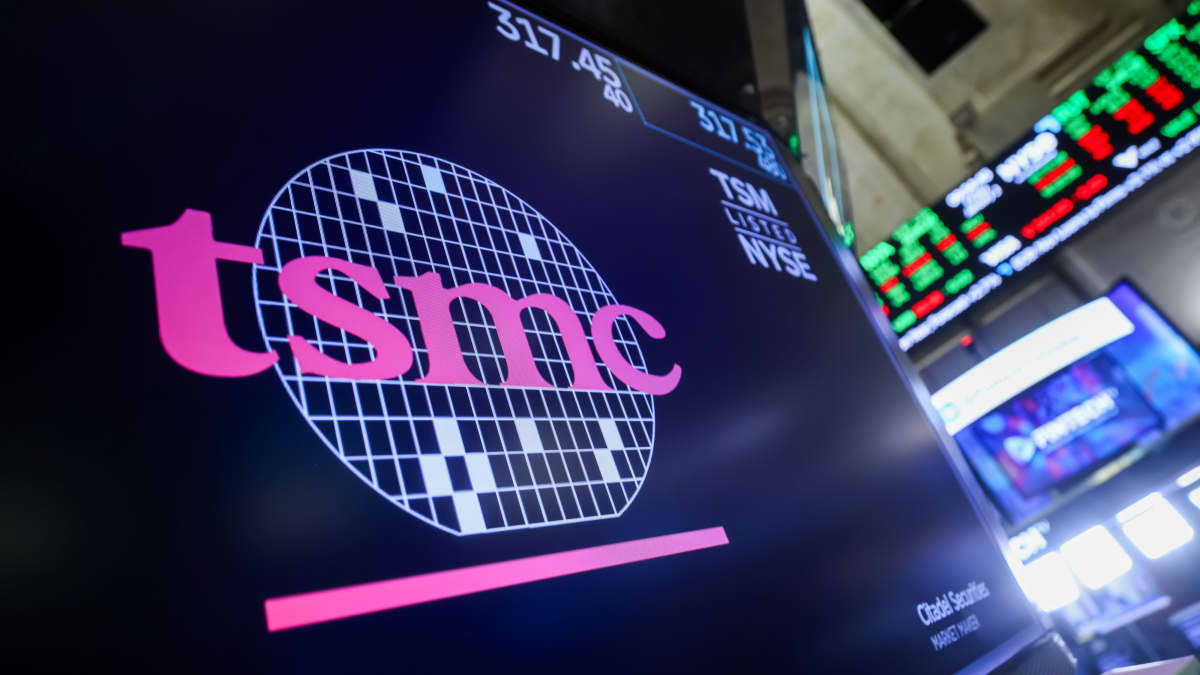
Meanwhile, shares of Taiwan Semiconductor Manufacturing Company (TSMC) initially traded lower before reversing course and rising approximately 2.5% after the U.S. market opened.
Taiwan May Expand Restrictions Beyond Blacklisted Companies
Sources familiar with the discussions indicated that Taiwanese officials are considering regulations that would restrict AI chip sales to all Chinese customers, rather than limiting controls to companies already on international blacklists such as Huawei Technologies.
If implemented, the new framework would significantly broaden Taiwan’s export control regime and give authorities greater power to monitor and enforce restrictions on advanced semiconductor shipments.
The proposal is reportedly being discussed as part of wider trade negotiations between Taiwan and the United States.
New Rules Could Introduce Criminal Penalties
One of the most significant aspects of the proposed legislation is that it could provide Taiwanese authorities with legal grounds to prosecute unauthorized AI chip exports to China as criminal offenses.
Currently, advanced chip exports to China are restricted under U.S. regulations. However, Taiwan’s existing legal framework does not classify such transactions as criminal violations, limiting the ability of domestic authorities to pursue enforcement actions.
Taiwan only made its first publicly known arrests related to alleged chip smuggling last month, with charges focused on document falsification rather than illegal technology exports.
Restrictions Could Mirror U.S. Export Policies
Under the framework being considered, Taiwan would impose restrictions on AI chips that exceed specific processing power thresholds when sold to Chinese customers.
The approach closely resembles export controls introduced by the United States in 2022, which were designed to limit China’s access to cutting-edge semiconductor technology used for artificial intelligence and advanced computing applications.
While discussions continue, details of the proposal remain under review and have not yet received final approval from senior officials.
Growing Concerns Over AI Hardware Reaching China
The deliberations come amid increasing concerns in Washington that advanced AI hardware may still be reaching Chinese companies through indirect channels.
U.S. officials have been closely monitoring reports involving AI servers equipped with Nvidia chips that were allegedly diverted from Taiwan into China despite existing restrictions.
Last week, the Trump administration reportedly moved to address a potential loophole that may have allowed advanced semiconductors to be supplied to overseas subsidiaries of Chinese firms.
U.S. Lawmakers Push for Tighter Oversight
Pressure is also mounting within the United States for stricter enforcement of semiconductor export controls.
On Monday, Senators Jim Banks and Andy Kim sent a letter to Bureau of Industry and Security chief Jeffrey Kessler, urging regulators to address concerns surrounding Chinese companies using overseas subsidiaries to order custom-designed chips from manufacturers such as TSMC.
Lawmakers argue that these arrangements could potentially undermine existing restrictions and allow advanced AI technologies to reach Chinese entities through indirect channels.
Semiconductor Industry Faces Increasing Geopolitical Pressure
The latest discussions highlight the growing strategic importance of advanced semiconductors in global trade and national security.
As competition between the United States and China intensifies, Taiwan remains at the center of the global chip supply chain. Any new export controls could have significant implications for technology companies, semiconductor manufacturers, and AI development efforts worldwide.
Investors will be closely watching whether Taiwan proceeds with the proposed measures and how potential restrictions could affect TSMC, the broader semiconductor sector, and future U.S.-China technology relations.