SpaceX’s Massive IPO Valuation Puts the ‘Elon Premium’ to the Test
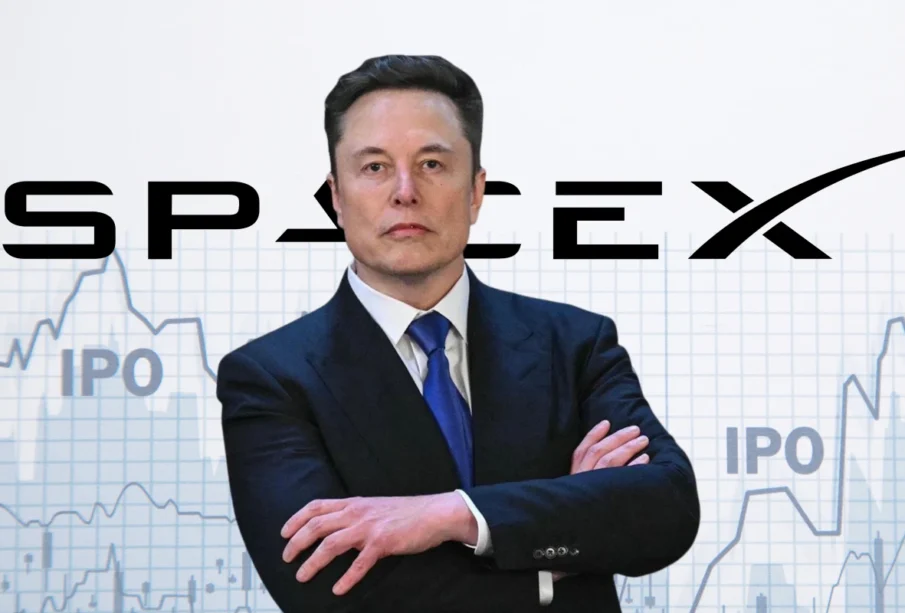
SpaceX’s highly anticipated public debut is set to challenge the so-called “Elon premium” that has helped make Elon Musk’s companies some of the most valuable businesses in the world.
The aerospace company is targeting a staggering $1.77 trillion valuation in what would become the largest IPO in history. If achieved, SpaceX would immediately rank among the biggest publicly traded companies in the United States, becoming the seventh-largest by market capitalization.
While many investors view Musk’s track record as a compelling reason to invest, others argue that SpaceX’s ambitious valuation leaves little room for error.
Investors Divided Over SpaceX Valuation
Supporters of Elon Musk believe his history of disrupting industries and creating shareholder value justifies paying a premium for SpaceX shares.
However, some analysts remain cautious, warning that the company’s valuation already assumes years of exceptional growth and near-perfect execution.
Ed O’Gorman, CEO of River Wealth Advisors, said the company’s fundamentals alone may not justify the lofty expectations embedded in the IPO pricing.
The debate reflects a broader question facing investors: how much additional value should be assigned to a company simply because it is led by Elon Musk?
The Power of the ‘Elon Premium’
For years, investors have been willing to pay significantly higher valuations for companies associated with Musk.
John Plassard, Head of Investment Strategy at Cité Gestion, noted that he would be comfortable paying a 20% to 30% premium for a well-managed Musk-led company compared with a similar competitor.
Still, not all investors are convinced. Some argue that SpaceX’s valuation has reached levels where even Musk’s reputation may not be enough to justify the price.
SpaceX Valuation Far Exceeds Traditional Metrics
Despite reporting a net loss of $4.94 billion in 2025, SpaceX is seeking a valuation equivalent to approximately 94.5 times annual sales.
For comparison, Tesla currently trades at around 16.7 times its projected 2025 revenue, according to market data.
The large gap highlights the extraordinary growth expectations investors are placing on SpaceX and its future business segments.
Why Some Investors Want Exposure to Both Tesla and SpaceX
Many market participants view Tesla and SpaceX as complementary investments rather than competitors.
Tejas Dessai, Director of Research at Global X, believes both companies can thrive independently and provide investors with exposure to different growth opportunities.
Similarly, 50 Park Investments CEO Adam Sarhan said investors who believe in Musk’s long-term vision may find value in holding both stocks.
However, Sarhan added that he would likely wait several months after the IPO before purchasing SpaceX shares, allowing the market to establish a more stable valuation.
Questions Surround SpaceX’s AI Ambitions
One of the biggest uncertainties for investors involves SpaceX’s artificial intelligence business and future technology initiatives.
Some of the company’s most ambitious projects, including orbital data centers, remain largely unproven and difficult to evaluate using traditional financial models.
PitchBook analyst Franco Granda questioned how investors can accurately value technologies that have no established market comparisons and remain largely theoretical at this stage.
Meanwhile, Grok, the AI chatbot developed by xAI, continues to compete against industry leaders such as OpenAI and Anthropic.
Morningstar analyst Nicolas Owens said current projections for SpaceX’s AI business have limited impact on his valuation estimates. Last week, Owens assigned SpaceX a valuation of approximately $780 billion, less than half of the company’s targeted IPO value.
Could Tesla and SpaceX Eventually Merge?
Speculation about a future merger between Tesla and SpaceX has resurfaced as the IPO approaches.
While most analysts acknowledge that combining the two companies would be extremely complex, some investors believe such a move could eventually make strategic sense.
Michael Hewson, Senior Market Analyst at iForex, suggested that Tesla could ultimately be absorbed into SpaceX following a successful public listing.
Others point to Tesla’s advanced manufacturing capabilities as a valuable asset for supporting SpaceX’s long-term ambitions in space exploration and infrastructure development.
Investors Less Concerned About Musk’s Focus
Unlike previous periods when investors worried that Musk was spreading himself too thin, current sentiment appears more relaxed.
Analysts note that Musk has successfully managed Tesla and SpaceX simultaneously for many years, reducing concerns that a public SpaceX would distract him from Tesla operations.
Since SpaceX confidentially filed for its IPO, Tesla shares have gained roughly 10%, suggesting investors remain confident in Musk’s ability to oversee multiple businesses.
This contrasts with earlier episodes such as the Twitter acquisition and Tesla’s SolarCity merger, both of which triggered significant declines in Tesla’s share price.
Retail Investors Weigh Their Options
The upcoming IPO is also generating significant interest among Tesla’s loyal retail investor base.
Some investors are evaluating whether to reduce Tesla positions in order to participate in the SpaceX offering. However, tax implications and expectations of a potential future merger are causing others to remain fully invested in Tesla.
For many shareholders, the decision ultimately comes down to whether they believe SpaceX’s record-breaking valuation accurately reflects the company’s future growth potential—or whether the market is placing too much faith in the enduring power of the Elon premium.