South Korea’s KOSPI Sinks More Than 8% as Chip Stock Selloff Triggers Circuit Breaker
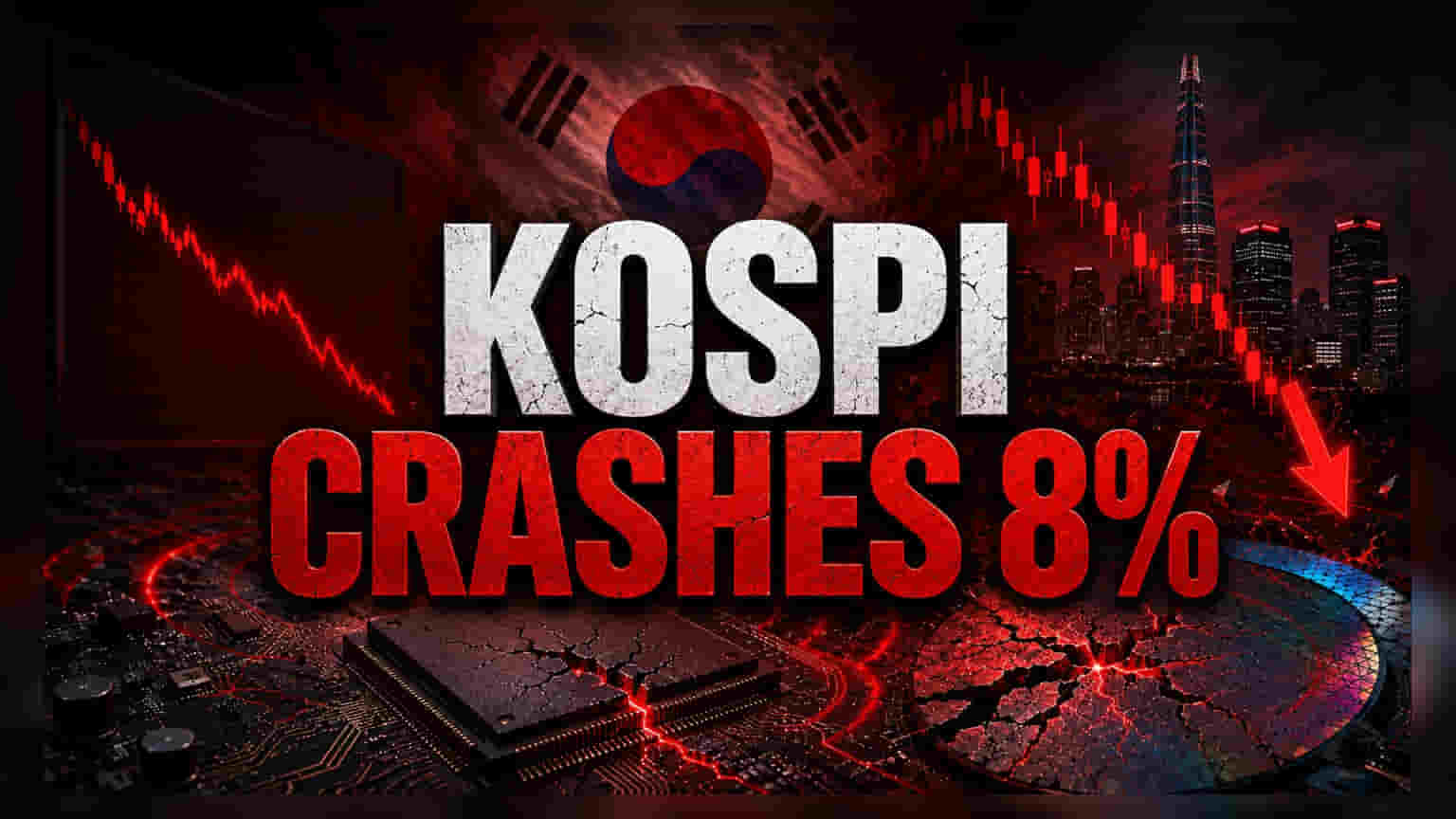
South Korea’s benchmark stock market suffered a sharp decline on Monday, with the KOSPI index plunging more than 8% as investors reacted to a global semiconductor selloff and escalating geopolitical tensions in the Middle East.
The steep drop triggered a market-wide circuit breaker, highlighting growing concerns over risk assets and the outlook for global economic growth.
KOSPI Circuit Breaker Activated
The KOSPI index fell as much as 8.8% during early trading, dropping to 7,442.73 points before recovering slightly.
In response to the rapid decline, the Korea Exchange activated a Level 1 circuit breaker and temporarily halted trading in KOSPI-listed stocks for 20 minutes. It marked the second time this year that trading safeguards were triggered in the South Korean market.
Following the suspension, the benchmark index remained under heavy pressure, trading roughly 8.4% lower and hovering near the 7,400-point level.
Global Semiconductor Selloff Sparks Market Panic
The sharp decline in South Korean equities followed a major selloff in U.S. semiconductor stocks at the end of last week.
Investor sentiment weakened after chipmaker Broadcom released forecasts that disappointed market expectations, triggering a broad retreat across the semiconductor sector.
As a result, the Philadelphia Semiconductor Index plunged more than 10% on Friday, recording its largest single-day decline since March 2020.
Given South Korea’s significant exposure to the global chip industry, local semiconductor stocks were among the hardest hit.
Samsung Electronics and SK Hynix Lead Losses
South Korea’s leading technology companies bore the brunt of the market decline.
Shares of Samsung Electronics and SK Hynix fell sharply during early trading as investors reduced exposure to semiconductor-related stocks.
Both companies have been major beneficiaries of the global artificial intelligence boom, which has helped drive demand for advanced memory chips and AI infrastructure over the past year.
AI Rally Loses Momentum
The KOSPI has been one of the strongest-performing stock indexes globally in 2026, largely fueled by the artificial intelligence-driven surge in semiconductor shares.
However, Monday’s selloff suggested that investor enthusiasm surrounding AI-related stocks may be cooling after months of strong gains.
The weakness in chip stocks sparked broader selling across the South Korean market as traders moved to lock in profits and reduce risk exposure.
Middle East Tensions Add to Investor Concerns
Market sentiment was also negatively affected by renewed conflict in the Middle East.
Investor concerns increased after Iran launched missiles toward Israel, raising fears about potential disruptions to global energy markets and broader economic stability.
The escalating tensions have renewed worries over inflation, oil prices and slowing global growth, prompting investors to shift away from risk-sensitive assets.
Nvidia Partnerships Fail to Lift Market Sentiment
The market decline occurred despite positive developments for South Korea’s artificial intelligence sector.
Nvidia recently announced new partnerships with SK Hynix, Naver and Doosan aimed at expanding AI infrastructure within the country.
The collaborations focus on the development of advanced AI data centers and so-called “AI factories,” reinforcing South Korea’s strategic role in the global artificial intelligence supply chain.
Nevertheless, the positive announcements were overshadowed by the broader semiconductor selloff and heightened geopolitical uncertainty, leaving South Korean equities under significant pressure.