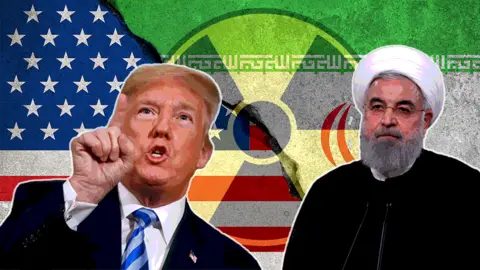
Trump Says Iran Agreed Not to Pursue Nuclear Weapons as Talks Continue
President Donald Trump said Iran has agreed not to develop nuclear weapons, describing the commitment as a key breakthrough in ongoing negotiations between Washington and Tehran.
Speaking on the New York Post’s “Pod Force One” podcast released Wednesday, Trump emphasized that preventing Iran from obtaining a nuclear weapon has been the central objective of recent diplomatic efforts.
However, the president also cautioned that Iran could still reverse its position in the future.
Nuclear Issue Remains at the Center of Negotiations
According to Trump, Iran’s commitment regarding nuclear weapons has become the most significant element of the discussions aimed at ending the conflict between the United States and Iran.
The war, which has now lasted more than three months, has made Iran’s nuclear ambitions one of the primary sticking points in negotiations.
Trump indicated that securing a long-term agreement on the issue remains a top priority for his administration.
Possible Meeting With Iran’s Supreme Leader
The president also suggested that a direct meeting with Iran’s Supreme Leader, Mojtaba Khamenei, could take place if negotiations continue to progress.
Trump described Khamenei as being actively involved in the discussions and said a meeting would likely occur if both sides reach a satisfactory understanding.
Mojtaba Khamenei assumed leadership of Iran following the death of his father earlier this year during the initial stages of the joint U.S.-Israeli military campaign against Iran.
Trump Remains Optimistic About a Deal
Despite ongoing military tensions, Trump portrayed recent developments as a positive step toward a broader resolution.
The president characterized the conflict as a significant success while reiterating his preference for a negotiated settlement.
Trump stated that his administration remains focused on reaching a deal but signaled that alternative options remain available if diplomacy fails.
“We are working on a deal,” Trump said, adding that if negotiations are unsuccessful, the United States would pursue other approaches.
Iran Accuses U.S. of Violating Ceasefire
While Trump expressed optimism about negotiations, Iran’s Foreign Ministry accused the United States of violating both the ceasefire agreement and international law through recent military actions.
According to Iranian officials, U.S. forces carried out strikes on an Iranian oil tanker in the Strait of Hormuz and a telecommunications facility on Qeshm Island.
Tehran condemned the attacks and blamed Kuwait and Bahrain for allegedly facilitating U.S. military operations by allowing the use of facilities located within their territories.
Iran Vows to Respond
Iranian officials stated that the country reserves the right to defend itself and vowed to respond using all available means.
The Foreign Ministry stressed that any attacks on Iranian interests would not go unanswered, further increasing concerns about regional stability.
The latest accusations have added new uncertainty to an already fragile ceasefire arrangement.
U.S. and Iran Exchange New Strikes
On Tuesday, U.S. Central Command (CENTCOM) announced that it had successfully intercepted a new wave of Iranian missile and drone attacks targeting Kuwait and Bahrain.
CENTCOM said it responded by striking an Iranian ground control station on Qeshm Island and intercepting several Iranian drones launched toward vessels operating in regional waters.
According to U.S. officials, no American personnel were injured during the confrontation.
Iran Claims Retaliatory Attacks
Iran’s Revolutionary Guard Corps (IRGC) later stated that it had launched retaliatory strikes against the U.S. Fifth Fleet headquarters in Bahrain as well as a regional air base.
However, CENTCOM said the attacks were unsuccessful and caused no significant damage.
The exchange marked another escalation in a conflict that has intensified repeatedly over the past week.
Peace Prospects Remain Uncertain
Earlier reports from Iranian media suggested that Tehran had suspended indirect negotiations with Washington due to rising tensions across the Middle East, including renewed clashes involving Iran-backed Hezbollah militants in Lebanon.
Although Trump previously dismissed reports that talks had been halted and suggested a peace agreement could be reached within days, the latest military exchanges have cast doubt on the likelihood of a near-term breakthrough.
Strait of Hormuz Remains a Major Concern
Adding to market uncertainty, Iran continues to effectively restrict traffic through the Strait of Hormuz, one of the world’s most important energy shipping routes.
Before the conflict began, approximately 20% of global oil supplies passed through the strategic waterway.
The continued disruption has fueled concerns about energy markets, inflation risks, and the broader impact of the conflict on the global economy.
As negotiations continue alongside ongoing military activity, investors and world leaders remain focused on whether diplomacy can ultimately prevent further escalation in the region.