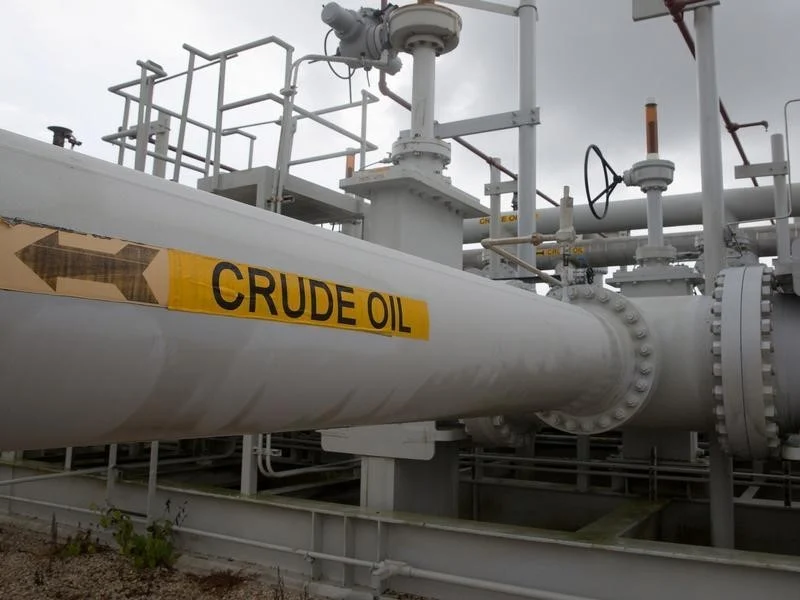
Oil Prices Extend Rally as Middle East Tensions and Supply Concerns Support Markets
Oil prices moved higher on Wednesday, extending gains from the previous session as escalating tensions in the Middle East and signs of tightening U.S. crude supplies strengthened bullish sentiment across energy markets.
Brent crude futures for August delivery rose 1.5% to $97.46 per barrel, while West Texas Intermediate (WTI) crude futures climbed 1.6% to $95.23 per barrel.
Both benchmark contracts had already gained more than 1% during Tuesday’s trading session.
Middle East Conflict Keeps Energy Markets on Edge
Investor attention remains firmly focused on geopolitical developments in the Middle East as hopes for a breakthrough in U.S.-Iran negotiations continue to fade.
Israel maintained military operations in southern Lebanon, while Kuwaiti authorities reported intercepting missile and drone attacks allegedly launched from Iran.
Adding to market concerns, the U.S. Central Command confirmed that American forces carried out strikes on Iran’s Qeshm Island, a strategically important location near the Strait of Hormuz.
The Strait of Hormuz is one of the world’s most critical energy shipping routes, responsible for transporting approximately one-fifth of global oil consumption.
U.S.-Iran Talks Face New Uncertainty
Market sentiment has become increasingly cautious amid reports suggesting that communication between Washington and Tehran has stalled in recent days.
While U.S. President Donald Trump has maintained that diplomatic discussions remain ongoing, reports from Iranian media have raised doubts about the likelihood of a near-term agreement.
As a result, traders have increased the geopolitical risk premium embedded in oil prices, contributing to the latest rally.
Investors are also monitoring another round of talks involving Israel and Lebanon scheduled for Wednesday, which could influence market sentiment in the coming days.
U.S. Crude Inventory Draw Boosts Prices
Additional support for oil prices came from the latest inventory data released by the American Petroleum Institute (API).
The report showed that U.S. crude oil inventories declined by 6.8 million barrels during the week ending May 29.
The drawdown significantly exceeded market expectations, which had projected a decline of approximately 3.6 million barrels.
A larger-than-expected inventory reduction is often viewed as a sign of stronger demand or tightening supply conditions, both of which tend to support higher oil prices.
Markets Await Official EIA Inventory Data
Investors are now waiting for official inventory figures from the U.S. Energy Information Administration (EIA), which are scheduled for release later on Wednesday.
The EIA report is expected to provide additional insight into current supply conditions and could influence short-term price movements in crude oil markets.
Any confirmation of the large inventory draw reported by the API could provide further support for oil prices.
Key U.S. Economic Reports Also in Focus
Beyond energy-specific data, traders are also monitoring several important U.S. economic releases.
Scheduled reports include the ADP employment survey, the ISM Services PMI, and factory orders data.
These indicators will offer fresh clues about the health of the U.S. economy and could impact expectations for future Federal Reserve policy decisions.
Market participants are also preparing for Friday’s highly anticipated nonfarm payrolls report, which remains one of the most closely watched economic events of the month.
The combination of geopolitical tensions, supply concerns, and upcoming economic data is likely to keep volatility elevated in global oil markets as investors assess the outlook for both demand and supply.