European Stocks Advance as STMicro Boosts Tech Sector Amid Iran Uncertainty
European stock markets opened higher on Tuesday as investors balanced optimism from the technology sector against ongoing uncertainty surrounding diplomatic efforts in the Middle East.
At the same time, oil prices moved lower, giving markets some relief after recent volatility driven by geopolitical tensions involving Iran, Israel, and Lebanon.
Technology Shares Lead Market Gains
Technology stocks were among the strongest performers in early trading, led by semiconductor giant STMicroelectronics.
The chipmaker surged to its highest level in more than 25 years after raising revenue targets for its crucial data center business. The announcement reinforced growing investor confidence in the artificial intelligence sector and highlighted continued strong demand for AI-related infrastructure.
The upbeat outlook from STMicroelectronics added to the positive sentiment already surrounding global semiconductor stocks and the broader AI investment theme.
Major European Indexes Move Higher
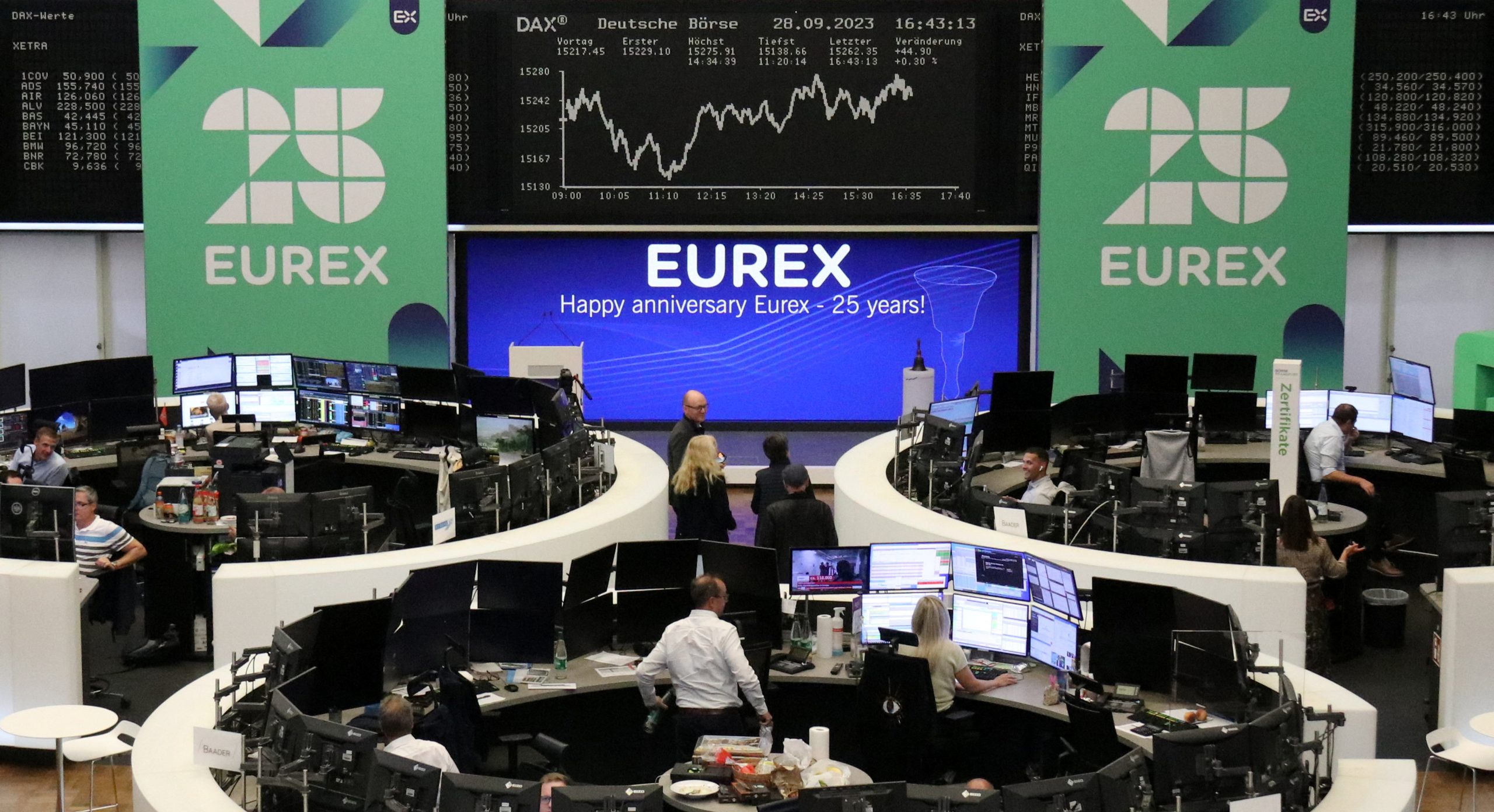
European equity markets posted broad-based gains during the opening session.
The pan-European Stoxx 600 climbed 0.7%, while Germany’s DAX advanced 1.0%.
France’s CAC 40 rose 0.9%, and the U.K.’s FTSE 100 gained 0.3%, supported by strength in technology and growth-oriented sectors.
The positive performance reflected investor confidence despite ongoing geopolitical concerns.
Oil Prices Pull Back From Recent Highs
Crude oil prices eased after posting strong gains in the previous session.
Brent crude futures fell 0.9% to $94.13 per barrel, giving back a portion of Monday’s rally that was driven by concerns over developments in U.S.-Iran relations.
Earlier reports suggested that Iran had stopped communicating with the United States through diplomatic intermediaries, fueling fears that negotiations could be breaking down and increasing concerns about potential supply disruptions in global energy markets.
Middle East Ceasefire Hopes Support Sentiment
Market sentiment received some support after Lebanon announced a partial ceasefire agreement between Israel and the Iran-backed Hezbollah group.
The development was viewed as a modest step toward reducing tensions in the region, although the situation remains fragile.
According to reports, Israel’s military intercepted two projectiles launched from Lebanon on Tuesday, underscoring that hostilities have not fully ceased despite the agreement.
Investors continue to monitor developments closely as geopolitical risks remain elevated.
Trump Signals Optimism on Iran Deal
Adding to the mixed outlook, U.S. President Donald Trump stated that he believes a peace agreement with Iran could be reached within the next week.
In comments to ABC News, Trump acknowledged that negotiations had experienced what he described as a “little glitch,” likely referring to Iran’s objections regarding Israeli military actions in Lebanon.
The president nevertheless maintained that discussions were moving forward and suggested that a breakthrough remains possible.
Contradictory Messages Keep Markets Guessing
Despite Trump’s optimistic remarks, uncertainty remains over the actual status of negotiations.
It is still unclear whether direct or indirect talks between Washington and Tehran have officially resumed.
Earlier in the day, Trump told CNBC that he was unconcerned if Iran had stopped responding to negotiations. Later, however, he said discussions were “progressing rapidly,” sending mixed signals to investors.
As markets await greater clarity, geopolitical developments remain a key factor influencing both energy prices and broader investor sentiment across global financial markets.