2026 FIFA World Cup Expected to Boost Tourism and Hospitality Across North America
The 2026 FIFA World Cup is projected to provide a temporary boost to tourism, hospitality, and leisure spending throughout North America, according to a recent report from William Blair.
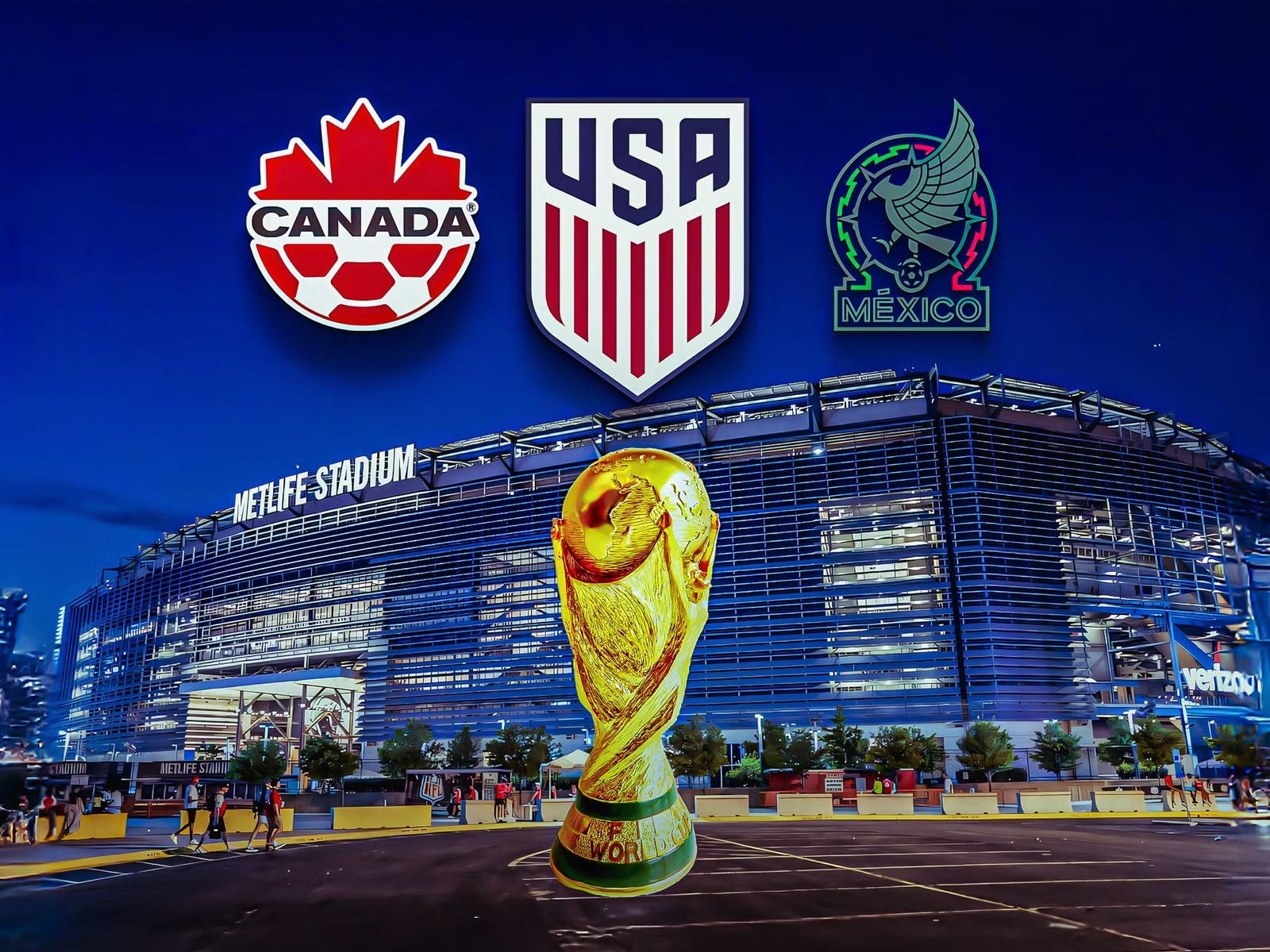
The tournament will kick off on June 11, 2026, and will be jointly hosted by the United States, Canada, and Mexico. It will be the largest World Cup in history, featuring 48 national teams competing across 104 matches in 16 host cities.
Tourism and Hospitality Set to Benefit Most
William Blair believes businesses tied to tourism, travel, hospitality, and entertainment are likely to be the primary beneficiaries of the tournament.
The report noted that consumer spending on live sporting events has remained resilient since the pandemic, creating favorable conditions for increased visitor activity during the World Cup.
Hotels, restaurants, bars, transportation providers, and entertainment venues are expected to experience stronger demand as millions of fans travel across the host nations.
Previous FIFA Events Offer Positive Signals
Data from the 2025 FIFA Club World Cup suggests that major football tournaments can generate meaningful local economic activity.
According to the report, spending within stadium-area ZIP codes increased approximately 7% year-over-year during the competition. Much of that growth was driven by higher spending at restaurants, bars, and hospitality-related businesses located near event venues.
These findings provide a useful indication of how local economies could benefit during the 2026 World Cup.
Smaller Host Cities Could See the Largest Gains
William Blair highlighted that cities without established international tourism industries may experience the strongest economic impact.
In major tourism destinations such as New York and Miami, World Cup visitors may simply replace existing tourists rather than generate substantial new demand. By contrast, smaller host markets could see a more noticeable increase in visitor spending and local business activity.
As a result, the economic benefits of the tournament are expected to vary significantly between host cities.
Ticket Prices and Travel Challenges Remain Key Concerns
Despite the positive outlook, several factors could limit the tournament’s economic impact.
The report pointed to FIFA’s dynamic ticket pricing strategy, which has pushed some ticket prices to record highs. Although prices for several matches have recently been reduced due to softer demand, affordability remains a concern for many fans.
International travel is another area of uncertainty. Hotel industry surveys have indicated booking activity below expectations in several host locations.
Visa processing delays, rising travel costs, and stricter entry requirements could discourage some overseas visitors from attending the tournament.
Potential Impact on Financial Markets
Beyond tourism and hospitality, the World Cup could also influence financial markets.
Historical data cited by William Blair showed that stock trading volumes often decline during World Cup matches, particularly in countries where football enjoys widespread popularity.
The report also found that nations winning the World Cup have historically outperformed global equity markets by an average of 5.5% during the month following the final match.
Host countries have generally experienced stronger stock market performance before and during the tournament, with gains often moderating once the event concludes.
Overall Economic Impact Expected to Be Limited
While the 2026 FIFA World Cup is expected to generate substantial tourism activity and increased spending in select sectors, William Blair believes the event is unlikely to significantly alter overall economic growth across the United States, Canada, or Mexico.
Instead, the tournament is expected to provide a short-term boost to travel, hospitality, and entertainment industries while delivering localized benefits to certain host cities throughout North America.