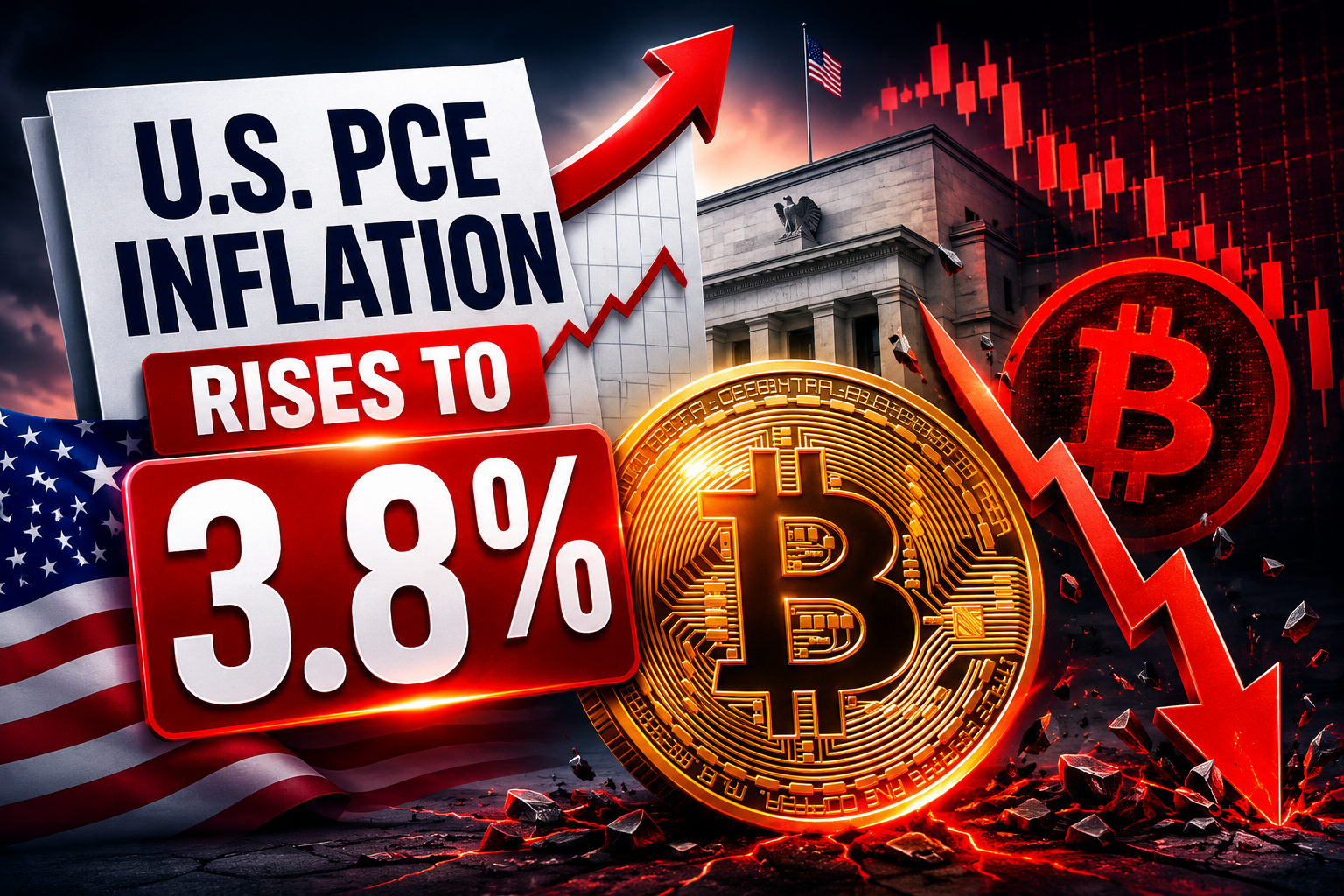
The latest U.S. inflation data showed that price pressures remained elevated in April, adding fresh uncertainty to financial markets and pushing Bitcoin lower alongside other risk assets. The Personal Consumption Expenditures (PCE) Price Index, which is the Federal Reserve’s preferred inflation measure, came in line with Wall Street expectations but continued to signal persistent inflation concerns.
According to data released on Friday, the U.S. headline PCE inflation rose 0.4% month-over-month in April, slightly below the expected 0.5% increase. On an annual basis, headline PCE reached 3.8%, matching analyst forecasts and marking the highest reading since August 2023. The latest figure also represented a notable increase from March’s 3.5% level.
Meanwhile, Core PCE inflation, which excludes food and energy prices, increased by 0.2% in April. This came below expectations of 0.3%, while the yearly Core PCE figure stood at 3.3%, in line with market estimates, according to the U.S. Bureau of Economic Analysis.
The inflation report arrived at a critical moment for investors, as markets continue searching for clues regarding the Federal Reserve’s future monetary policy decisions. Persistent inflation has strengthened expectations that interest rates could remain higher for longer.
The CME FedWatch Tool now reflects growing market expectations for an extended hawkish cycle from the Federal Reserve. Traders are increasingly pricing in the possibility of additional rate hikes through 2027, with expectations pointing toward as much as 100 basis points of tightening over that period.
The hotter inflation environment has weighed heavily on Bitcoin and the broader crypto market. Analysts noted that rising inflation, combined with geopolitical tensions linked to the ongoing U.S.-Iran conflict, has created unfavorable macroeconomic conditions for risk assets.
Following the inflation release, the U.S. dollar index and benchmark 10-year Treasury yields moved higher, while equities, gold, and cryptocurrencies faced renewed selling pressure. Bitcoin extended its losses as investor sentiment weakened across global markets.
Crypto analyst Michaël van de Poppe commented that Bitcoin’s recent weakness does not necessarily confirm a broader market collapse. According to him, the correction appears linked to month-end portfolio rebalancing by major asset managers.
Van de Poppe also highlighted that Bitcoin failed to break above the important $77,000 resistance level, which contributed to broader weakness among altcoins. He noted that Bitcoin is currently testing a key support zone and warned that if support fails, prices in the lower $60,000 range could be revisited.
Despite the current bearish sentiment, the analyst maintained a cautiously optimistic outlook for the long-term crypto market. He described market sentiment as worse than during the 2022 and 2018 downturns but suggested that some digital assets could eventually benefit from a market transition phase once conditions improve.