Trump Administration Sanctions Iranian Hormuz Toll Authority
The administration of U.S. President Donald Trump announced new sanctions on Wednesday targeting Iran’s Persian Gulf Strait Authority (PGSA), an entity established by Tehran to potentially collect tolls and transit fees from vessels passing through the Strait of Hormuz.
The U.S. Treasury Department confirmed that the PGSA was added to the Office of Foreign Assets Control (OFAC) sanctions list due to alleged connections with Iran’s Islamic Revolutionary Guard Corps (IRGC).
Sanctions Target Shipping and Transit Payments
The sanctions include restrictions on shipowners and operators that arrange shipping transits through the PGSA or make payments and toll-related transactions with the organization.
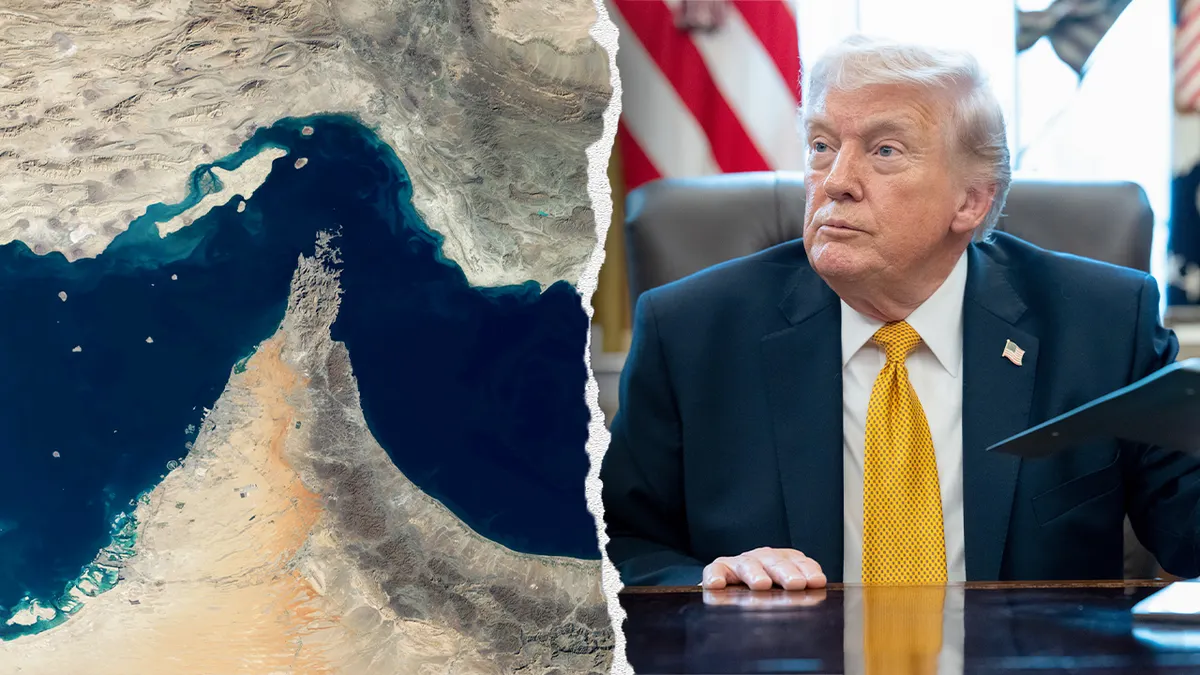
Iran created the PGSA in early May as part of an effort to formalize greater control over traffic passing through the strategically important Strait of Hormuz.
Tehran claimed authority over waters stretching from the port of Umm Al Quwain in the United Arab Emirates to Kuh-e Mobarak in Iran.
Trump Rejects Iran-Oman Hormuz Proposal
The sanctions were introduced shortly after President Donald Trump dismissed reports from Iranian state media claiming that Iran had reached an unofficial framework agreement with Oman regarding joint management of shipping traffic through Hormuz.
Under the proposed framework, Iran would reportedly restore commercial shipping activity through the Strait of Hormuz to pre-conflict levels within one month.
However, Trump strongly rejected the idea of Iran and Oman jointly controlling the waterway, emphasizing that the Strait of Hormuz represents international waters that must remain open to global shipping.
Strait of Hormuz Remains Key Geopolitical Flashpoint
The Strait of Hormuz has become one of the central issues in the ongoing conflict between the United States, Israel and Iran.
Tehran has effectively restricted passage through the waterway since hostilities between the U.S. and Israel escalated in late February.
The disruption has impacted nearly one-fifth of global oil supplies, contributing to sharp increases in oil prices and creating wider economic pressure on international shipping and trade.
Oil Markets and Global Trade Under Pressure
Beyond the energy sector, reduced shipping activity through Hormuz has also disrupted broader supply chains and global trade flows.
Analysts believe that a near-term agreement to fully reopen the Strait of Hormuz appears increasingly unlikely, especially after the United States and Iran resumed direct military exchanges this week, including additional air strikes that further weakened the fragile ceasefire established earlier in April.