Fed’s Waller Says Rate Cut Talk Is ‘Crazy’ as Inflation Risks Persist
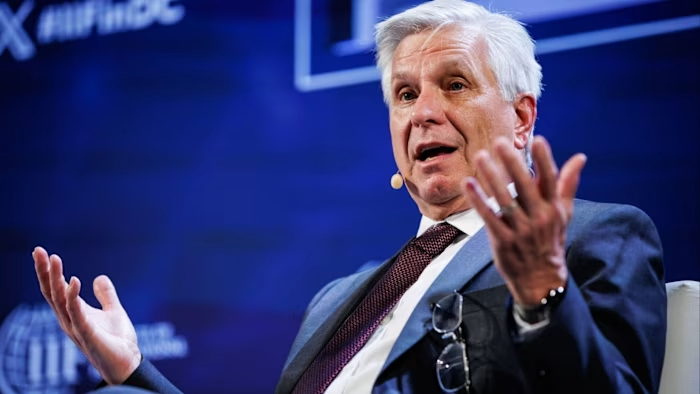
Christopher Waller, one of the most influential voices within the U.S. central bank, signaled a noticeably more hawkish stance on monetary policy, arguing that the Federal Reserve should remove its longstanding “easing bias” and leave open the possibility of future interest rate increases.
Although Waller clarified he is not currently advocating for a rate hike, he stressed that interest rates should remain unchanged until inflation shows stronger signs of returning toward the Fed’s 2% target.
Inflation Concerns Keep Pressure on the Federal Reserve
Speaking at an economic forum in Germany, Waller warned against expectations of near-term interest rate cuts, citing persistent inflation and a more stable labor market.
According to Waller, discussions around lowering borrowing costs in the coming months are difficult to justify given current economic data.
He argued that inflation remains above target and appears to be spreading more broadly across the economy, increasing concerns that price pressures could remain elevated for longer.
Waller Supports Removing the Fed’s ‘Easing Bias’
With the Fed’s preferred inflation gauge reaching 3.8% in April, Waller said he would support removing language in policy statements suggesting future rate cuts remain likely.
Instead, he favors a more neutral approach that would indicate a rate increase is just as possible as a rate reduction depending on incoming economic data.
The shift reflects growing concerns among policymakers that inflation may not cool as quickly as previously expected.
Markets Quickly Increase Bets on Future Rate Hikes
Waller’s remarks immediately affected market expectations.
Traders in interest-rate futures increased bets that the Federal Reserve could raise rates later this year. Market pricing indicated roughly a two-thirds probability of a quarter-point rate increase by October, with growing expectations for possible action as early as September.
Before his comments, investors had largely expected any potential rate increase to occur closer to December.
Labor Market Stability Changes the Fed Outlook
A stronger-than-expected labor market is also influencing Waller’s position.
He said weakening employment conditions no longer appear to be the dominant factor guiding monetary policy decisions, reducing one of the main arguments previously supporting lower interest rates.
New Fed Chair Faces Increasingly Hawkish Environment
Waller’s comments came shortly before Kevin Warsh was expected to be sworn in as the new Federal Reserve Chair, replacing outgoing Chair Jerome Powell.
The leadership transition comes amid rising inflation concerns and political pressure regarding interest rates.
Donald Trump has repeatedly argued in favor of lower borrowing costs and previously criticized Powell for maintaining tighter monetary policy.
However, recent comments from Fed officials suggest policymakers may increasingly lean toward a tougher stance on inflation.
More Fed Officials Open to Additional Rate Hikes
Minutes from the Federal Reserve’s April meeting showed a growing number of officials believe additional rate increases may become necessary if inflation pressures continue expanding beyond energy costs and tariff-related effects.
Three Fed policymakers reportedly dissented at the April meeting in favor of adopting a more hawkish policy position immediately.
The Federal Reserve kept interest rates unchanged at its previous meeting and is widely expected to maintain current levels again during its June 16–17 policy gathering.
Inflation Expectations Remain Key Risk Indicator
Looking ahead, Waller said he will closely monitor inflation expectations over the next two to four years.
He warned that any significant increase could be concerning and risk the Federal Reserve falling “behind the curve” again — similar to the 2021–2022 period when inflation surged to its highest level in four decades.