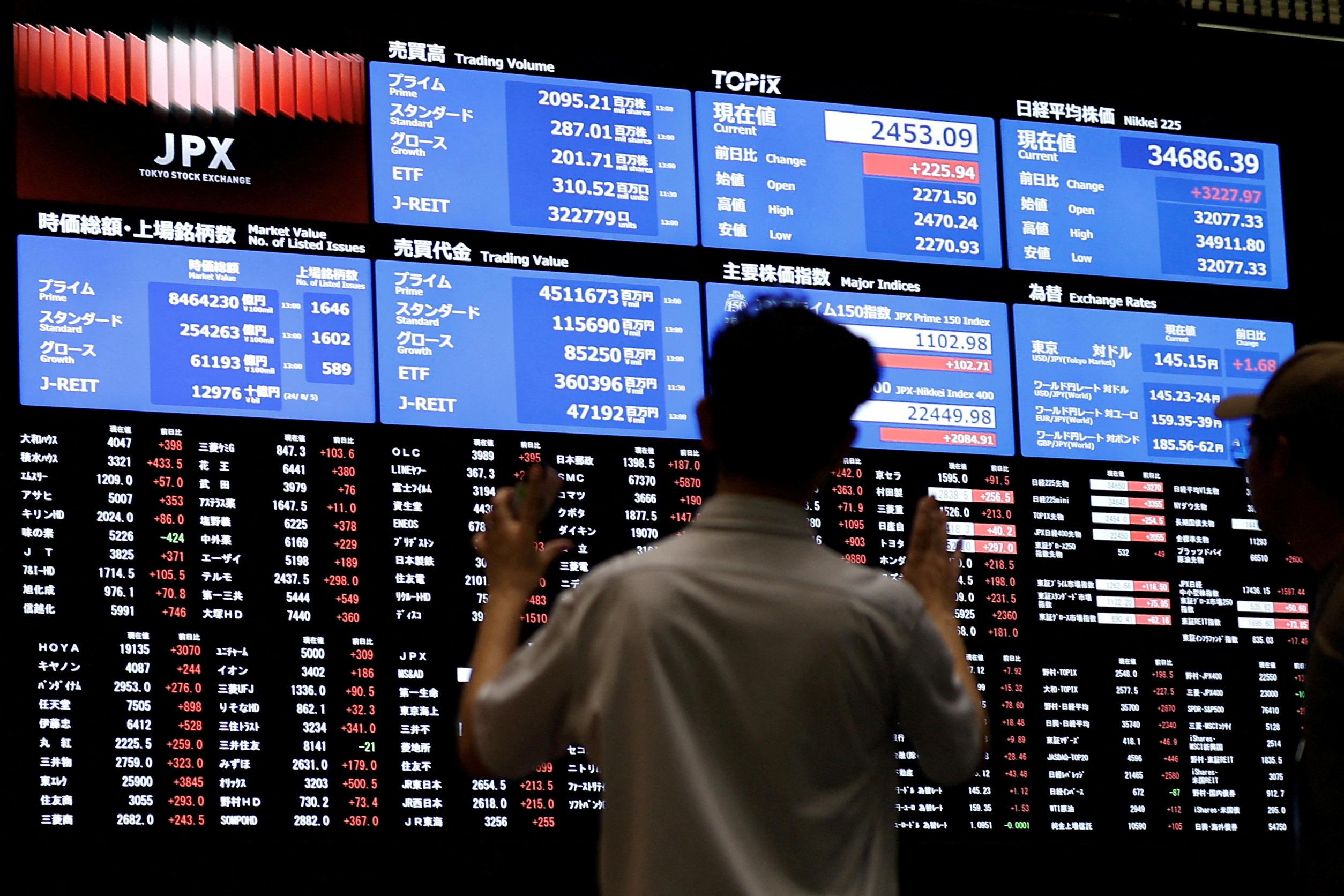
Asian Stocks Decline as Tech Selloff Deepens and Samsung Strike Concerns Grow
Asian stock markets moved lower on Wednesday, with technology shares leading declines as investors adopted a cautious stance ahead of quarterly earnings from semiconductor giant Nvidia.
Weak sentiment followed another negative session on Wall Street, where major U.S. indexes closed lower for a third consecutive day amid pressure on technology and chip-related stocks.
U.S. stock futures showed little movement during Asian trading hours.
South Korea’s KOSPI Drops Sharply as Samsung Faces Strike Risk
South Korea’s stock market recorded some of the region’s biggest losses, with the KOSPI index falling more than 2.5%.
Shares of Samsung reversed earlier gains and dropped over 4% after negotiations between the company and labour unions reportedly broke down over unresolved issues.
According to reports, Samsung’s union plans to begin strike action, increasing concerns over potential disruptions in semiconductor production.
The development added further pressure to investor sentiment surrounding the technology sector.
Japanese Stocks Also Retreat
Japan’s major indexes followed the broader regional downturn:
- The Nikkei 225 declined 1.5%
- The broader TOPIX index fell 1.7%
Higher global bond yields continued to weigh on growth-focused and technology companies, particularly semiconductor firms that have benefited from enthusiasm surrounding artificial intelligence.
Nvidia Earnings Become Major Test for AI Rally
Investors are closely watching upcoming quarterly results from Nvidia, expected later on Wednesday.
The earnings report is viewed as an important indicator of whether strong spending on artificial intelligence infrastructure remains sustainable.
While markets broadly expect another strong performance, some investors have become cautious following Nvidia’s substantial gains during the year.
Results from the company could significantly influence sentiment across global technology and semiconductor stocks.
Rising Oil Prices and Geopolitical Risks Add Pressure
Oil prices remained elevated above $110 per barrel despite easing slightly after comments from U.S. President Donald Trump suggesting a delay in planned military action involving Iran.
However, Trump later warned military action could still occur if diplomatic efforts fail, keeping inflation concerns and geopolitical risks firmly in focus.
Persistently high energy prices continue increasing uncertainty around inflation and interest rate expectations.
Markets Await Federal Reserve Minutes
Investors are also preparing for the release of minutes from the Federal Reserve’s April policy meeting.
The report could provide additional insight into future U.S. interest rate decisions and inflation concerns, factors that remain highly influential for global equity markets.
China Keeps Loan Prime Rates Unchanged for 12th Consecutive Month
China maintained its benchmark lending rates for a 12th straight month as authorities balanced weak domestic demand against rising inflation pressures linked to higher energy costs.
The People’s Bank of China left:
- One-year Loan Prime Rate (LPR): 3.00%
- Five-year Loan Prime Rate (LPR): 3.50%
The decision matched market expectations but offered little support to Chinese equities.
Chinese and Regional Markets Extend Losses
Chinese stock markets continued lower as concerns over sluggish credit growth and prolonged weakness in the property sector persisted.
Market performance across the region included:
- Shanghai Composite: -0.5%
- CSI 300 Index: -0.4%
- Hang Seng Index: -1.1%
- Australia’s ASX 200: -1.2%
- Singapore Straits Times Index: -0.8%
- India’s Nifty 50 futures: -0.5%
Regional markets remained under pressure from a combination of technology weakness, rising bond yields, inflation concerns and geopolitical uncertainty.