Trump Says Xi Agrees Iran Must Not Obtain Nuclear Weapons
U.S. President Donald Trump said his patience with Iran is running out and revealed that discussions with Chinese President Xi Jinping resulted in a shared position: Iran should not be allowed to develop nuclear weapons and the Strait of Hormuz must remain open.
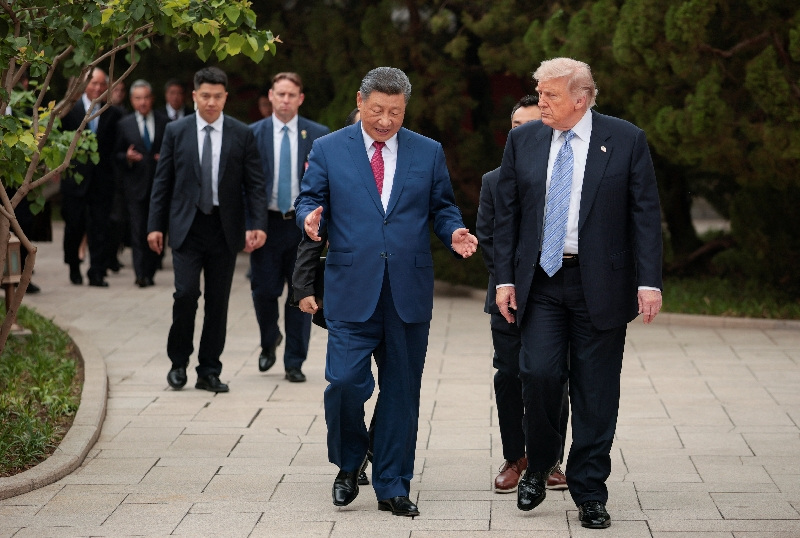
Speaking after his second day of talks with Xi in Beijing, Trump said the leaders addressed several major issues including the Iran conflict, Taiwan, trade relations and global security.
“We’ve settled a lot of different problems that other people wouldn’t have been able to solve,” Trump stated following the meeting.
Strait of Hormuz Remains a Major Global Concern
Iran effectively restricted most shipping traffic through the Strait of Hormuz following U.S.-Israeli military strikes that began on February 28. The disruption triggered major concerns over global energy supplies, as nearly one-fifth of worldwide oil and liquefied natural gas shipments typically pass through the strategic waterway.
China remains one of Iran’s closest economic partners and the largest buyer of Iranian oil, making stability in the region critical for Beijing.
The White House said Trump and Xi agreed the strait should remain open. According to officials, Xi expressed opposition to further militarisation of the waterway and rejected attempts to impose shipping tolls, something Iran has previously threatened.
Trump Pressures Iran Over Nuclear Program
Trump signaled increasing frustration with Tehran and urged Iranian leaders to negotiate.
In an interview with Fox News, Trump stated:
“I am not going to be much more patient. They should make a deal.”
Diplomatic efforts have stalled as Iran continues to reject demands to end its nuclear program or surrender enriched uranium reserves. Iranian officials maintain that their nuclear activities are peaceful and deny any intention to build nuclear weapons.
On Iran’s uranium stockpile, Trump suggested securing the material may be more important politically than strategically, although he acknowledged preferring U.S. control over it.
China’s Position on Iran Remains Unclear
Chinese President Xi Jinping did not publicly comment on his discussions with Trump regarding Iran. However, China’s foreign ministry issued a statement criticizing the ongoing conflict and calling for an end to hostilities.
“This conflict, which should never have happened, has no reason to continue,” the ministry said.
Trump also claimed Xi pledged not to provide military equipment to Iran, calling the alleged commitment a significant development.
“He said he’s not going to give military equipment, that’s a big statement,” Trump said.
The White House further noted that Xi expressed interest in increasing purchases of American oil, potentially reducing China’s long-term dependence on energy routes through the Strait of Hormuz.
Diplomacy Stalls as Conflict Continues
Efforts to negotiate an end to the conflict have slowed after both Iran and the U.S. rejected each other’s latest proposals.
Analysts remain skeptical that China will place substantial pressure on Iran, given Tehran’s strategic importance as a geopolitical counterbalance to U.S. influence.
Meanwhile, U.S. Treasury Secretary Scott Bessent said China has strong incentives to support reopening the Strait of Hormuz because uninterrupted energy flows serve Beijing’s own economic interests.
Security Risks Increase Around Key Shipping Routes
Tensions in the region continue to impact maritime security.
An Indian cargo ship carrying livestock sank near Oman this week after reportedly being struck by a missile or drone, according to maritime security assessments. All crew members were rescued.
Separately, British maritime authorities reported that unauthorized personnel boarded a vessel near the UAE port of Fujairah and redirected it toward Iran.
Fujairah is strategically important because it allows some oil shipments to bypass the Strait of Hormuz, reducing exposure to disruptions.
Lebanon Talks Show Signs of Diplomatic Progress
Despite broader regional instability, talks between Lebanese and Israeli officials in Washington were described as constructive by senior U.S. officials.
Discussions are expected to continue as international efforts focus on reducing tensions across the Middle East.
Iran Retains Influence Despite Military Pressure
Trump said the objectives behind military action against Iran include dismantling its nuclear capabilities, reducing threats to neighboring countries and increasing pressure on Iran’s leadership.
A senior U.S. admiral told lawmakers that Iran’s ability to threaten regional interests has been significantly weakened. However, questions remain over Iran’s remaining missile and drone capabilities.
Although Iran has suffered heavy losses during the conflict, its continued influence over the Strait of Hormuz has strengthened its negotiating position.
Tehran is reportedly seeking sanctions relief, compensation for war-related damages and international recognition of its control over the vital shipping corridor.