Kevin Warsh Prepares for Potential Federal Reserve Overhaul
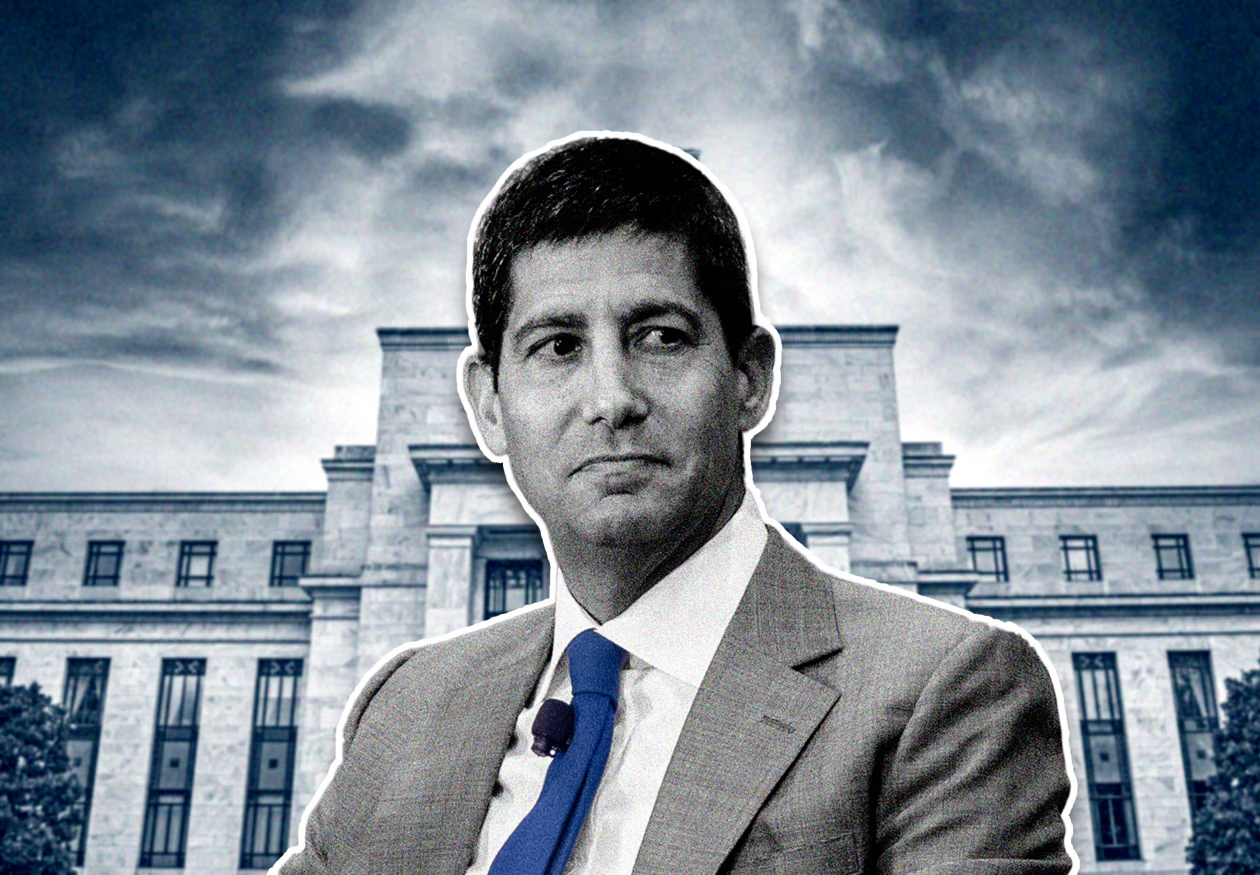
Fifteen years after leaving the Federal Reserve over disagreements surrounding aggressive bond-buying policies, Kevin Warsh is now expected to return as the central bank’s next leader with an ambitious reform agenda.
However, while Warsh is expected to push for major changes across monetary policy, inflation analysis, and Federal Reserve communications, analysts believe meaningful reforms could take considerable time to implement.
Warsh Has Long Criticized Fed Policies
Warsh has spent years criticizing several aspects of Federal Reserve policy, including the central bank’s handling of inflation, its willingness to intervene in financial markets, and its increasingly transparent communication strategy.
He has also been a vocal critic of the Fed’s massive balance sheet, which expanded dramatically after years of bond-buying programs and currently stands at roughly $6.7 trillion.
Experts say Warsh’s proposals could require both technical adjustments to economic models and politically sensitive changes in how the Fed communicates with markets and the public.
Federal Reserve Communication Could Change
One area where Warsh could move relatively quickly is the tone and style of Federal Reserve communication.
Analysts believe he may reduce the prominence of press conferences and move away from the modern “forward guidance” approach adopted after the 2007–2009 financial crisis.
That approach focused heavily on providing markets with detailed guidance about future monetary policy decisions.
Former Fed Governor Randall Kroszner said Warsh is unlikely to make abrupt disruptive changes, emphasizing that any major reforms would likely unfold gradually over time.
Trump Expected to Secure Warsh Confirmation
Donald Trump nominated Warsh to replace current Fed Chair Jerome Powell, whose term officially ends this week.
Warsh’s confirmation is widely expected to pass through the U.S. Senate.
Trump repeatedly clashed with Powell over interest rates and broader Federal Reserve policy during Powell’s tenure.
The administration also faced criticism over efforts targeting Federal Reserve independence, including legal and political pressure involving Fed Governor Lisa Cook and investigations surrounding Powell.
Interest Rates Remain Warsh’s Immediate Challenge
Warsh’s first major test as Fed Chair would likely involve balancing Trump’s calls for lower interest rates against economic data that currently supports tighter monetary policy.
The U.S. unemployment rate remains relatively low, while inflation continues running above the Fed’s 2% target.
Some Federal Reserve policymakers have already begun discussing the possibility that additional rate hikes may eventually become necessary if inflation pressures continue broadening across the economy.
Warsh Believes AI Could Lower Inflation
Despite current inflation concerns, Warsh has argued that several long-term factors could eventually justify lower interest rates.
Among them are productivity gains from artificial intelligence, reductions in the Federal Reserve’s bond holdings, and alternative inflation measures that may show slower price growth than official data currently suggests.
However, economists caution that proving these theories and building consensus among policymakers could take years.
Internal Reviews and Policy Debates Expected
Former Federal Reserve officials expect Warsh’s early months to focus heavily on internal policy reviews and economic research discussions.
Potential reforms could include changes to bank reserve rules, adjustments to balance sheet management, and the incorporation of alternative inflation indicators into policy debates.
Warsh has also expressed interest in reforming the Fed’s Summary of Economic Projections, including the widely followed “dot plot” chart that outlines future interest rate expectations.
Experts Divided Over Communication Changes
While some economists support revisiting parts of the Federal Reserve’s communication framework, many remain cautious about removing key tools such as post-meeting press conferences.
Former Federal Reserve Bank of St. Louis President James Bullard described Fed press conferences as an international standard for explaining monetary policy decisions.
A recent survey conducted by the Brookings Institution also showed that most Federal Reserve experts still consider the current communication system highly valuable for shaping market expectations.
Debate Grows Around AI and Inflation Risks
Warsh’s views on artificial intelligence and inflation have also sparked growing debate among economists.
Some analysts agree that AI-driven productivity improvements could eventually reduce inflationary pressure by lowering costs across the economy.
However, others warn that expectations surrounding AI-driven wealth gains could actually increase spending and fuel inflation in the near term.
Austan Goolsbee recently suggested that growing excitement surrounding AI could push consumers and investors to spend more aggressively today, potentially forcing the Fed to maintain higher interest rates.
Ultimately, the debate centers on whether future productivity gains will offset current inflation risks quickly enough to justify easier monetary policy.