Asian Currencies Slip as Dollar Strengthens on US-Iran Tensions
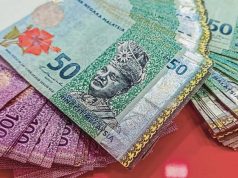
Most Asian currencies traded slightly lower on Friday, while the U.S. dollar strengthened as investors monitored renewed military tensions between the United States and Iran alongside ongoing hopes for a potential peace agreement in the Middle East.
The U.S. Dollar Index rose 0.2% during Asian trading hours, recovering from recent lows. U.S. Dollar Index futures also gained 0.2%.
Strait of Hormuz Tensions Increase Market Caution
Demand for safe-haven assets returned after U.S. and Iranian forces exchanged fire near the Strait of Hormuz on Thursday, increasing concerns about a broader escalation in the region.
Iran accused the United States of targeting vessels entering the Strait of Hormuz and launching strikes near Qeshm Island. Meanwhile, Washington stated that its military acted in self-defense after Iranian drones, missiles, and small boats reportedly targeted three U.S. Navy destroyers passing through the strategic shipping route.
Despite the latest confrontation, President Donald Trump said the ceasefire agreement remained active and described the incident as limited in scope. Iranian officials also stated that conditions had stabilized.
Financial markets interpreted the comments as a sign that both countries were still attempting to avoid a wider regional conflict.
Analysts at MUFG noted that Asian foreign exchange markets could remain range-bound as investors wait for further progress on a possible U.S.-Iran agreement and upcoming U.S. economic data.
Asian Currencies Show Mixed Performance
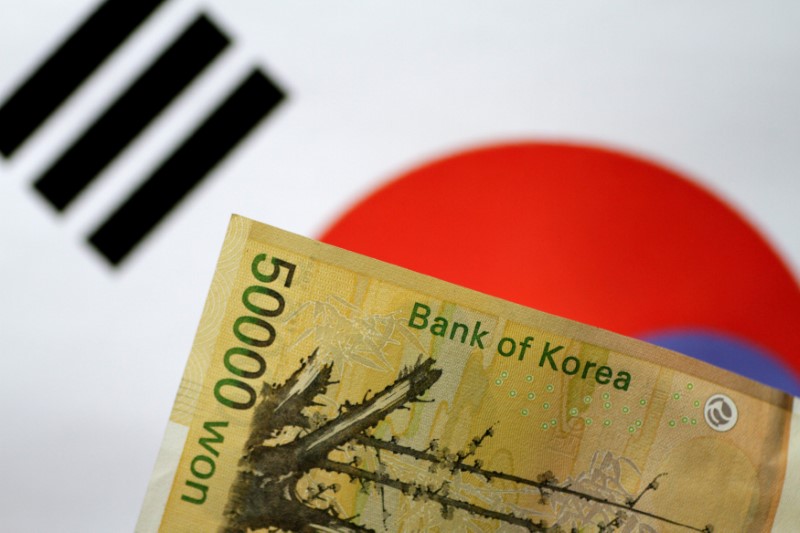
Japan’s USD/JPY currency pair traded mostly unchanged, while South Korea’s USD/KRW pair rose 0.4%.
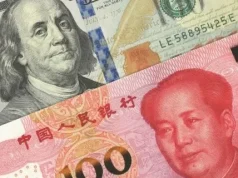
China’s USD/CNY pair edged 0.1% higher, reflecting mild pressure on the Chinese yuan.
Meanwhile, India’s USD/INR pair remained largely stable, while Singapore’s USD/SGD pair gained 0.1%.
The Australian dollar weakened slightly, with AUD/USD falling 0.2%.
Traders Await Key US Jobs Report
Regional currencies remained under pressure ahead of Friday’s closely watched U.S. nonfarm payrolls report, which is expected to provide additional clues on the health of the U.S. economy and the future direction of Federal Reserve interest rates.
MUFG analysts forecast that the U.S. economy added 45,000 jobs in April, slightly below the Bloomberg consensus estimate of 65,000 jobs.
The bank also expects the U.S. unemployment rate to rise modestly to 4.4% from 4.3%, although ongoing jobless claims data continues to indicate a relatively resilient labor market.