Wall Street Moves Higher as Geopolitical Tensions Ease
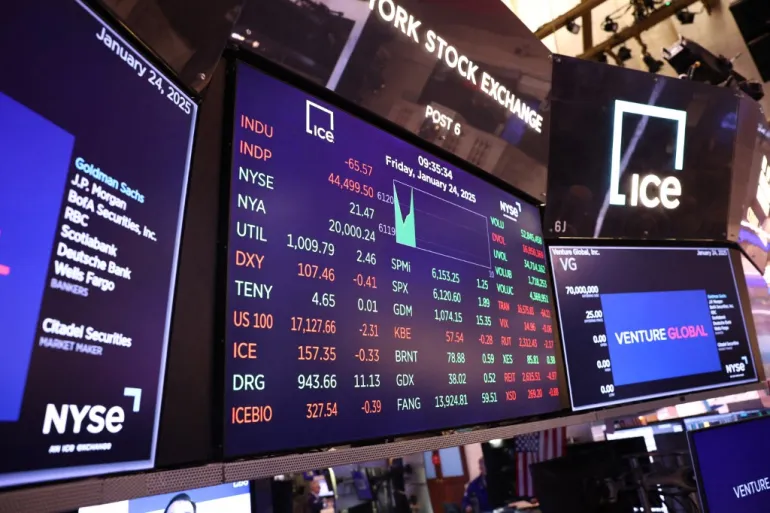
U.S. equities traded higher on Tuesday, supported by improving sentiment after more measured rhetoric from Washington following a spike in tensions with Iran. Gains in technology and materials stocks, along with a strong earnings season, also contributed to the upward momentum.
At 11:15 ET (15:15 GMT), the S&P 500 rose 0.8% to 7,259.30 points, while the NASDAQ Composite gained 1% to 25,315.34. The Dow Jones Industrial Average climbed 0.7% to 49,271.79.
U.S. Clarifies Position on Hormuz Operation
Tensions in the Middle East escalated over the weekend after Donald Trump announced “Project Freedom,” an initiative aimed at reopening shipping routes through the Strait of Hormuz—a critical passage for global oil supply.
Iran responded with missile activity targeting U.S. naval assets, although U.S. Central Command stated that no ships were hit. Officials confirmed that American-flagged commercial vessels were able to pass through the strait safely.
Meanwhile, the United Arab Emirates reported intercepting missile and drone attacks, with damage including a fire at a major oil facility in Fujairah.
To calm markets, U.S. officials emphasized that the operation is defensive and temporary. Defense Secretary Pete Hegseth stated that the mission is focused solely on ensuring safe passage for commercial shipping and not on escalating conflict.
Diplomatic Signals Help Ease Market Concerns
Additional signs of de-escalation came from Abbas Araghchi, who indicated that diplomatic talks are progressing and reiterated that the crisis cannot be resolved through military action alone.
These developments helped stabilize investor sentiment after recent volatility tied to geopolitical risks.
Oil Prices Retreat After Recent Surge
Oil prices declined on Tuesday after a sharp rally in the previous session. Brent crude fell 3.3% to $110.63 per barrel, while U.S. West Texas Intermediate (WTI) dropped 4.3% to $101.84.
The pullback was partly driven by easing geopolitical concerns and signs that shipping activity through the Hormuz Strait may be resuming. Maersk confirmed that one of its vessels successfully exited the Gulf with support from U.S. forces.
Labor Market Signals Mixed Ahead of Jobs Report
Away from geopolitical developments, investors also monitored labor market data ahead of the upcoming nonfarm payrolls report.
According to the Bureau of Labor Statistics, job openings stood at 6.866 million in March, slightly below the previous month but above expectations. Hiring activity increased to 5.554 million, with the hiring rate rising to 3.5%.
However, some economists cautioned that underlying trends still point to a gradual cooling in labor demand.
Services Sector Growth Moderates
Data from the Institute for Supply Management showed that U.S. services activity continued to expand in April, with the index at 53.6. While still above the expansion threshold of 50, the figure came in slightly below expectations and the prior month’s reading.
Importantly, the prices paid component remained stable, suggesting that inflation pressures may not be accelerating as sharply as feared despite higher energy costs.
Earnings Season Supports Market Optimism
Corporate earnings remain a key driver of market sentiment. Chipmaker Advanced Micro Devices is set to report results later in the day, with investors closely watching its performance against rival NVIDIA in the AI space.
Meanwhile, Palantir Technologies exceeded expectations and raised its outlook, although its stock declined amid concerns over rising expenses.
Overall, the earnings season has been stronger than anticipated, with S&P 500 companies expected to deliver profit growth of around 28% year-over-year for the first quarter—well above earlier forecasts.