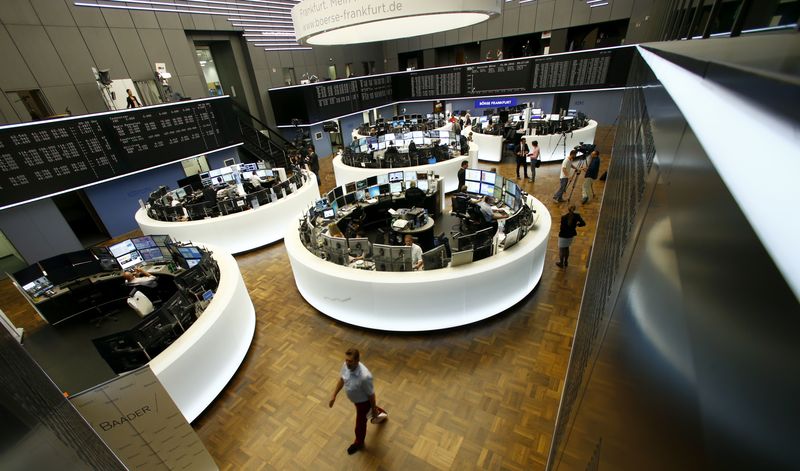
European Stocks Slip as Hormuz Disruptions Weigh on Sentiment
European equities moved lower on Wednesday, as investors reacted cautiously to Donald Trump’s decision to extend the ceasefire with Iran. Ongoing shipping disruptions in the Strait of Hormuz continued to overshadow any optimism from the temporary truce.
Major European Indices Trade in the Red
By mid-session, the pan-European Stoxx 600 declined by 0.2%. Germany’s DAX and France’s CAC 40 also posted losses of 0.2% and 0.4% respectively, while the U.K.’s FTSE 100 slipped by 0.1%. The broad-based weakness reflected persistent geopolitical uncertainty and concerns over energy markets.
Escalation in the Strait of Hormuz
Tensions intensified after Iranian state media reported that the Islamic Revolutionary Guards Corps targeted vessels in the Strait of Hormuz. According to reports, at least two ships were attacked and seized, further tightening control over this critical global shipping route.
The situation was reinforced by updates from U.K. Maritime authorities, which confirmed separate incidents involving vessels in the region. These developments have heightened fears of prolonged disruption in one of the world’s most important oil transit corridors.
Ceasefire Extension Offers Limited Relief
Trump announced an extension of the ceasefire just hours before its expected expiration, stating that the move was made following mediation efforts by Pakistan. The truce will remain in place until Iran presents a unified proposal for peace.
Iranian officials acknowledged the extension but expressed skepticism toward further negotiations. Planned diplomatic talks, including a potential visit by U.S. Vice President JD Vance to Pakistan, were postponed amid rising tensions.
Energy Supply Risks Fuel Inflation Concerns
Despite the ceasefire, the U.S. blockade of Iranian ports remains in place, and tanker traffic through the Strait of Hormuz is still severely restricted. Given that roughly 20% of global oil flows through this route, disruptions have sparked fears of an energy-driven inflation surge.
These concerns were reinforced by data showing U.K. inflation rising to 3.3% in March, largely driven by the sharpest increase in fuel costs in three years.
Oil and Gas Prices Remain Elevated
Brent crude, the global oil benchmark, traded around $98 per barrel, slightly below its peak but still significantly higher than pre-conflict levels. Meanwhile, natural gas prices also remain elevated, partly due to damage to production facilities in the Middle East, including Qatar.
Analysts warn that continued supply disruptions could keep energy prices high, posing risks to economic growth and central bank policy decisions.
Corporate Earnings Provide Mixed Signals
Amid geopolitical uncertainty, investors also focused on corporate earnings across Europe. ABB raised its full-year sales outlook, citing resilient demand, which pushed its shares higher.
AkzoNobel reported better-than-expected profits due to pricing improvements and cost controls, while Sweden’s Tele2 posted strong earnings growth, supporting its stock performance.