Wall Street Opens Lower as US-Iran Tensions Resurface
U.S. stock markets opened mostly lower on Monday as renewed tensions between the United States and Iran raised doubts over the durability of a ceasefire agreement set to expire later this week.
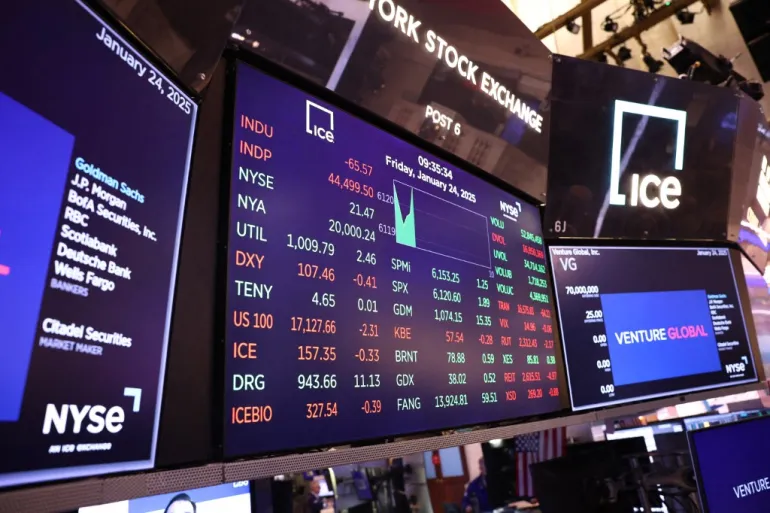
At 09:32 ET (13:32 GMT), the S&P 500 declined 0.2% to 7,114.68 points, the NASDAQ Composite fell 0.3% to 24,408.94 points, and the Dow Jones Industrial Average edged slightly lower to 49,439.30 points.
Recent Rally Loses Momentum
The weaker start to the week follows a strong performance in the previous sessions, where major indices gained more than 1% and reached record highs.
Investor sentiment had been supported by announcements suggesting that the Strait of Hormuz—a key route for around 20% of global oil supply—had reopened to commercial shipping after weeks of disruption.
Optimism was further boosted by expectations that the ceasefire between the U.S. and Iran could be extended, raising hopes for a potential end to the conflict.
Rising Uncertainty Around Peace Talks
Despite earlier optimism, uncertainty has returned to the market. President Donald Trump stated that a U.S. delegation led by Vice President JD Vance was heading to Pakistan for further negotiations, and signaled openness to direct talks with Iranian leaders.
However, the outlook for diplomacy has become less clear as tensions escalated over the weekend.
Escalation Undermines Market Confidence
The situation intensified after the U.S. seized an Iranian-flagged cargo ship, alleging it had attempted to bypass a naval blockade. Iran responded by threatening retaliation and indicating it may not participate in upcoming negotiations.
Trump also warned of potential military escalation if a peace agreement is not reached, further heightening geopolitical risks.
Strait of Hormuz Status Remains Unclear
Conflicting statements from Iranian officials have created uncertainty over whether the Strait of Hormuz is open or closed. While shipping data indicated increased activity over the weekend, Iran has since claimed the waterway is shut again due to the ongoing blockade.
Analysts noted that the recent easing in tensions appears to have been short-lived, adding to market volatility.
Oil Prices Rebound on Renewed Risks
Oil markets reacted to the latest developments, with prices rising after a sharp decline late last week.
Brent crude gained 3% to $93.09 per barrel, while U.S. West Texas Intermediate (WTI) rose 3.6% to $85.60 per barrel, reflecting renewed concerns over supply disruptions.
Earnings and Economic Data in Focus
Investors are also preparing for a busy week of corporate earnings, which could provide further insight into how the ongoing conflict is affecting major U.S. companies.
Cleveland-Cliffs reported stronger-than-expected first-quarter revenue, supported by higher selling prices. Meanwhile, key earnings are expected from companies such as American Express, Intel, UnitedHealth, RTX Corporation, and Tesla.
In addition, U.S. business activity data for April is due later this week, following a weaker reading in March.
Market Outlook: Volatility Ahead
Analysts expect a combination of geopolitical developments, economic data releases, and major earnings reports—particularly from large technology firms—to drive market direction in the coming days.
These factors could lead to increased volatility across global financial markets.