Trump Warns Iran of Severe Consequences Ahead of Deadline
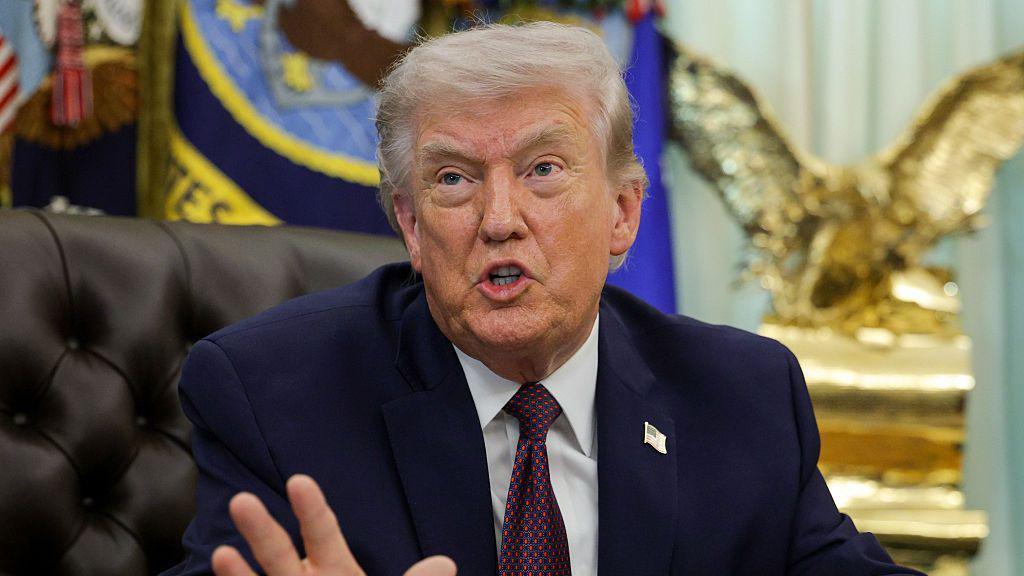
U.S. President Donald Trump has issued a stark warning to Iran, threatening devastating consequences if Tehran fails to meet his demands by Tuesday evening.
In a strong statement, Trump suggested that failure to comply could result in irreversible destruction, emphasizing the seriousness of the situation while noting he would prefer to avoid such an outcome.
Talks Stall as Tensions Escalate
According to reports, Iran has suspended direct negotiations with the United States following the latest escalation in rhetoric. However, indirect discussions through mediators are still ongoing.
Trump reiterated earlier threats to target critical infrastructure, including bridges and power plants, if Iran does not agree to reopen the Strait of Hormuz by the set deadline.
Strait of Hormuz at the Center of Global Concerns
The Strait of Hormuz remains a crucial chokepoint for global energy supply, with roughly 20% of the world’s oil passing through it. Its effective closure has driven oil prices higher, with crude hovering around $110 per barrel—significantly above pre-conflict levels near $70.
The surge in energy prices has increased concerns over inflation and global economic growth.
Potential Military Action and Long-Term Impact
Trump warned that any large-scale U.S. military action could have long-lasting consequences, suggesting that rebuilding Iran’s infrastructure could take decades if strikes were carried out.
Despite the aggressive tone, the president indicated that a diplomatic resolution remains possible if progress is made in ongoing negotiations.
Iran’s Conditions for Peace Talks
Iran has outlined several preconditions for entering meaningful negotiations, including an immediate halt to attacks, guarantees against future strikes, and compensation for damages caused by the conflict.
Reports also suggest that under a potential long-term agreement, Iran may seek to impose transit fees on ships passing through the Strait of Hormuz.
Previously, Tehran rejected a U.S.-backed proposal for a temporary ceasefire that would have reopened the strait, instead presenting its own framework for negotiations.
Conflict Continues Across the Region
Hostilities between Iran and Israel continued on Tuesday, with both sides launching new attacks. The U.S. military is also preparing for potential strikes on Iranian energy infrastructure, particularly targeting key export hubs.
Iran’s Islamic Revolutionary Guard Corps has warned it could expand operations beyond neighboring countries, potentially targeting infrastructure linked to the U.S. and its allies and disrupting regional energy flows.
Growing Risks to Global Energy Supply
Recent strikes have hit strategic locations, including Iran’s Kharg Island—an important center for oil exports—as well as infrastructure such as bridges and transport links.
The conflict has expanded across the Middle East, involving multiple actors and increasing risks to global oil supply chains. Iran has also carried out strikes on energy facilities in the Persian Gulf, further intensifying market concerns.
Diplomatic Efforts Continue in Parallel
Despite the escalating conflict, mediation efforts are still underway. Officials indicate that negotiations may be approaching a critical stage, with multiple parties attempting to prevent further escalation.
However, uncertainty remains high as the deadline approaches, leaving global markets and policymakers closely watching developments.