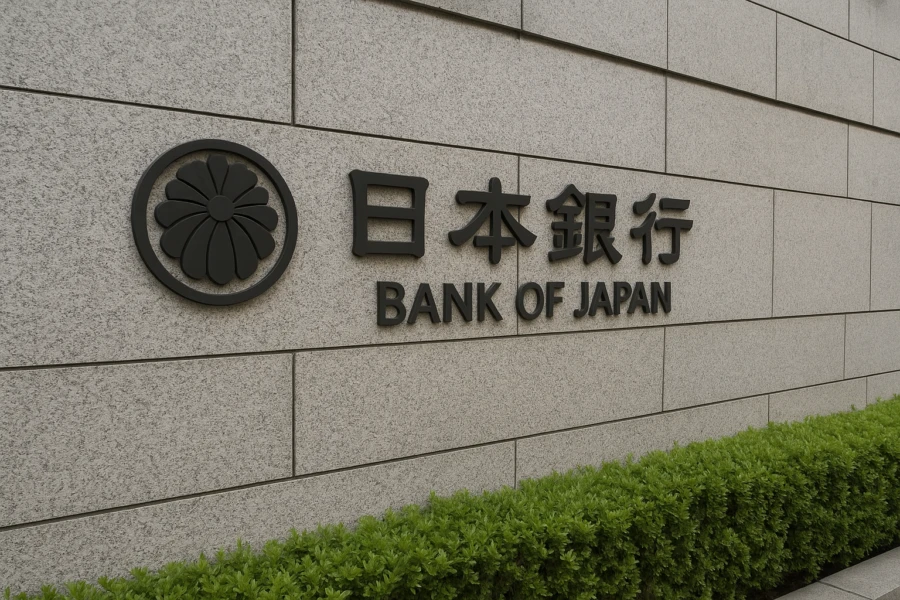
Bank of Japan Introduces New Inflation Gauge
The Bank of Japan announced that its newly introduced core consumer price index rose by 2.2% in February, excluding temporary or policy-driven factors. This marks the first release of the new inflation gauge, which analysts believe is designed to better highlight underlying price trends and support the case for further interest rate hikes.
New Index Shows Stronger Inflation Trend
The updated measure removes the impact of “institutional factors,” including education subsidies and energy-related support programs. As a result, it showed a stronger year-on-year increase compared to the official core CPI figure of 1.6%, recently published by Japan’s internal affairs ministry.
BOJ Aims to Improve Inflation Communication
The introduction of the new index follows recent comments by BOJ Governor Kazuo Ueda, who pledged to improve transparency around underlying inflation data.
Economists have often criticized the central bank’s definition of underlying inflation as unclear, despite its importance in shaping monetary policy decisions.
Former BOJ economist Seisaku Kameda noted that while the new indicator may not directly influence the timing of rate hikes, it represents a significant shift in how the central bank communicates its inflation outlook.
Excluding Temporary Government Measures
According to the BOJ, the new gauge removes the effects of short-term government interventions, such as expanded tuition subsidies and policies aimed at reducing utility costs.
These measures were introduced to ease the burden of rising living expenses on households and have had the effect of temporarily suppressing inflation readings.
The central bank plans to publish this new data monthly, shortly after the release of the national CPI figures.
Core-Core Inflation Also Strengthens
The BOJ also reported that its “core-core” CPI measure, which excludes both energy prices and temporary factors, rose by 2.7%, compared to 2.5% under the government’s standard calculation.
This reinforces the view that underlying inflation in Japan is gaining momentum.
Supporting the Case for Further Rate Hikes
Analysts expect the new gauge to strengthen the BOJ’s argument that inflation is on track to sustainably reach its 2% target, even if headline figures temporarily dip below that level.
The central bank defines underlying inflation as price increases driven by domestic demand rather than external cost pressures, such as rising raw material prices.
Challenges in Measuring True Inflation
However, distinguishing between demand-driven and cost-driven inflation has become increasingly difficult as price pressures broaden across the economy.
Existing inflation measures, including those excluding food and energy, have also been influenced by government efforts to contain rising living costs.
Growth Outlook and Interest Rate Signals
In a separate update, the BOJ revised Japan’s potential growth rate to 0.65%. Analysts suggest this could lead to a slight upward revision in estimates of the country’s neutral interest rate.
Governor Ueda has indicated that updated projections for the neutral rate—widely seen as the level that neither stimulates nor restricts economic growth—will be released by the summer.
Markets closely monitor these estimates for clues on how much further the BOJ may increase its policy rate from the current level of 0.75%.