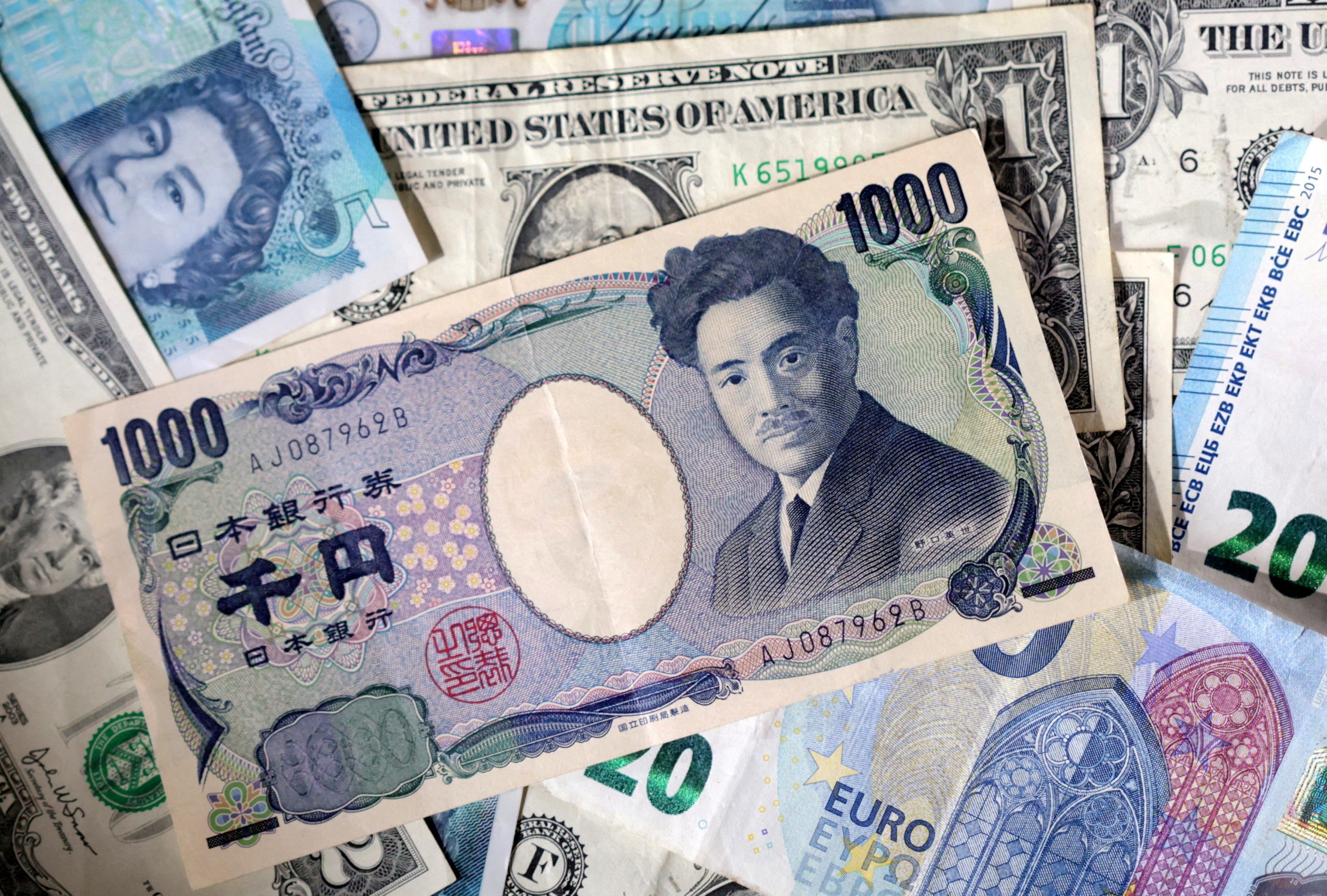
Japan Suspected of Multiple Yen Interventions During Golden Week
Japan’s Ministry of Finance appears to have carried out several yen-buying interventions during the Golden Week holiday period, according to analysts at Bank of America. Market movements on April 30, May 1, May 4, and May 6 all showed patterns consistent with official dollar-selling activity aimed at supporting the yen.
BofA strategist Shusuke Yamada said the interventions appeared to stabilize USD/JPY within a specific range. Post-intervention lows repeatedly held in the mid-155 area, while rallies were capped near 157. The first intervention reportedly started when the pair was trading in the low-160s.
USD/JPY 160 Seen as Japan’s “Line in the Sand”
According to Yamada, previous intervention campaigns in April-May 2024 and July 2024 also began when USD/JPY traded between the high-150s and low-160s.
This pattern suggests that Japanese authorities may consider the 160 level against the dollar as a critical threshold for currency stability.
Intervention Size Could Reach $72 Billion
The scale of the latest intervention wave may be substantial. Bloomberg estimates that the April 30 operation alone totaled around 5.4 trillion yen, based on current account data from the Bank of Japan.
Using a historical estimate that roughly 1 trillion yen in intervention moves USD/JPY by about one yen, Yamada believes the full intervention series may have reached approximately 11 trillion yen, or nearly $72 billion.
If confirmed, this would make it Japan’s largest currency intervention effort since 2022, although the exact amount remains uncertain.
Japan Still Has Significant FX Reserve Capacity
Japan’s foreign exchange reserves currently stand near $1.4 trillion, meaning the government still has significant financial capacity to continue market operations if necessary.
Yamada estimates that if authorities maintain cash balances through maturing securities and investment income, the implied asset sales into financial markets — widely believed to involve U.S. Treasuries — could total around $40 billion to $50 billion.
IMF Rules and Potential for More Intervention
Yamada also pointed to Japan’s classification under the IMF’s free-floating currency system. Under those guidelines, countries are generally limited to three intervention episodes lasting up to three business days within a six-month period.
Recent interventions have remained within those limits so far. However, market activity on May 6 may indicate that a second separate intervention episode has already started, potentially leaving room for additional action on May 7 and May 8.
BoJ Rate Hike Expectations Remain Strong
The strategist also emphasized that expectations for another interest rate hike from the Bank of Japan remain firm.
“The momentum toward a BoJ hike at the June meeting is unlikely to fade,” Yamada said, noting that markets are currently pricing in roughly a 70% probability of a June rate increase.
He added that if large-scale intervention temporarily strengthens the yen and reduces June hike expectations to around 40%, it could create an attractive market opportunity for investors positioning for higher Japanese interest rates.