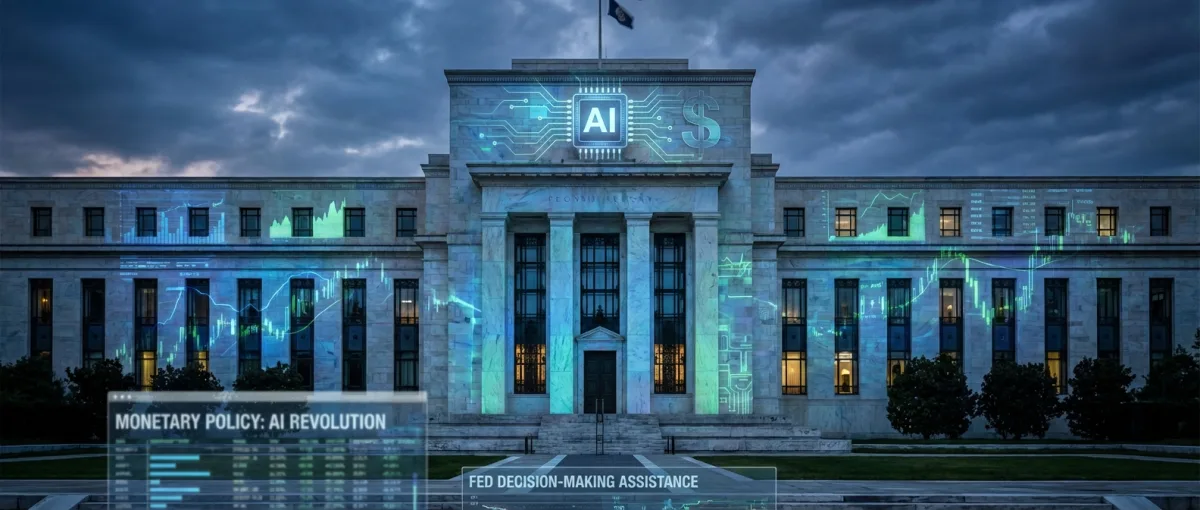
AI Growth Not Yet Driving Monetary Policy Decisions
Bank of America (BofA) believes that, despite the rapid expansion of artificial intelligence investment, it is unlikely to have a meaningful impact on central bank decisions in the near term. The bank argues that AI’s macroeconomic effects are still developing and remain relatively gradual.
Limited Inflation Impact from AI
According to BofA, AI is currently only mildly inflationary. The primary pressures come from increased energy demand linked to data centers and a positive wealth effect driven by rising equity markets.
However, these factors are not strong enough to force major central banks—such as the Federal Reserve—to adjust their current policy stance.
AI’s Contribution to Economic Growth Remains Modest
While AI investment is supporting economic expansion, its overall impact remains limited compared to broader macroeconomic forces. BofA estimates that AI-related spending is adding around 0.4 percentage points to U.S. GDP growth this year.
Despite this contribution, key drivers such as labor market conditions, fiscal policy, and energy prices continue to play a far more significant role in shaping monetary policy decisions.
Low Adoption Slows Productivity Gains
One of the main reasons AI is not yet influencing monetary policy is its relatively low adoption across the economy. Productivity gains—often expected to be disinflationary—have not yet materialized on a large scale.
As a result, central banks are unlikely to respond to AI developments until their effects become more visible in wages, output, and overall price dynamics.
Investment Boom Driven by Tech Infrastructure
BofA also highlights that the current AI surge is largely fueled by capital expenditure cycles, particularly from major technology companies investing heavily in data centers and infrastructure.
Although this investment supports economic growth, it does not immediately translate into sustained demand-driven inflation that would require tighter monetary policy.
Long-Term Implications for Interest Rates
Looking ahead, AI could eventually complicate monetary policy. BofA expects that productivity gains from AI may push the neutral interest rate higher, creating new challenges for policymakers balancing growth and inflation.
Conclusion: Not Yet a Key Policy Driver
For now, BofA’s view is clear: while AI is becoming increasingly important for the global economy, it is not yet a decisive factor in short-term monetary policy decisions. Central banks remain focused on more immediate drivers of inflation and economic growth.