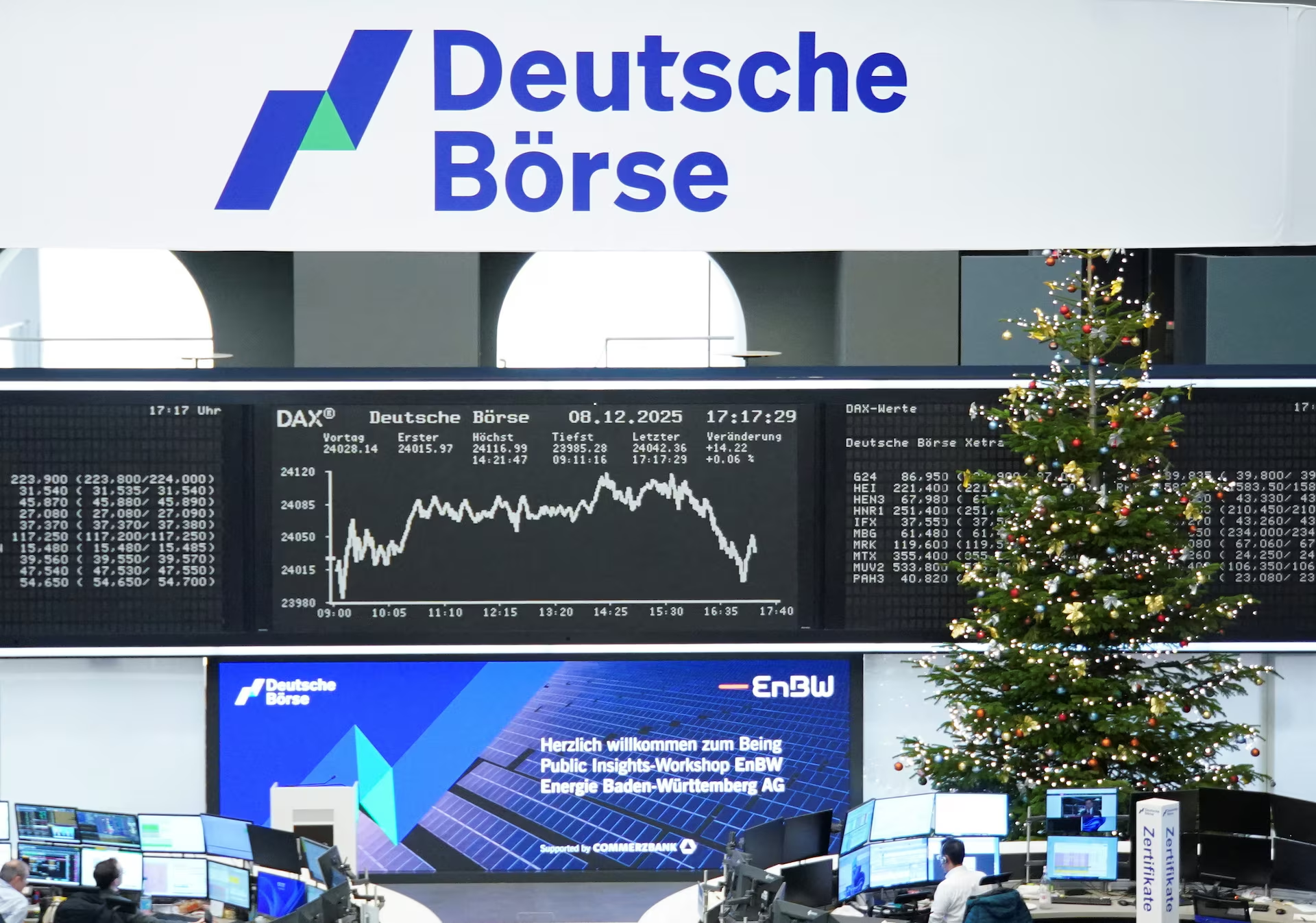
European Stocks Extend Losses Amid Rising Energy Prices
European equities declined again on Friday as investors reacted to surging energy prices driven by the escalating U.S.-Israel–Iran conflict.
The pan-European Stoxx 600 fell 1.7%, while Germany’s DAX dropped 2.2%. France’s CAC 40 declined 1.7%, and the UK’s FTSE 100 slipped 1.6%, highlighting broad-based weakness across the region.
Energy Shock Weighs on Markets
European markets had already fallen sharply on Thursday, reaching their lowest levels since December. The sell-off was largely triggered by a spike in natural gas prices following intensified attacks on energy infrastructure across the Middle East.
A key flashpoint was an alleged strike on the South Pars gas field, part of the world’s largest natural gas reserve. Iran responded with retaliatory attacks targeting energy facilities in the region, including a major site in Qatar.
Europe’s Exposure to Natural Gas Disruptions
Europe remains heavily reliant on natural gas imports from Qatar, making it particularly vulnerable to supply disruptions. The benchmark Dutch TTF natural gas price surged by around 25% at one stage before easing slightly.
This volatility has heightened concerns about energy security and its broader economic impact across the eurozone.
European Central Bank Warns on Inflation Risks
The European Central Bank cautioned that prolonged conflict could push inflation higher. While policymakers kept interest rates unchanged, they significantly raised inflation forecasts for 2026 due to the expected impact of rising energy costs.
Rate Hike Risks Re-Emerge
With inflation risks returning, analysts at Capital Economics suggested that the ECB may consider raising interest rates in the coming months.
At the same time, expectations for rate cuts by the Federal Reserve have been pushed further out, as the U.S. also deals with the economic consequences of the conflict.
Investors Seek Safety in the Dollar
Amid heightened uncertainty, investors have shifted toward the U.S. dollar, reducing demand for non-yielding assets like gold. Despite its traditional role as a safe haven, gold has struggled as higher interest rate expectations weigh on prices.
Gold Miners Hit by Price Decline
The pullback in gold prices has particularly impacted mining stocks in Europe, with the sector dropping 4.2% on Thursday.
Market Sentiment Remains Fragile
As markets head into the end of a volatile week, President Donald Trump attempted to reassure investors, stating that efforts are underway to de-escalate the crisis and that the situation could stabilize soon.
However, concerns over inflation, energy supply disruptions, and potential interest rate hikes continue to weigh heavily on investor sentiment.