U.S. stocks declined on Wednesday after Federal Reserve Chair Jerome Powell highlighted significant uncertainty حول the impact of rising oil prices, driven by the Middle East conflict, on inflation and the broader economy.
Powell’s cautious remarks came as markets were already under pressure from stronger-than-expected producer inflation data and a sharp rise in oil prices following an attack on Iran’s South Pars gas field, the largest in the world.
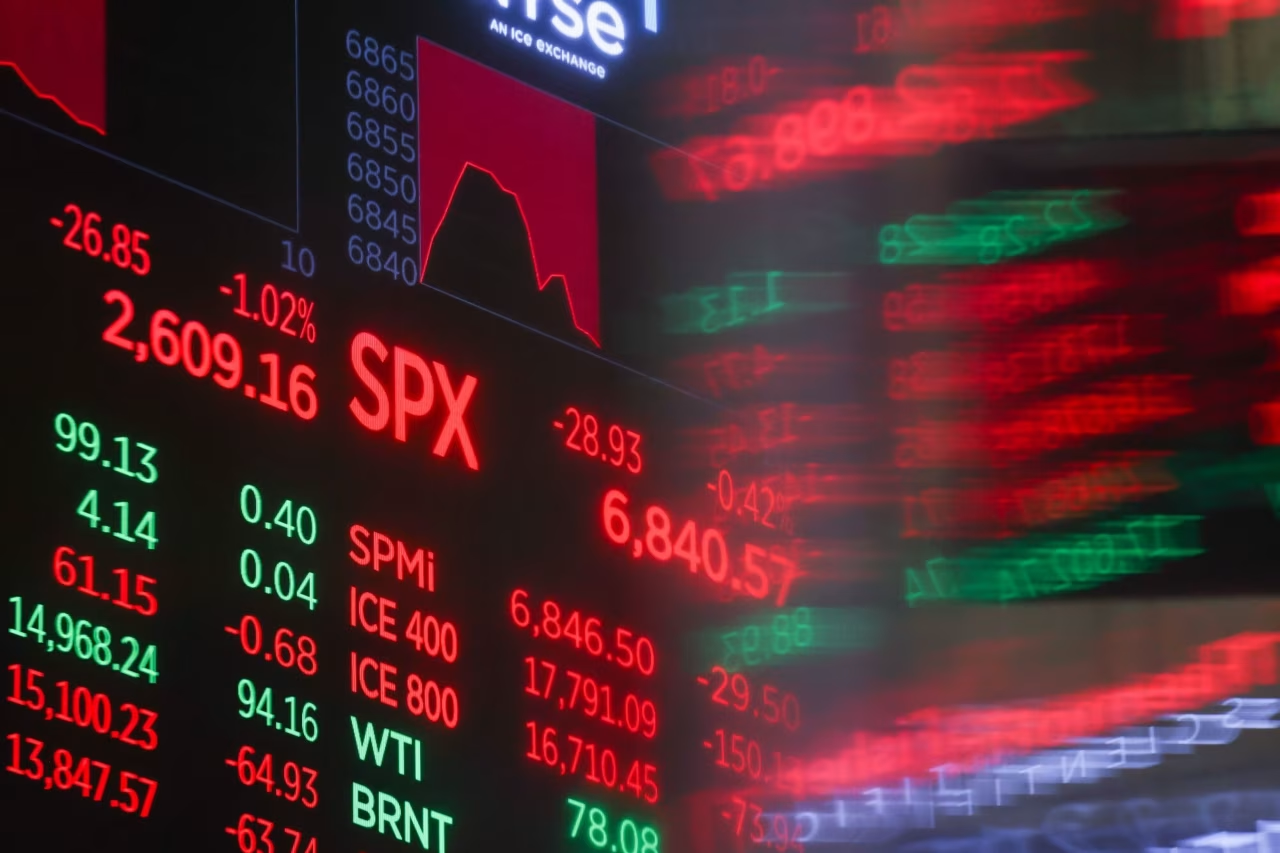
The S&P 500 fell 1.4% to close at 6,625.38 points, while the NASDAQ Composite dropped 1.5% to 22,152.42 points. The Dow Jones Industrial Average also declined, losing 1.6% to settle at 46,224.68 points.
Despite a brief recovery earlier in the week, Wall Street reversed course as geopolitical tensions and elevated oil prices continued to weigh on investor sentiment.
Fed Maintains Rates Amid Rising Uncertainty
The Federal Reserve kept interest rates unchanged at 3.50%–3.75%, in line with expectations. Policymakers reiterated that the economic outlook remains uncertain, particularly due to developments in the Middle East.
Powell stressed that while higher energy prices will likely push inflation higher in the short term, the overall impact remains unclear. He emphasized that the Fed will closely monitor how the situation evolves before making further policy decisions.
The central bank’s updated Summary of Economic Projections (SEP) continues to signal at least one rate cut this year and another in 2027. However, inflation forecasts have been revised higher, with core PCE expected to remain elevated in the near term.
Inflation Data Adds to Market Pressure
Earlier in the day, data showed that the U.S. Producer Price Index (PPI) rose 0.7% month-over-month in February, significantly above expectations of 0.3%. On an annual basis, PPI increased 3.4%, marking its highest level in a year.
Core PPI, which excludes volatile items, also exceeded forecasts, rising 0.5% monthly and 3.5% annually. The data highlights persistent inflation pressures, even before the recent surge in oil prices.
This combination of rising energy costs and sticky inflation has complicated the Federal Reserve’s policy outlook, reinforcing expectations of a prolonged higher interest rate environment.
Middle East Tensions Fuel Oil Price Surge
Geopolitical risks remain a key driver of market volatility. Iran has warned of potential strikes on energy infrastructure across the Gulf region, including Saudi Arabia, the United Arab Emirates, and Qatar.
These threats follow reports that Israel targeted facilities linked to Iran’s South Pars gas field, escalating tensions further. Qatar has condemned the attack, calling it a dangerous escalation.
Concerns over disruptions in the Strait of Hormuz, a critical route for global oil shipments, have added to supply fears. The waterway handles roughly 20% of the world’s oil flows.
As a result, Brent crude surged above $109 per barrel, while U.S. gasoline prices climbed to their highest levels since October 2023.
Policy Response and Market Developments
In response to rising energy prices, U.S. President Donald Trump temporarily waived the Jones Act for 60 days to ease supply chain disruptions and support domestic energy flows.
Meanwhile, markets are closely watching corporate earnings. Macy’s shares rose nearly 5% after reporting solid quarterly results, while investors are awaiting earnings from Micron, with a focus on demand trends tied to artificial intelligence.
Conclusion
U.S. equities ended lower as investors reacted to a combination of Fed uncertainty, rising inflation, and escalating geopolitical tensions. With oil prices surging and economic risks increasing, markets are likely to remain volatile in the near term as traders assess the evolving global landscape.