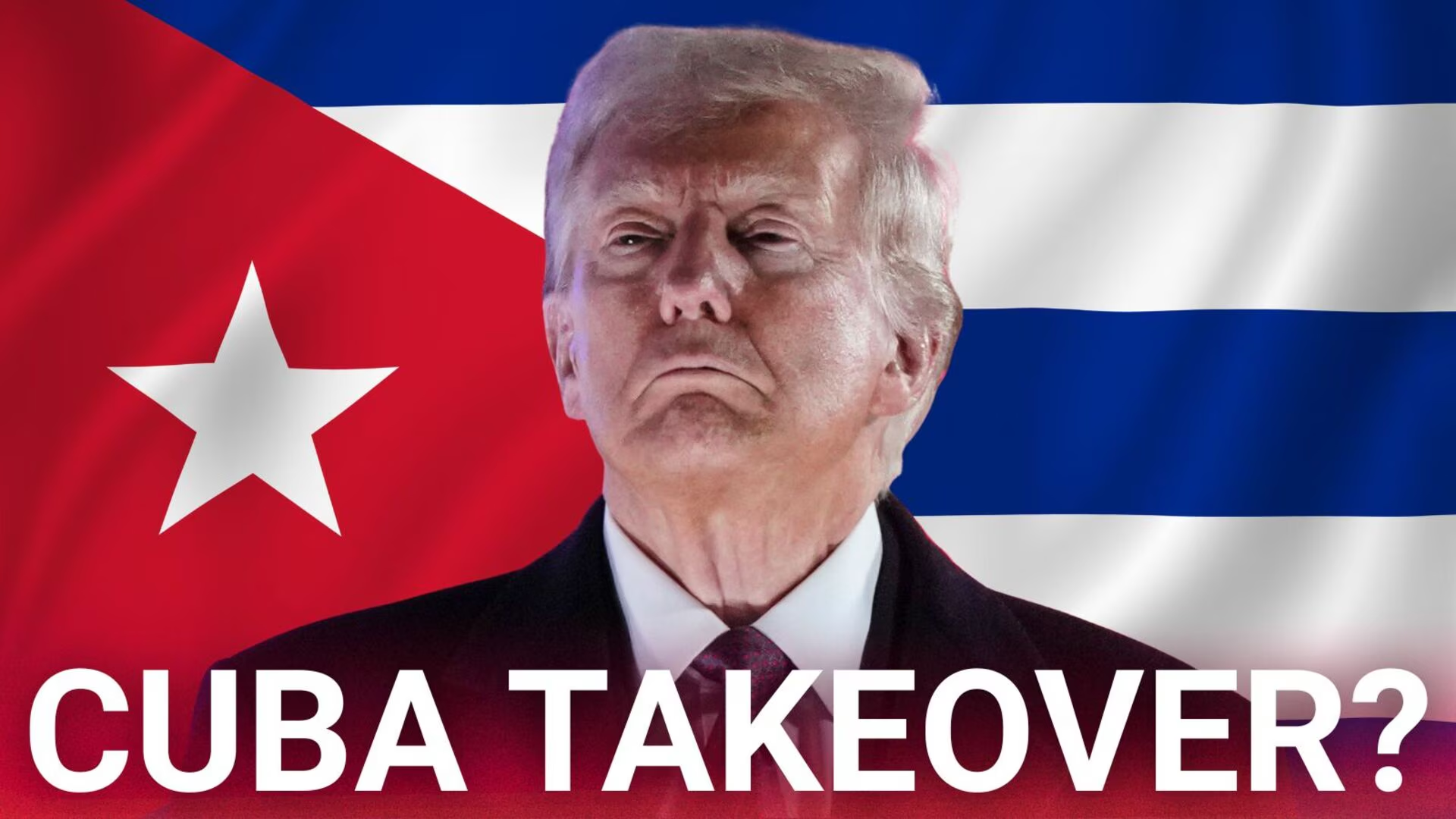
U.S. President Donald Trump intensified his rhetoric toward Cuba on Monday, stating that he believes the United States could “take Cuba in some form” and claiming he has the authority to act freely regarding the island nation.
His remarks come at a time when Washington and Havana are engaged in talks aimed at easing long-standing tensions, which have remained strained for decades. Despite these diplomatic efforts, Trump’s comments signal a more aggressive stance toward Cuba’s future.
Speaking to reporters, Trump suggested that he could either “free” or “take” Cuba, emphasizing that he believes he has broad power over the situation. These statements were made as the country faces a severe economic and energy crisis, worsened by a U.S.-led oil blockade that has disrupted fuel supplies.
Following his comments, reports indicated that one of the key objectives for the United States in ongoing discussions is the potential removal of Cuban President Miguel Díaz-Canel. However, U.S. officials are reportedly leaving the next steps to be determined internally by Cuba.
Cuba has consistently rejected any form of external interference in its political system, viewing such demands as unacceptable conditions in negotiations. President Díaz-Canel has reiterated that any dialogue with the United States must respect national sovereignty, political independence, and mutual equality.
Tensions have escalated further after the United States halted Venezuelan oil shipments to Cuba and warned of tariffs on countries supplying energy to the island. As a result, Cuba has experienced severe fuel shortages, leading to widespread power outages and significant disruptions to its economy.
The situation has reached critical levels, with the country facing extended blackouts and economic stagnation as key sectors struggle to operate without reliable energy supplies.
Despite the rising tensions, Trump indicated that U.S. priorities may currently lie elsewhere, stating that ongoing geopolitical conflicts could take precedence before any decisive action regarding Cuba.
Historically, while multiple U.S. administrations have opposed Cuba’s communist government, Washington has avoided direct military intervention since agreements reached during the 1962 Cuban Missile Crisis.
As of now, the White House has not clarified the legal framework or justification for any potential action involving Cuba, and Cuban authorities have not issued an official response to Trump’s latest remarks.