The joint military campaign by the United States and Israel against Iran has now entered its third week, with global financial markets closely monitoring efforts to reopen the strategically vital Strait of Hormuz. The situation has gained additional attention after **Donald Trump called on several countries to help Washington restore shipping through the key oil transit route.
U.S. Allies Show Hesitation Over Hormuz Intervention
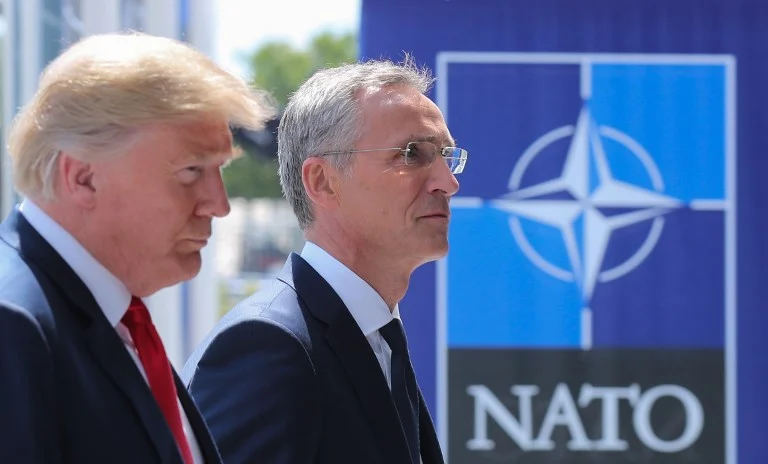
However, several U.S. allies — particularly members of the North Atlantic Treaty Organization — have reportedly shown reluctance to support Washington’s request.
Germany’s defense minister questioned what a limited European naval deployment could realistically achieve compared with the capabilities of the U.S. Navy. He also emphasized that the conflict with Iran was not initiated by European nations.
Officials from Spain and Italy have similarly indicated they are unlikely to participate in any military operation targeting Iran. Greece has also stated that its regional security involvement will remain focused on operations in the Red Sea rather than the Persian Gulf.
EU Considers Expanding Naval Mission
Despite the hesitation from individual countries, **Kaja Kallas said the **European Union is considering adjustments to the mandate of its naval mission in the Middle East. The proposal could allow European forces to help protect commercial vessels attempting to navigate the Strait of Hormuz.
Speaking to reporters aboard Air Force One, Trump did not confirm whether any countries had agreed to join the U.S.-led effort to secure the shipping corridor.
In a separate interview with the Financial Times, Trump urged NATO members to assist in reopening the strait. He warned that failure to support the mission could have negative consequences for the alliance’s future.
Tensions With China and Global Energy Risks
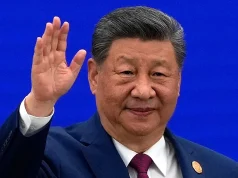
Trump also singled out China during the dispute, suggesting that he might cancel a planned summit with **Xi Jinping if Beijing does not use its influence to help restore shipping through the strait.
According to reports from The New York Times, some oil tankers bound for China have been allowed to pass through the waterway, while others have reportedly been targeted by projectiles.
The Strait of Hormuz, located south of Iran, is one of the world’s most important energy transit routes. Roughly 20% of global oil supply flows through the narrow passage, making any disruption a major threat to global energy markets.
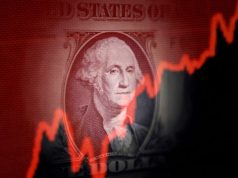
By effectively blocking much of the tanker traffic through the strait, Iran has significantly disrupted energy supplies to major economies in Europe and Asia. As a result, oil and natural gas prices have surged, raising concerns that the conflict could reignite global inflation and slow economic growth.
Oil Market Volatility and Economic Concerns
Analysts at Vital Knowledge noted that the core challenge for markets remains unresolved. While the United States and Israel appear to hold military advantages, Iran continues to exert economic pressure by restricting access to the Strait of Hormuz.
The surge in oil prices has created additional political challenges for the Trump administration. Washington’s military campaign against Iran has expanded across parts of the Middle East, including regions close to major oil-producing countries in the Persian Gulf.
On Monday, authorities in the United Arab Emirates reported that the Fujairah oil industrial zone was struck by a second drone attack within two days, although no injuries were reported.
Meanwhile, Israel announced it was carrying out limited and targeted ground operations in southern Lebanon, further raising the risk of regional escalation.
Rising Fuel Prices in the United States
The conflict has also begun to affect consumers in the United States. Gasoline prices at the pump have started to rise, which analysts say could become a political issue for the Republican Party ahead of the U.S. midterm elections in November.
Although oil prices eased slightly during European trading hours on Monday afternoon, Brent crude — the global oil benchmark — remained above $100 per barrel, highlighting the continued impact of the geopolitical crisis on energy markets.