Israeli Airstrikes Strike Central Beirut as Conflict With Hezbollah Intensifies
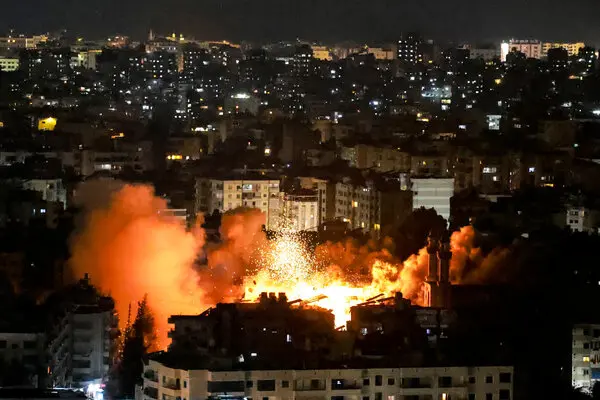
Israeli airstrikes hit two buildings in central Beirut on Thursday, close to the headquarters of the Lebanese government, escalating Israel’s military campaign against the Iran-backed militant group Hezbollah and drawing Lebanon further into the broader Middle East conflict.
The strikes came a day after Hezbollah launched its largest rocket barrage of the current conflict. Following the attack, Israel’s defense minister said the military had been ordered to expand operations, while Israel’s top military commander warned that the campaign in Lebanon could be prolonged.
Over the past week, Israeli forces have carried out extensive strikes across southern and eastern Lebanon, as well as in the Hezbollah-controlled southern suburbs of Beirut. According to Lebanese authorities, nearly 700 people have been killed in the attacks. Mass evacuation orders in those regions have forced more than 800,000 residents to leave their homes.
Airstrikes Reach the Heart of Beirut
The conflict widened further when Israeli strikes reached downtown Beirut. An airstrike hit a building in the Bachoura neighborhood, located roughly one kilometer from the Lebanese government’s Grand Serail headquarters, at around 5:30 p.m. local time.
Before the strike, the Israeli military issued a warning stating that residents were close to a Hezbollah facility that would be targeted. A similar warning was later issued for the nearby Zuqaq al-Blat district, shortly before another building closer to the government complex was struck.
Earlier on Thursday, a separate pre-dawn airstrike in another area of Beirut killed 12 people, according to Lebanon’s health ministry. The strike reportedly hit a seafront sidewalk where displaced families had set up tents while sleeping outdoors.
Witnesses described the devastation. One displaced resident, identified as Abu Ali, questioned the justification for the attack, saying the tents housed children, elderly people and women. Another displaced man, Mahmoud Kassem, said the scene left him emotionally devastated.
Mass Evacuations Across Southern Lebanon
After issuing evacuation orders across large parts of southern Lebanon last week, the Israeli military expanded the instructions on Thursday. Residents were told to leave additional areas of the south, meaning evacuation orders now cover about 10% of Lebanese territory.
Israel’s defense minister, Israel Katz, said the military campaign aims to restore safety for Israeli communities near the northern border.
Israel Signals a Prolonged Military Operation
Israel’s military chief, Eyal Zamir, warned that the operation in Lebanon would likely continue for some time. He said additional troops and military capabilities would be deployed to the northern front as the campaign progresses.
Israel launched its offensive after Hezbollah opened fire on March 2, saying it was acting in response to the killing of Iran’s supreme leader. Since then, Hezbollah has launched daily rocket and drone attacks against Israel.
Late on Wednesday, Hezbollah fired its largest barrage yet, triggering intensified Israeli strikes in Beirut’s southern suburbs.
The Israeli military said Hezbollah coordinated the attack with Iran, launching about 200 rockets and 20 drones, while Iran simultaneously fired ballistic missiles toward Israel. Iran’s Revolutionary Guards later confirmed a joint operation with Hezbollah.
According to Israel’s military leadership, only two launches out of hundreds fired that night managed to land inside Israeli territory.
Rising Civilian Toll Raises International Concern
Lebanon’s health ministry said the number of people killed in Israeli attacks had climbed to 687, including 98 children, 62 women and 18 medical workers. The figures do not specify how many victims were civilians or combatants.
Imran Riza, the United Nations resident coordinator in Lebanon, said the human cost of the conflict had become extremely high and urged all sides to respect international humanitarian law.
He also warned that the humanitarian crisis could worsen as more civilians are forced to flee their homes and displacement continues to grow.
Diplomatic Tensions Escalate
Israel’s defense minister also issued a warning to Lebanese President Joseph Aoun, saying that if the Lebanese government cannot stop Hezbollah attacks against Israel, Israeli forces may take action directly in the affected territory.
Lebanon previously stated its intention to establish a state monopoly on weapons, and the cabinet recently banned any independent military activity by Hezbollah.
In response to the joint attacks, Lebanese Foreign Minister Youssef Raggi summoned Iran’s chargé d’affaires, arguing that the coordinated operation violated the government’s recent decision.
Meanwhile, Israel said it has targeted members of Iran’s Quds Force operating in Lebanon, including a strike earlier this week on a hotel in Beirut’s Raouche district.