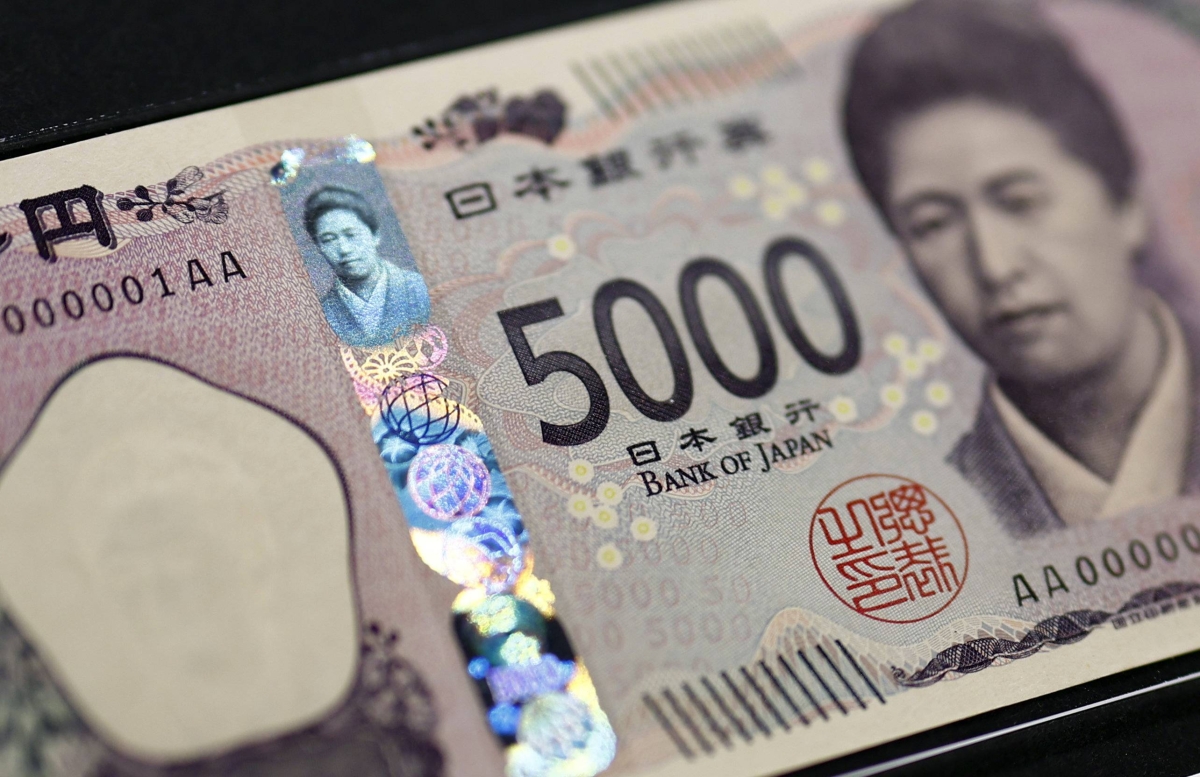
The Japanese yen strengthened during Asian trading on Tuesday, supported by broad U.S. dollar weakness and the strongest warning yet from Japanese officials signaling readiness to intervene in currency markets. The move came as the yen hovered near recent lows against major currencies.
Analysts say the renewed threat of intervention has temporarily capped bearish bets on the yen. However, near-term pressure on the currency may persist after last week’s cautious messaging from the Bank of Japan suggested that interest rate increases in 2026 will likely be gradual.
The yen rose 0.7% to around 156 per U.S. dollar, extending gains from the previous session and reversing most of the losses recorded since Friday. Those losses followed the BOJ’s widely anticipated interest rate hike.
The Japanese currency also gained roughly 0.5% against the euro, the Australian dollar, and the British pound, although it remained close to recent lows versus its major peers.
Japanese Finance Minister Satsuki Katayama said authorities have full flexibility to respond to excessive currency moves. Her comments marked the clearest signal so far that Tokyo is prepared to step into markets if volatility accelerates.
According to Matt Simpson, senior market analyst at StoneX, a potential intervention during the low-liquidity period between Christmas and New Year would be particularly effective. However, he added that intervention may not be necessary unless the dollar breaks sharply above the 159 yen level.
Japan has previously intervened to support the yen in both 2022 and 2024.
Japanese government bond prices pared earlier gains after reports indicated that Tokyo’s planned debt issuance for fiscal 2026 could slightly exceed the 28.6 trillion yen sold in the current fiscal year. The government is expected to finalize its draft budget later this week.
Despite the yen’s recent weakness, the move has occurred alongside a softer dollar. The greenback has come under pressure since the Federal Reserve cut interest rates earlier this month and signaled another reduction in 2026. Markets are currently pricing in two additional rate cuts next year.
Charu Chanana, chief investment strategist at Saxo, said expectations for slow BOJ tightening combined with potential Fed easing point to more two-way yen trading. She noted that the yen is likely to strengthen when U.S. bond yields fall or when global risk sentiment deteriorates.
She added that the biggest risk to the outlook would be a prolonged “higher-for-longer” U.S. rate environment or renewed caution from the BOJ, with key catalysts including Japan’s annual Shunto wage talks and future U.S. rate decisions.
Dollar remains under pressure
The U.S. dollar continued to drift lower in December. The euro edged up 0.1% to $1.1776, while sterling climbed 0.2% to a two-and-a-half-month high near $1.35.
The dollar index slipped 0.2% to 98.061, extending losses after a 0.5% drop on Monday. The index is on track for a monthly decline of about 1.4% and an annual fall of nearly 10%, marking its steepest yearly drop since 2017.
Strategists at MUFG said the dollar’s decline is unlikely to be temporary, arguing that the U.S. currency has likely peaked and entered a multi-year downtrend.
Market attention now turns to delayed U.S. GDP data due later on Tuesday. The figures, postponed by a prolonged government shutdown, are expected to have limited market impact due to their outdated nature.
Economists expect the data to reinforce signs of a K-shaped U.S. economy, where higher-income households continue to perform well while middle- and lower-income groups struggle. GDP is forecast to have grown at a 3.3% annualized pace last quarter, compared with 3.8% growth in the second quarter.
Elsewhere in currency markets, the Australian dollar rose 0.2% to $0.6669, the New Zealand dollar gained 0.3% to $0.5814, and the Swiss franc strengthened 0.4% to a six-week high against the U.S. dollar.