
What Is Swing Trading?
Swing trading is a trading strategy where positions are held for several days to weeks in order to capture short- to medium-term price movements.
Instead of entering and exiting trades within the same day, swing traders aim to profit from “swings” in the market — the natural up and down movements in price.
This approach sits between day trading and long-term investing. It allows traders to take advantage of trends without needing to monitor markets constantly.
Swing trading is widely used across stocks, forex, commodities, and cryptocurrencies.
How Swing Trading Works
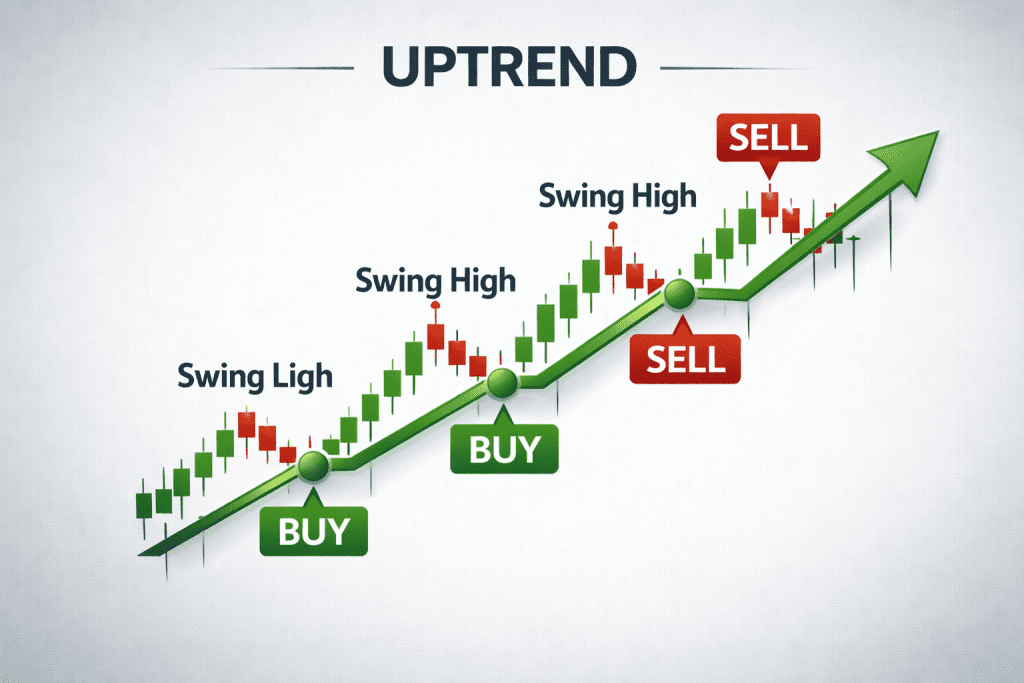
Swing trading focuses on identifying potential turning points in price.
Traders typically:
- look for trends in the market
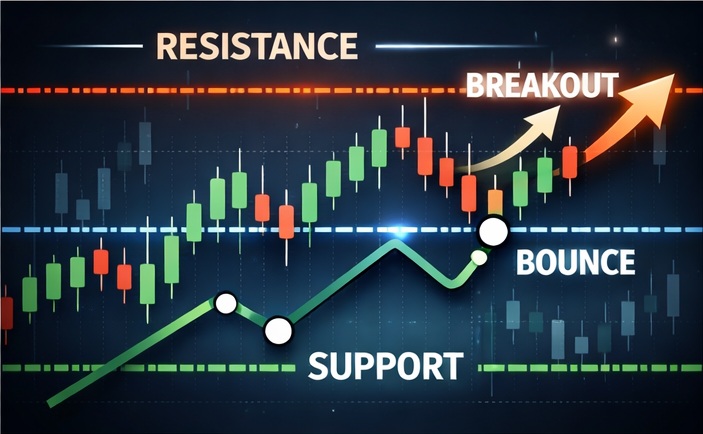
- identify key support and resistance levels
- enter trades after pullbacks or breakouts
- hold positions until momentum fades
For example, a trader may buy a stock during a temporary pullback in an uptrend, expecting the price to continue higher over the following days.
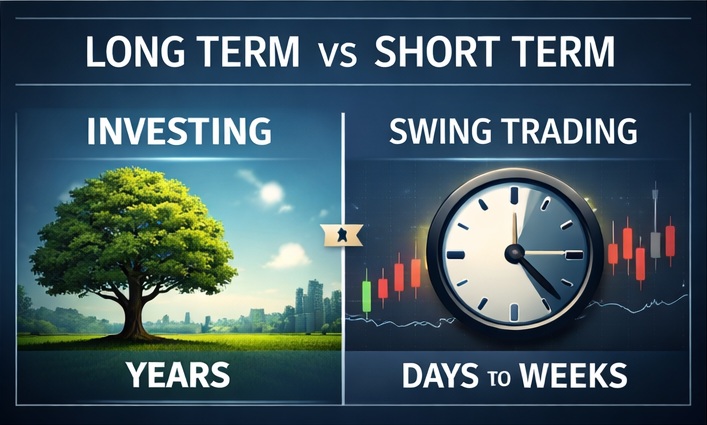
Unlike long-term investing, swing trading is focused on timing market movements, not holding assets for years.
Swing Trading vs Day Trading
Swing trading is often compared to day trading, but the two strategies differ significantly.
Swing trading:
- positions held for days or weeks
- less screen time required
- focuses on larger price movements
Day trading:
- positions opened and closed within the same day
- requires constant monitoring
- focuses on small, rapid price changes
For most beginners, swing trading is more practical because it does not require full-time attention.
Key Tools Swing Traders Use
Successful swing traders rely on a combination of tools and analysis methods.
Technical Analysis
Charts are essential. Traders analyze price patterns and indicators such as:
- moving averages
- RSI
- MACD
- trend lines
Support and Resistance
These levels help identify entry and exit points.
Market Structure
Understanding whether a market is trending or ranging is crucial.
Risk Management in Swing Trading
Risk management is one of the most important aspects of trading.
Without it, even profitable strategies can fail.
Key principles include:
- Position sizing: Never risk too much on one trade
- Stop-loss orders: Define your exit before entering
- Risk-to-reward ratio: Aim for higher potential reward than risk
- Capital preservation: Protect your account first
A common rule is to risk no more than 1–2% per trade.
Pros and Cons of Swing Trading
Advantages
- less time-intensive than day trading
- captures meaningful price moves
- works across multiple markets
- suitable for part-time traders
Disadvantages
- exposure to overnight risk
- requires patience and discipline
- market gaps can impact trades
- not fully passive
Is Swing Trading Right for You?
Swing trading can be a strong approach for those who want to actively participate in markets without committing to full-time trading.
It is particularly suitable for:
- beginners learning market behavior
- traders with limited time
- investors seeking active strategies
However, success depends on:
- discipline
- consistency
- emotional control
Final Thoughts
Swing trading offers a balanced approach between short-term trading and long-term investing.
By focusing on market swings, traders can take advantage of price movements without needing constant screen time.
Understanding trends, risk management, and market structure is essential for building a sustainable strategy.
Over time, swing trading can become a valuable tool for navigating financial markets more effectively.