What Is Risk Management in Trading?
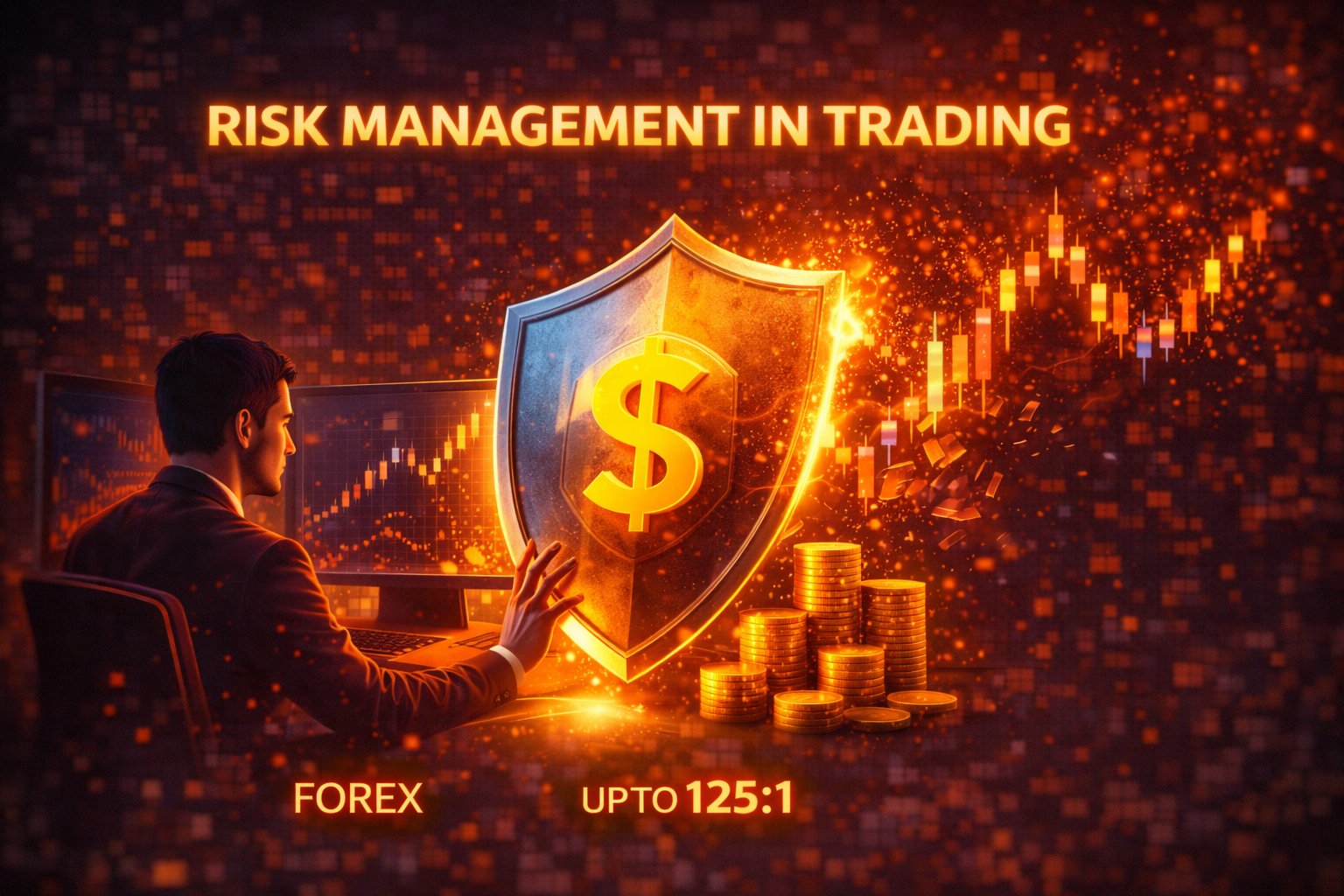
Risk management is the process of controlling potential losses in trading.
It is not about maximizing profits, but about protecting capital.
Every professional trader understands that losses are part of the game.
The goal is to ensure that no single loss can significantly damage the account.
Without risk management, even the best strategy will eventually fail.
Why Most Traders Fail Without It
Many beginners focus only on entries and profits.
They ignore risk.
This leads to oversized positions, emotional decisions, and large drawdowns.
A few bad trades can wipe out weeks or months of gains.
In many cases, traders lose their entire account.
Risk management is what separates professionals from gamblers.
Position Sizing Explained
Position sizing determines how much capital is allocated to each trade.
Instead of risking large portions of capital, disciplined traders risk a small percentage.
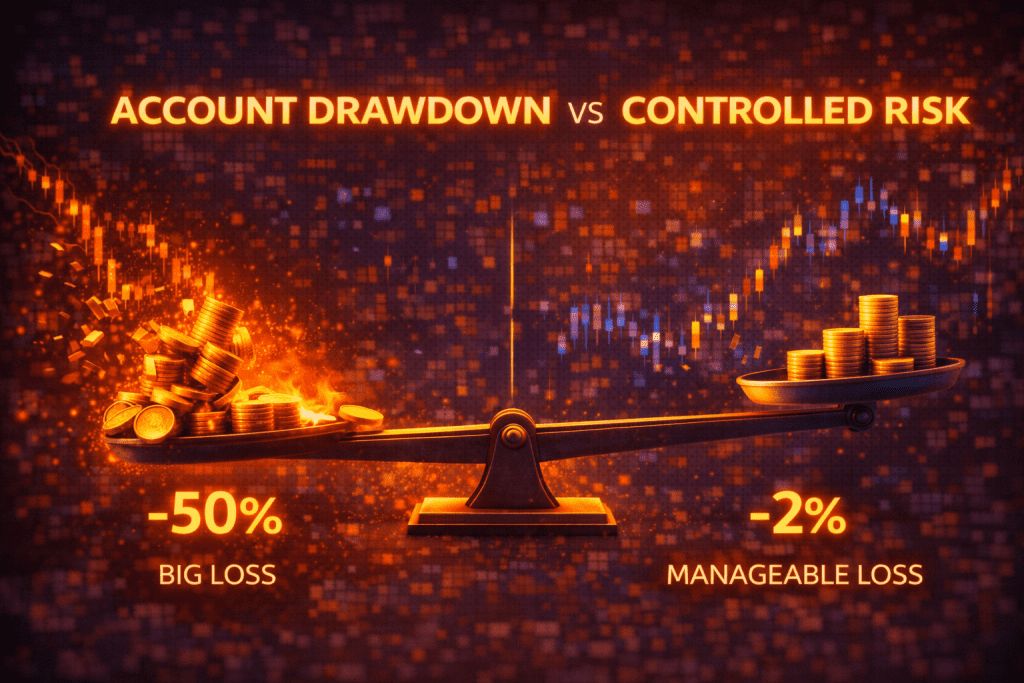
A common rule is risking 1–2% per trade.
This ensures that even a series of losses does not destroy the account.
Position sizing is one of the most powerful tools in trading.
Stop Loss and Risk-Reward Ratio
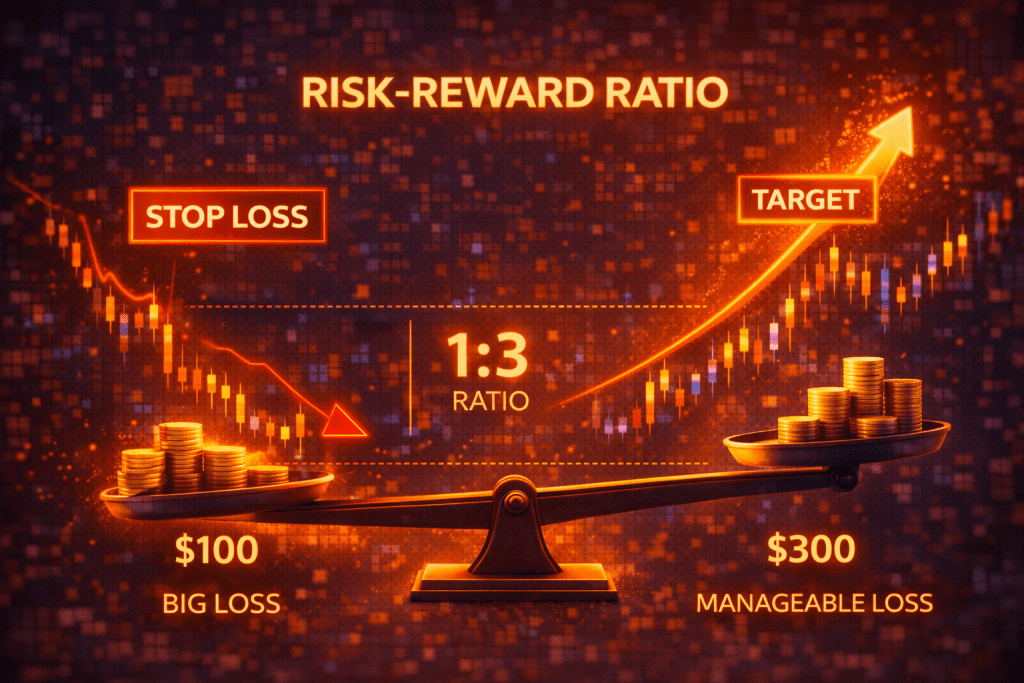
A stop loss is a predefined level where a trade is closed to prevent further loss.
It protects the trader from unexpected market moves.
The risk-reward ratio measures how much a trader risks compared to potential profit.
For example, risking $100 to make $300 gives a 1:3 ratio.
Consistently using favorable risk-reward setups allows traders to remain profitable even with lower win rates.
Psychological Discipline
Risk management is not only technical.
It is also psychological.
Traders must follow their rules even after losses.
Fear and greed often lead to breaking discipline.
Overtrading, revenge trading, and moving stop losses are common mistakes.
Maintaining consistency is key to long-term success.
Real Example of Risk Management
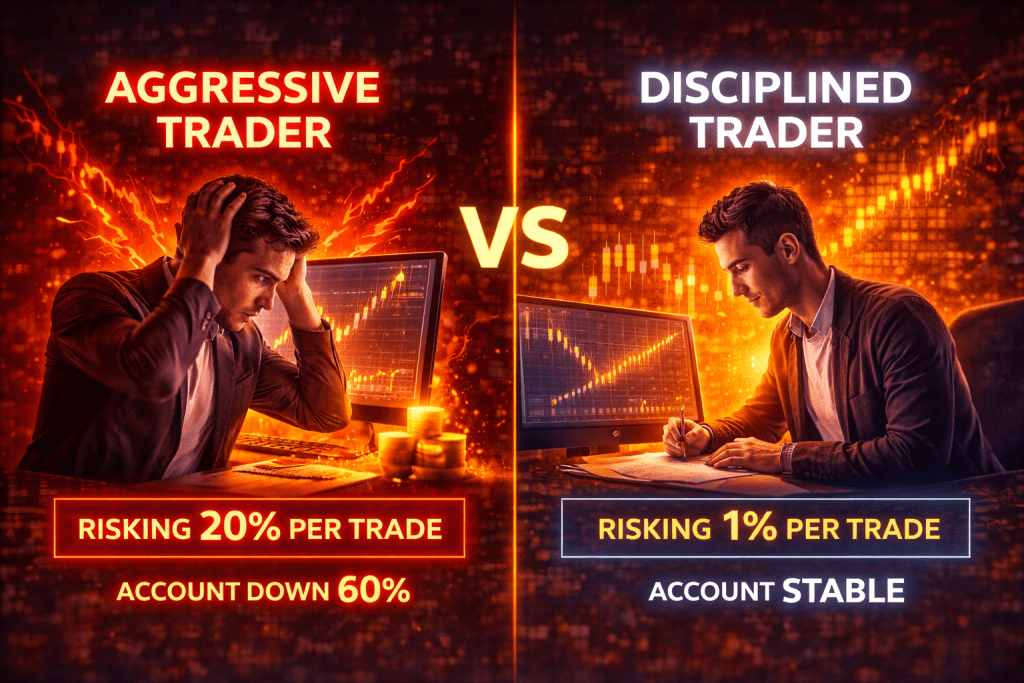
Consider two traders.
One risks 20% per trade.
Another risks 1% per trade.
After five losing trades, the first trader loses most of their account.
The second trader remains stable and continues trading.
This illustrates how risk management protects longevity.
Common Risk Management Mistakes
Many traders underestimate risk.
They trade without stop losses.
They risk too much on single trades.
They ignore market conditions.
They increase position size after losses.
These behaviors often lead to account failure.
How to Build a Risk Management Strategy
A solid risk management plan includes:
fixed risk per trade
defined stop loss levels
clear position sizing rules
Traders should also track performance and adjust based on results.
Consistency is more important than perfection.
Final Thoughts
Risk management is the foundation of successful trading.
It does not guarantee profits, but it ensures survival.
In trading, survival comes first.
Profits come second.
Traders who master risk management give themselves the opportunity to stay in the game long enough to succeed.