What Is Risk Management in Trading?
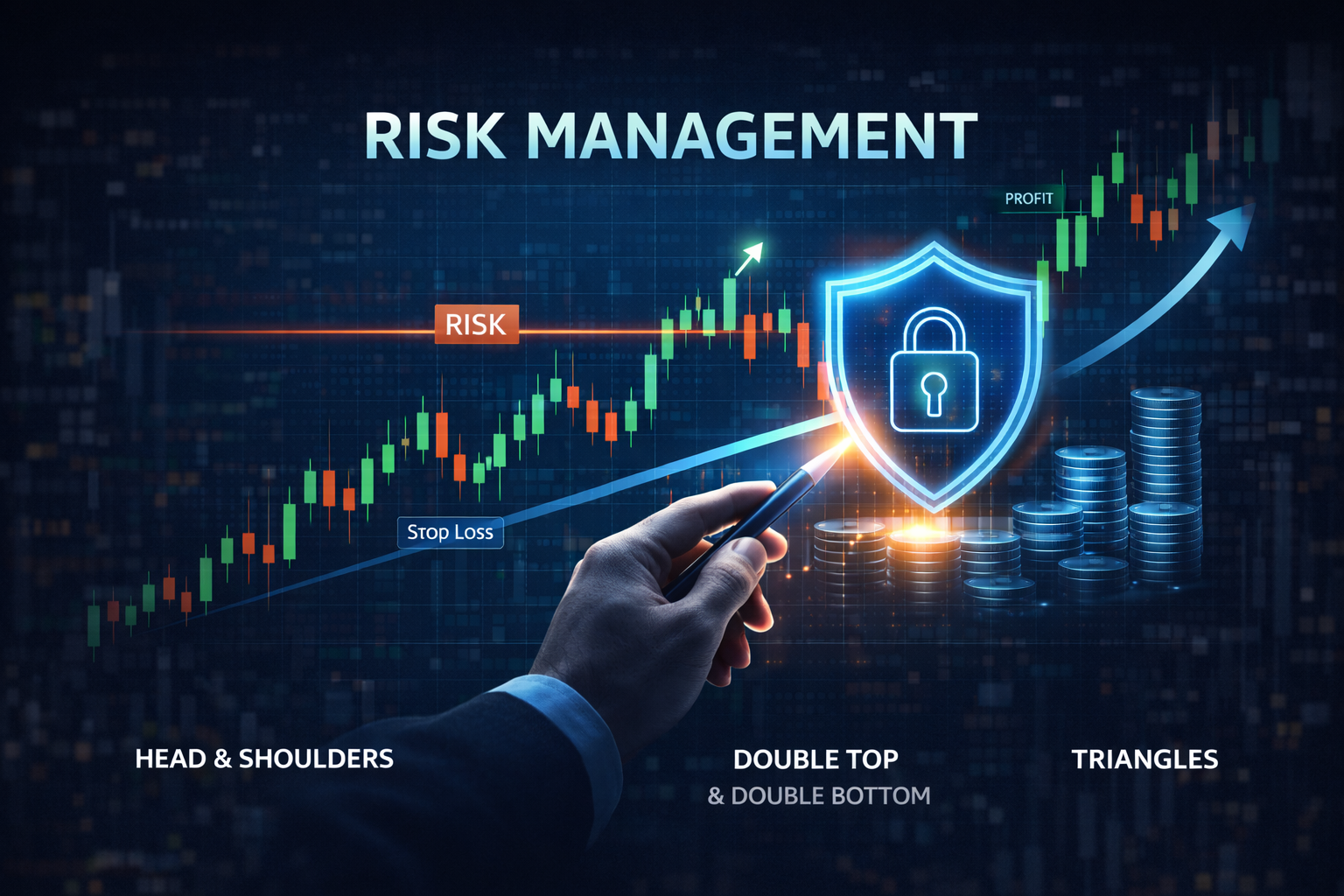
Risk management is the process of controlling potential losses in trading while protecting your capital.
It is one of the most important aspects of trading, yet it is often overlooked by beginners who focus only on profits.
The reality is simple: successful trading is not about how much you make, but how much you protect.
Without proper risk management, even a profitable strategy can lead to long-term losses.
Why Risk Management Matters
Every trade carries uncertainty.
Markets can move unexpectedly due to economic news, geopolitical events, and sudden changes in sentiment.
Risk management ensures that no single trade can significantly damage your account.
Traders who survive long-term are not those who win every trade, but those who manage losses effectively.
The Core Principles of Risk Management
Understanding a few key principles can dramatically improve your results.
Capital Preservation
Your first goal is not to grow your account — it is to protect it.
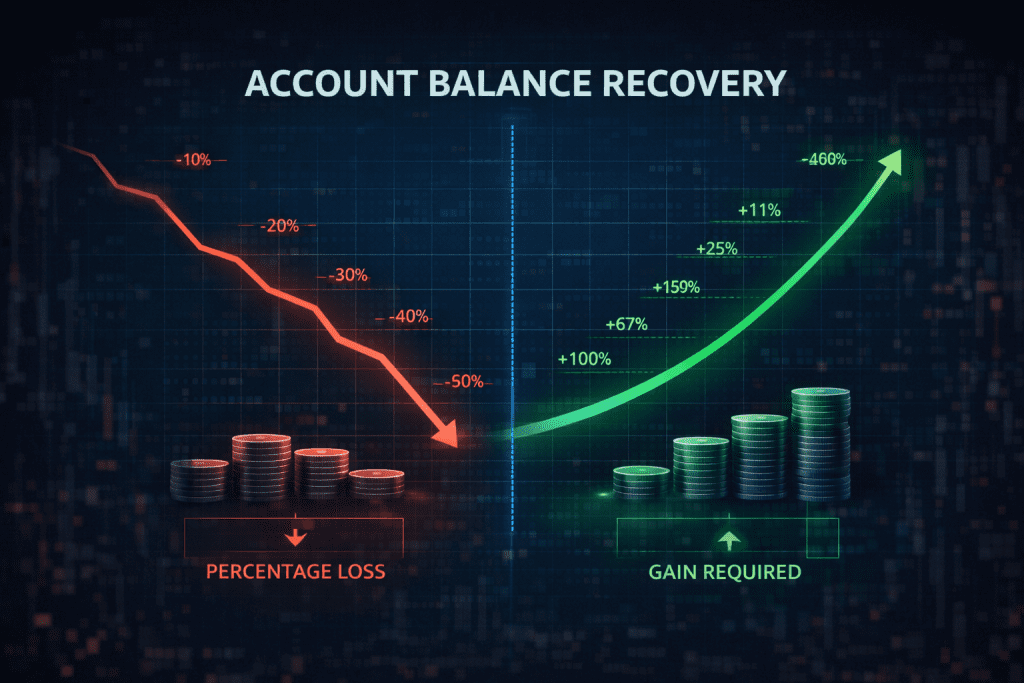
If you lose a large portion of your capital, recovering becomes extremely difficult.
For example, a 50% loss requires a 100% gain to recover.
This is why controlling losses is critical.
Risk Per Trade
Professional traders typically risk only a small percentage of their capital on each trade.
A common rule is to risk no more than 1–2% per trade.
This ensures that even a series of losses will not wipe out your account.
Stop-Loss Orders
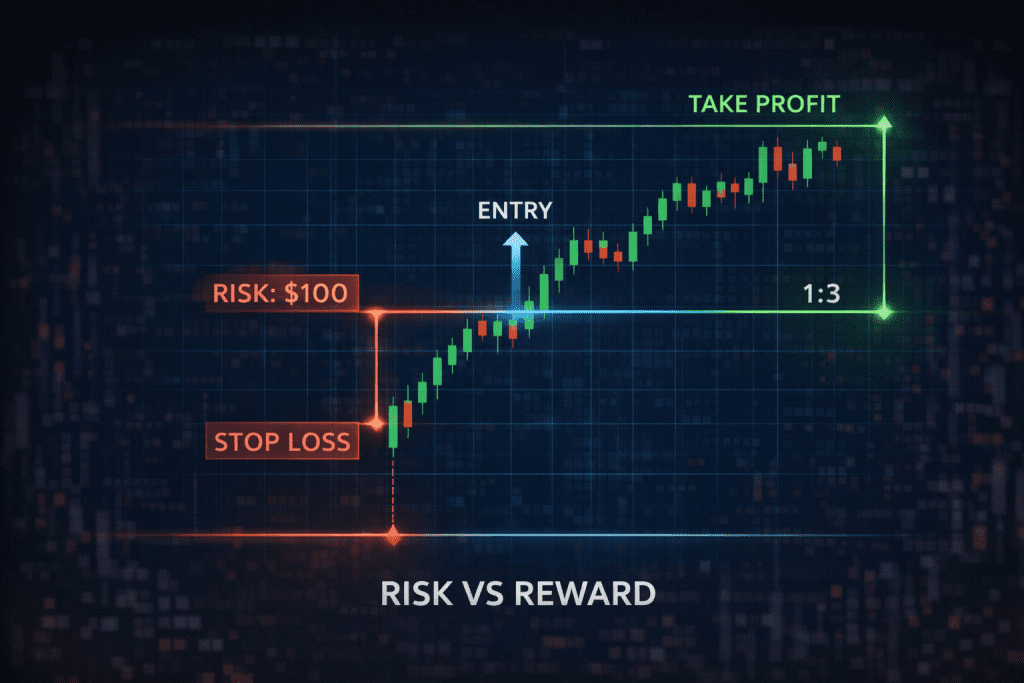
A stop-loss is a predefined level where your trade is automatically closed to limit losses.
It removes emotional decision-making and enforces discipline.
Without a stop-loss, small losses can quickly turn into large ones.
Risk-to-Reward Ratio
This measures how much you are risking compared to how much you aim to gain.
For example, risking $100 to make $300 represents a 1:3 ratio.
A favorable ratio allows you to be profitable even if you don’t win every trade.
Position Sizing Explained
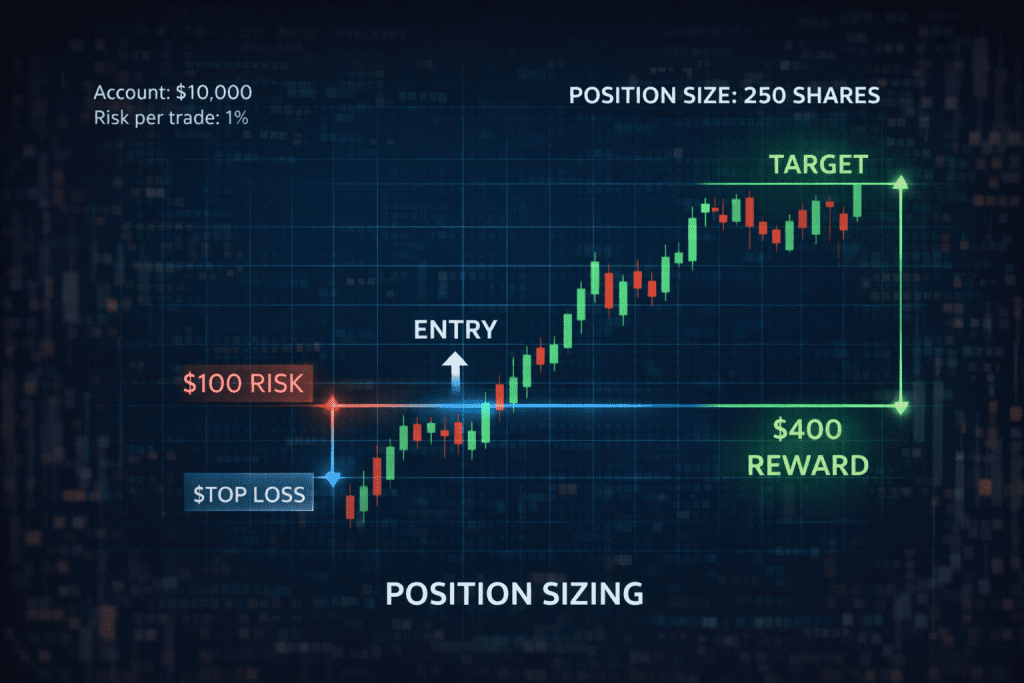
Position sizing determines how much capital you allocate to each trade.
It is directly linked to your risk per trade.
For example, with a $10,000 account and 1% risk, you risk $100 per trade.
Your position size should be calculated so that your stop-loss corresponds to that amount.
This keeps your risk consistent across all trades.
Common Risk Management Mistakes
Many traders fail not because of strategy, but because of poor risk control.
Common mistakes include risking too much on a single trade, not using stop-loss orders, increasing position size after losses, chasing the market, and ignoring risk-to-reward ratios.
These behaviors often lead to emotional trading and inconsistent results.
The Psychological Side of Risk
Risk management is not only technical — it is psychological.
Traders often hold losing positions too long, close winning trades too early, and deviate from their plan.
Having clear risk rules helps remove emotions from decision-making.
Discipline is what separates successful traders from unsuccessful ones.
Building a Risk Management Plan
A structured plan should include maximum risk per trade, a clear stop-loss strategy, defined risk-to-reward targets, position sizing rules, and consistency across all trades.
Following a plan is more important than constantly changing strategies.
Final Thoughts
Risk management is the foundation of long-term trading success.
Without it, even the best strategies will eventually fail.
By controlling losses, managing position size, and staying disciplined, you create a system that can survive and grow over time.
In trading, protecting your capital is what gives you the opportunity to profit.