What Is Inflation?
Inflation refers to the general increase in prices over time.
As inflation rises, the purchasing power of money decreases.
This means that the same amount of money buys fewer goods and services.
Inflation is a normal part of a growing economy, but excessive inflation can create instability.
What Causes Inflation?
Inflation is driven by several key factors.
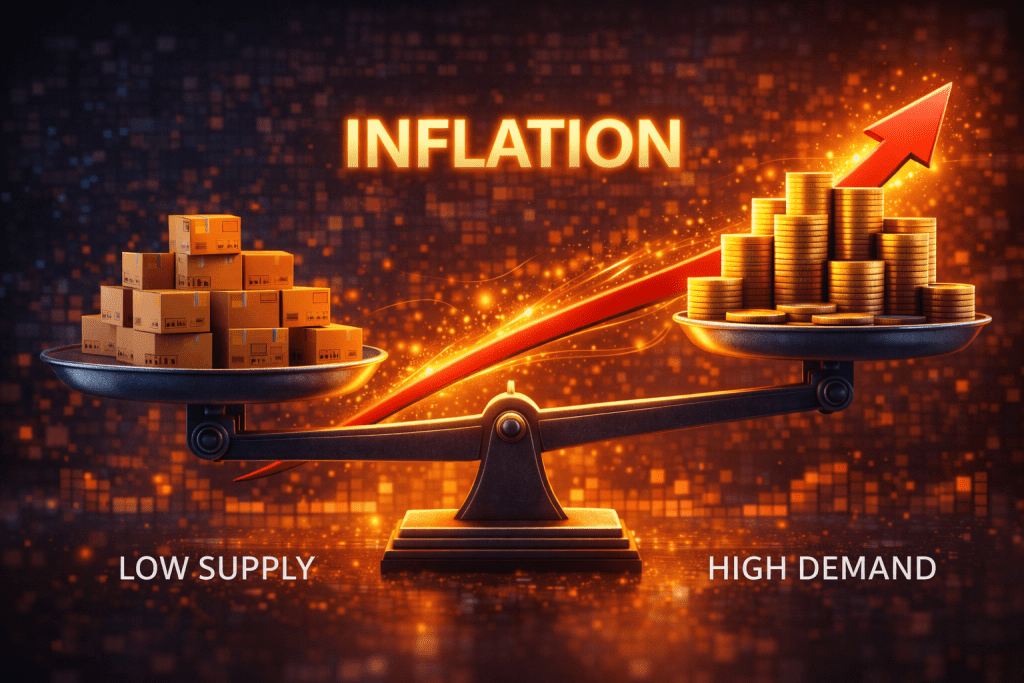
Demand-pull inflation occurs when demand for goods and services exceeds supply.
Cost-push inflation happens when production costs increase, forcing businesses to raise prices.
Another important factor is monetary policy.
When central banks increase the money supply, inflation tends to rise.
Inflation and Interest Rates
Interest rates and inflation are closely connected.
Central banks use interest rates to control inflation.
When inflation rises too quickly, central banks increase interest rates to slow down the economy.
Higher interest rates reduce borrowing and spending.
When inflation is low, central banks may lower interest rates to stimulate growth.
This relationship is one of the most important drivers of financial markets.
Impact on Financial Markets
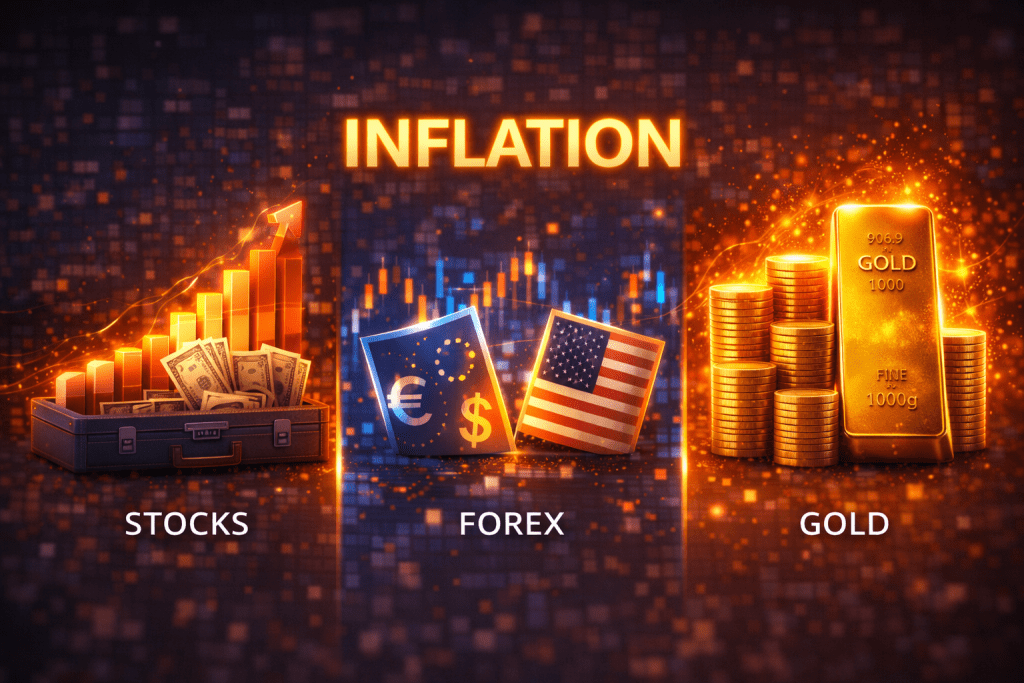
Inflation affects all major asset classes.
Stocks can be impacted differently depending on the sector.
Companies with strong pricing power tend to perform better during inflation.
In forex markets, currencies are heavily influenced by interest rate expectations.
Higher interest rates often strengthen a currency.
Commodities, especially gold, often benefit from rising inflation.
Crypto markets can react to inflation depending on investor sentiment and liquidity conditions.
Inflation and Purchasing Power
One of the most direct effects of inflation is the erosion of purchasing power.
As prices rise, consumers can afford less with the same income.
This impacts savings, investments, and overall economic stability.
Understanding this concept is essential for long-term financial planning.
Why Investors Monitor Inflation
Inflation is one of the most important macroeconomic indicators.
It influences:
interest rates
market sentiment
asset valuations
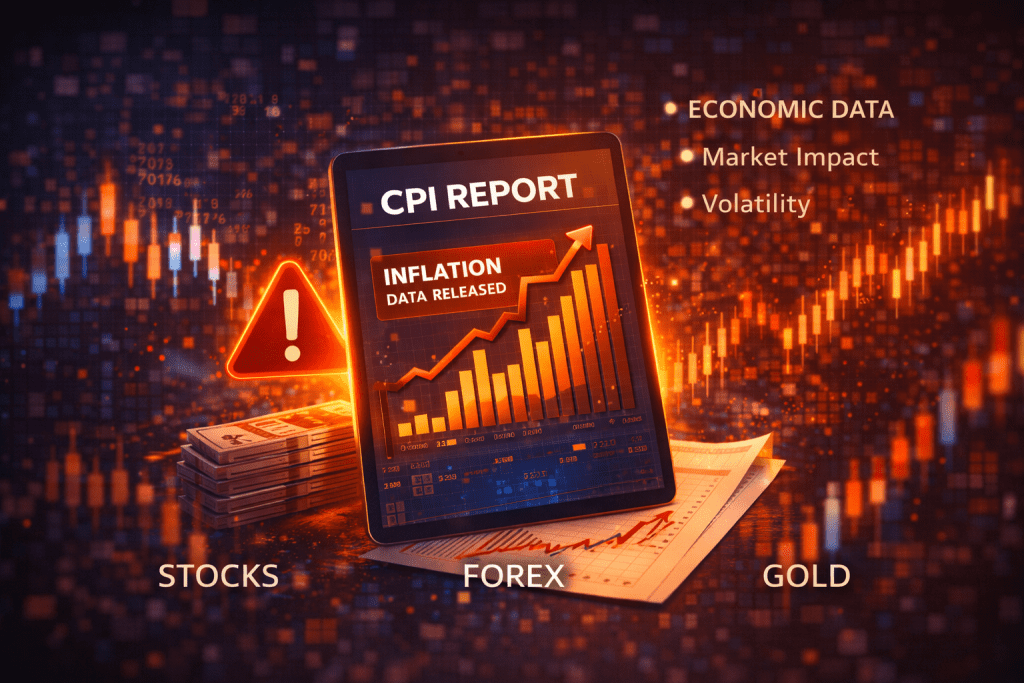
Investors closely watch inflation data releases such as CPI.
These reports can trigger strong market movements.
Inflation vs Deflation
While inflation represents rising prices, deflation is the opposite.
Deflation occurs when prices decline over time.
Although it may seem positive, deflation can slow economic growth.
It often leads to reduced spending and investment.
Balanced inflation is generally considered healthy for the economy.
Common Mistakes Investors Make
Many investors misunderstand inflation and its effects.
Some ignore macroeconomic trends.
Others react emotionally to short-term news.
Failing to understand inflation can lead to poor investment decisions.
How to Protect Against Inflation
Investors use various strategies to protect against inflation.
These include:
investing in assets that grow over time
diversifying portfolios
monitoring interest rate trends
Understanding macro conditions helps investors adapt.
Final Thoughts
Inflation is a fundamental force that shapes financial markets.
It affects everything from interest rates to asset prices and investor behavior.
By understanding inflation, traders and investors can make more informed decisions and better navigate market conditions.
In the long run, those who understand macroeconomics gain a significant advantage.