
What Are Trading Strategies?
A trading strategy is a structured plan that defines how you enter, manage, and exit trades.
It removes randomness and replaces it with a clear, repeatable process.
Instead of guessing, traders follow predefined rules based on analysis and probability.
A well-defined strategy answers three key questions:
when to enter a trade
when to exit a trade
how much to risk
Without a strategy, trading becomes emotional and inconsistent.
Why Trading Strategies Matter
Markets are unpredictable in the short term.
A strategy helps you stay consistent and disciplined regardless of market conditions.
It also allows you to measure performance and improve over time.
Successful traders do not rely on luck.
They rely on systems that have been tested and refined.

Types of Trading Strategies
There are several types of strategies depending on your time horizon and approach.
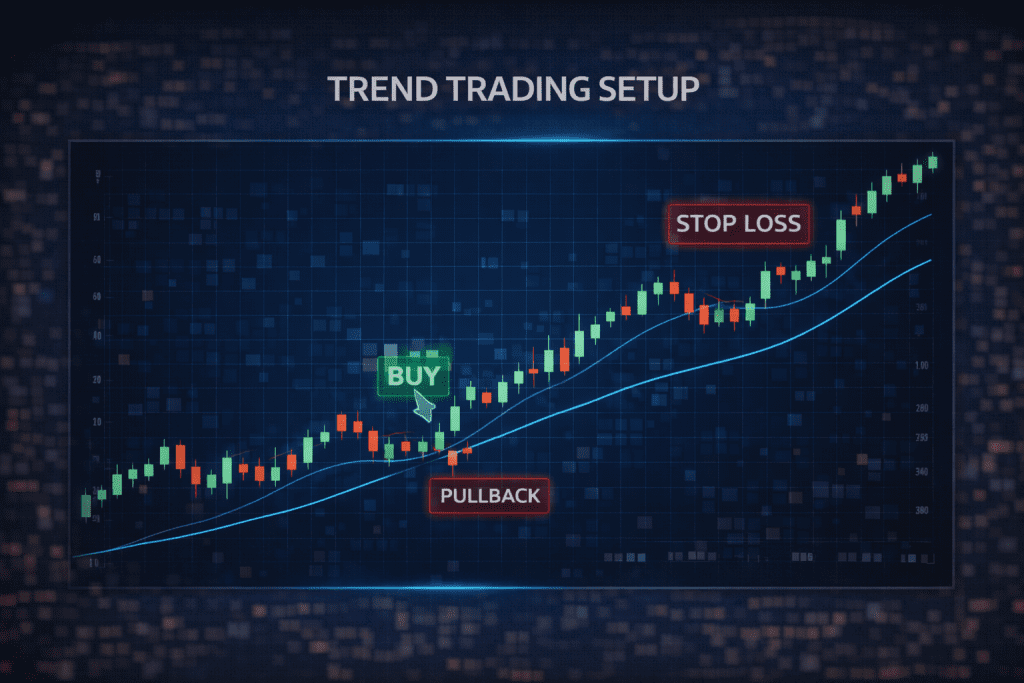
Trend Trading
This strategy involves trading in the direction of the market trend.
Traders look for confirmation that the market is moving consistently in one direction.
The goal is to capture large moves rather than small fluctuations.
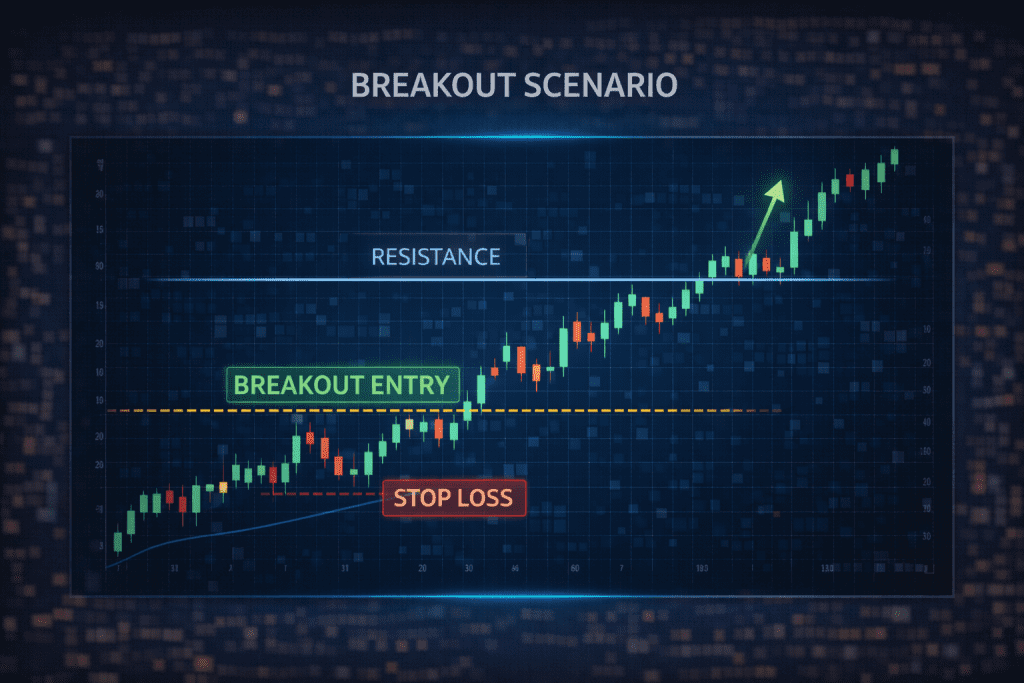
Breakout Trading
Breakout traders enter the market when price moves beyond a key level.
This often signals the start of a strong move.
These setups typically occur around support and resistance zones.
Range Trading
In sideways markets, traders buy near support and sell near resistance.
This strategy works best when the market lacks a clear trend.
It relies on price bouncing within a defined range.
Scalping
Scalping focuses on very short-term trades.
Traders aim to capture small price movements multiple times.
It requires speed, precision, and strict discipline.
Swing Trading
Swing traders hold positions for several days or weeks.
They aim to capture medium-term market movements.
This approach balances time commitment and potential returns.
Key Elements of a Trading Strategy
A strong strategy includes several essential components.
Entry Rules
Clear conditions that must be met before entering a trade.
This could include patterns, indicators, or price levels.
Exit Rules
Defined profit targets and stop-loss levels.
Knowing when to exit is just as important as knowing when to enter.
Risk Management
Every strategy must include strict risk control.
This ensures long-term survival in the market.
Consistency
A strategy only works if it is applied consistently over time.
Changing rules frequently leads to poor results.
Building Your First Trading Strategy
Beginners should start simple.
Choose one market and one approach.
For example, a basic trend-following strategy could include:
identifying the trend
waiting for a pullback
entering at a key level
placing a stop-loss below structure
The goal is not complexity, but clarity.
Common Mistakes to Avoid
Many traders struggle because they:
switch strategies too often
overcomplicate their setup
ignore risk management
trade without a plan
Simplicity and discipline are key to long-term success.
Strategy vs Execution
Even the best strategy will fail without proper execution.
Emotional decisions, hesitation, and overconfidence can ruin performance.
Execution is what turns a good strategy into actual results.
Final Thoughts
Trading strategies provide structure and consistency in an unpredictable environment.
By choosing a clear approach, managing risk, and staying disciplined, you increase your chances of success.
Over time, refining your strategy based on experience is what leads to improvement.
A simple, well-executed strategy will always outperform a complex one that is not followed properly.