
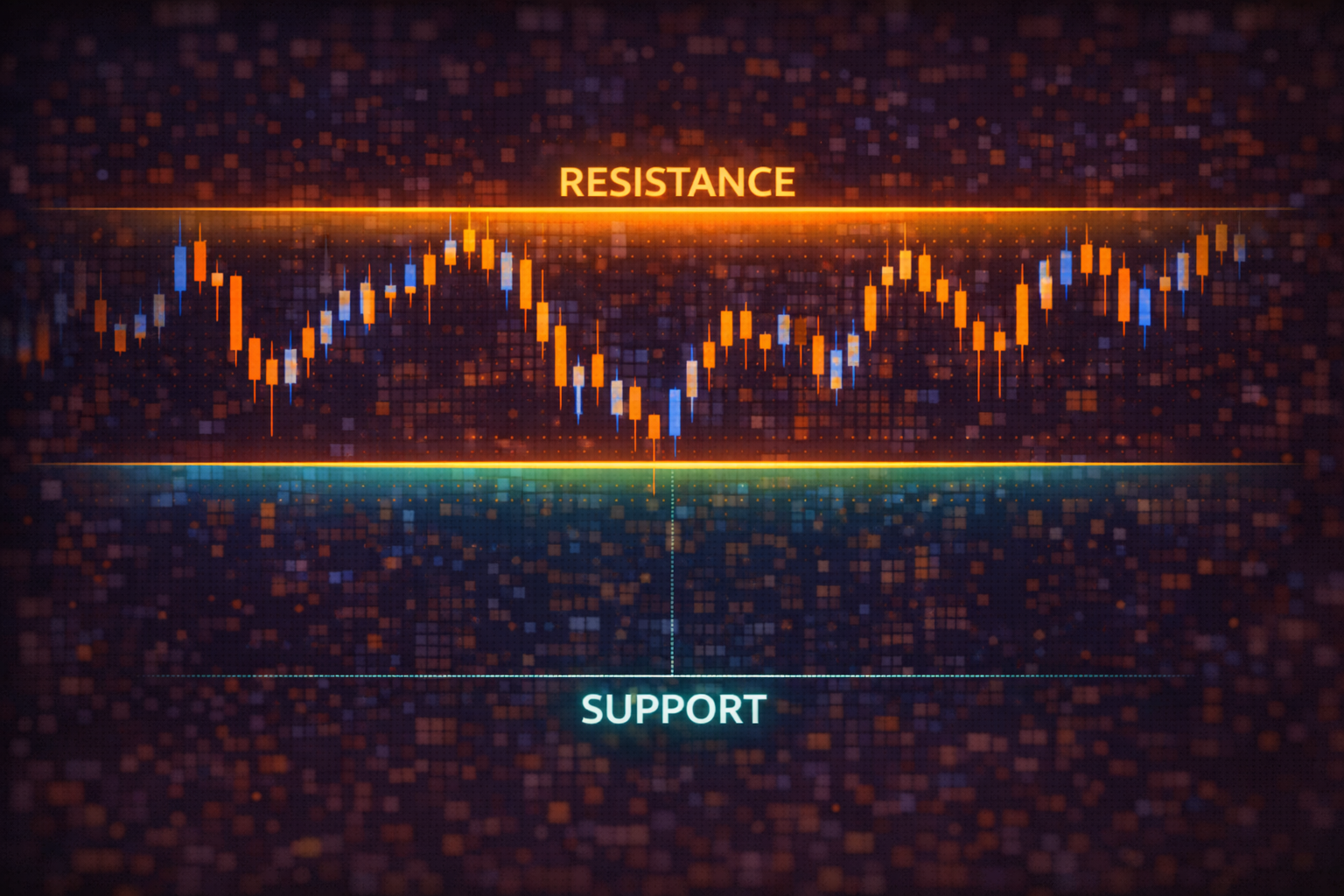
What Are Support and Resistance Levels?
Support and resistance levels are key price zones where the market tends to react.
Support is a level where price tends to stop falling and bounce upward.
Resistance is a level where price tends to stop rising and move downward.
These levels act as invisible barriers that influence price movement.
They are among the most fundamental concepts in technical analysis.
Why These Levels Form
Support and resistance exist because of human behavior.
Traders remember key price levels where the market previously reversed.
At support, buyers step in because they see value.
At resistance, sellers take profits or open new positions.
This creates repeated reactions at similar price areas.
Over time, these zones become stronger as more traders recognize them.
How Traders Identify Them
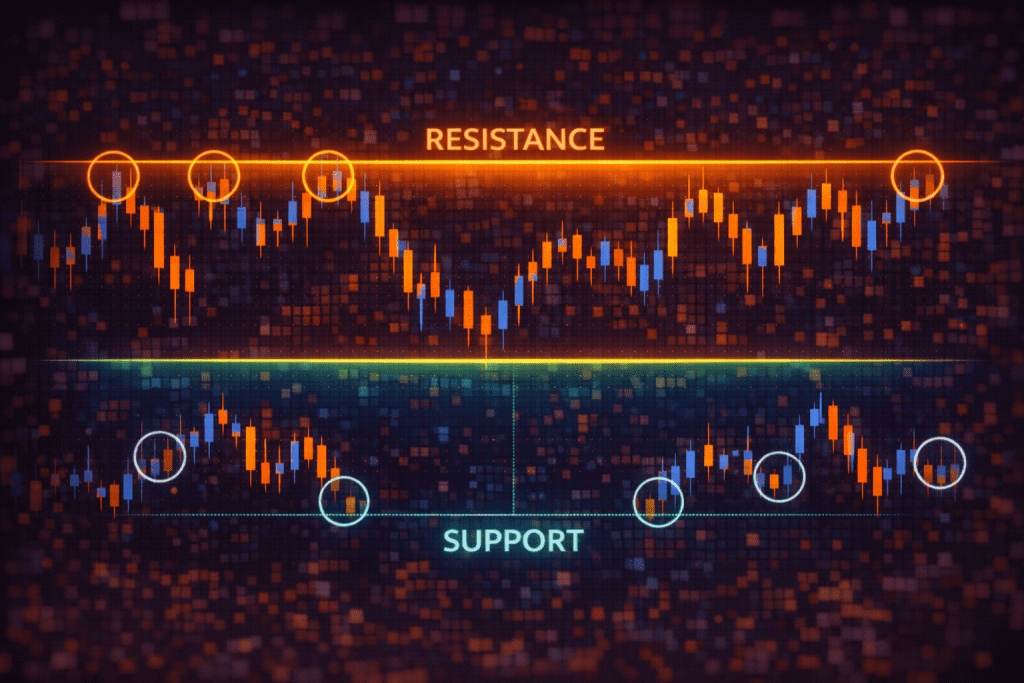
Traders identify support and resistance by analyzing past price action.
They look for areas where price has reversed multiple times.
Horizontal levels are the most common method.
However, zones are more important than exact lines.
Markets rarely react to a single price point.
Instead, they respond within a range.
The more times a level is tested, the more significant it becomes.
Breakouts vs Rejections
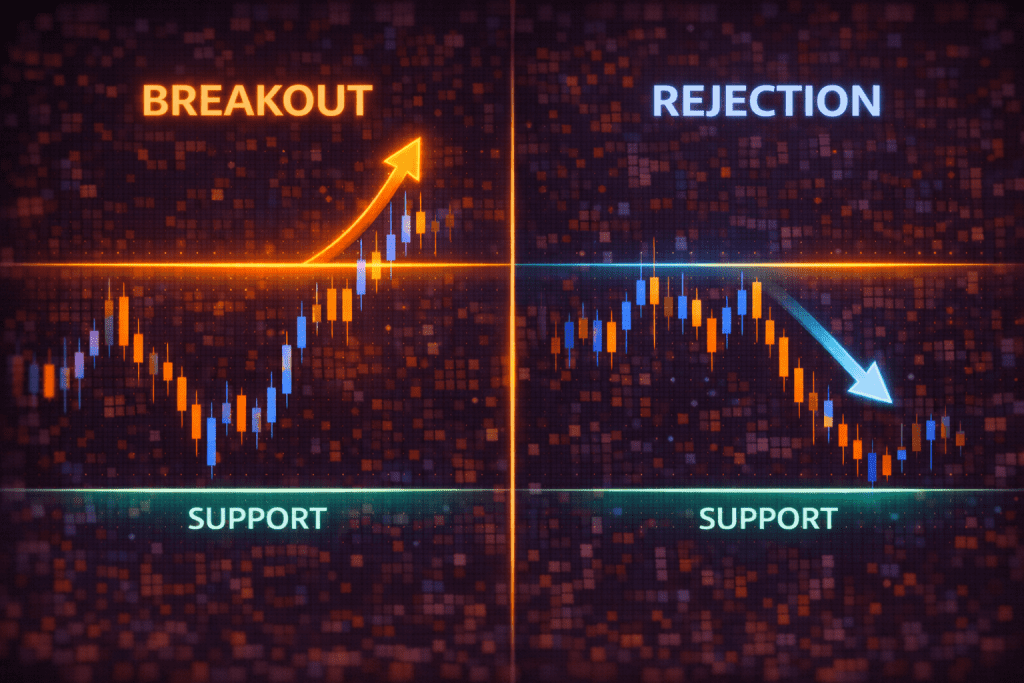
When price reaches support or resistance, two outcomes are possible.
A rejection occurs when price touches the level and reverses.
A breakout happens when price moves through the level with strength.
Breakouts often lead to strong trends.
Rejections often lead to short-term reversals.
Understanding the difference is essential for timing trades.
Common Mistakes Traders Make
Many traders treat support and resistance as exact lines.
This leads to poor entries and false expectations.
Another mistake is ignoring market context.
Strong trends can break levels easily.
Some traders also chase breakouts without confirmation.
Others enter too early before the level is properly tested.
These mistakes can lead to unnecessary losses.
Real Market Examples
Support and resistance appear in all markets.
Stocks, forex, crypto, and commodities all respect these levels.
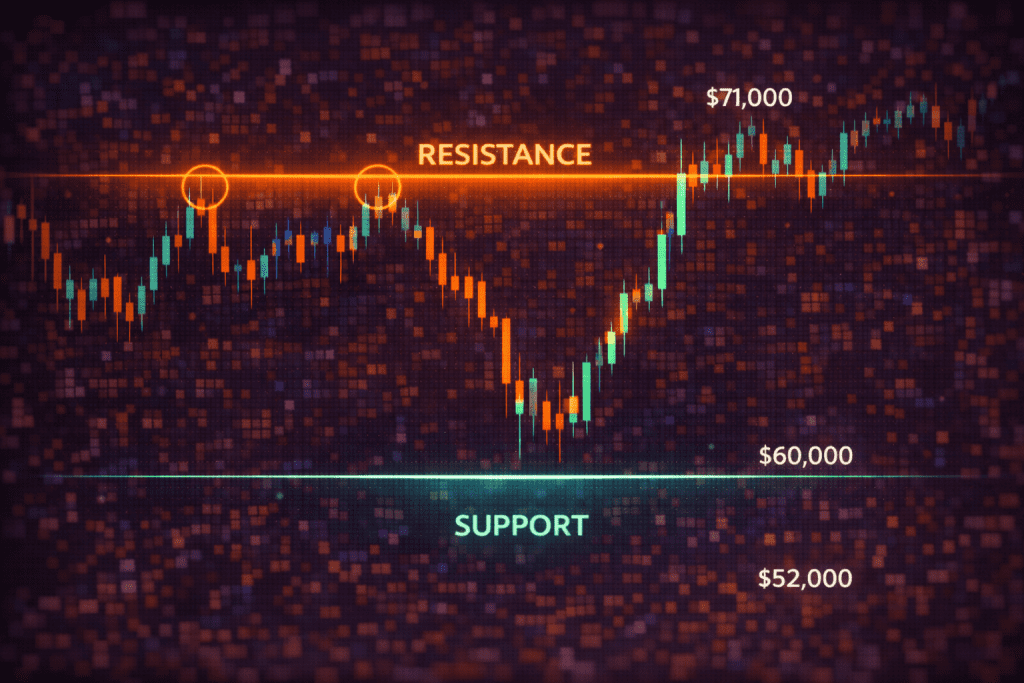
For example, Bitcoin often reacts at major psychological levels.
Stock indices also show repeated reactions at key zones.
These levels help traders identify high-probability areas.
How to Use Support and Resistance in Trading
Traders use support and resistance to plan entries and exits.
They buy near support and sell near resistance.
They also use these levels to place stop losses.
Breakouts can signal trend continuation.
Rejections can signal reversals.
Combining these levels with other tools improves accuracy.
Final Thoughts
Support and resistance levels are the foundation of technical analysis.
They provide structure to price movement.
Understanding how price reacts at these levels gives traders a major advantage.
Mastering them is one of the first steps toward consistent trading.