New signs of weakness in the labor market, combined with rising oil prices, are creating a difficult situation for U.S. Federal Reserve officials. Policymakers may soon face a challenging choice between controlling inflation and supporting a potentially fragile job market.
Oil prices have recently climbed toward $90 per barrel, while average gasoline prices in the United States jumped from around $3 to $3.32 per gallon within a single week. At the same time, the latest employment report showed a slowdown in hiring. In February, U.S. employers cut approximately 92,000 jobs, while job gains reported in previous months were revised lower.
Part of the decline in employment was linked to labor strikes in the healthcare sector and continued downsizing within the federal government. Nevertheless, the data weakened expectations that the U.S. labor market was about to regain stronger momentum.
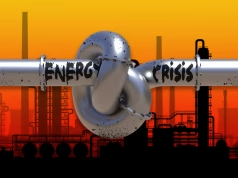
Together, these developments — rising commodity prices due to geopolitical tensions and weaker job growth — have revived concerns about stagflation, a scenario characterized by high inflation combined with slow economic growth. This is a situation the Federal Reserve believed had largely been avoided in recent years.
The Federal Reserve is widely expected to keep interest rates unchanged at its upcoming policy meeting scheduled for March 17–18. However, policymakers may now need to consider broader economic risks, especially as supply chain disruptions linked to geopolitical conflicts reappear.
The current situation brings back memories of the pandemic period, when disruptions in global supply chains caused significant economic uncertainty. With no clear timeline for how long oil flows may remain disrupted or how high energy prices could rise, the outlook remains uncertain.
Following the weaker-than-expected jobs report, financial markets increased their expectations that the Federal Reserve may begin cutting short-term interest rates as early as June. However, the final decision will likely depend on how policymakers assess the balance between slowing economic growth and rising inflation pressures.
Speaking on Bloomberg Television, Federal Reserve Governor Christopher Waller described the recent rise in oil prices as potentially a temporary shock that may not require immediate monetary policy action. However, he also acknowledged that the situation could change if energy prices continue to climb.
According to Waller, if oil price pressures ease within a few weeks or months, the impact on the broader economy would likely remain limited. However, if higher energy costs persist for a longer period, they could begin affecting other sectors and contribute to wider inflation pressures.
At the same time, Federal Reserve officials are expected to closely monitor developments in the labor market following the disappointing February employment figures.
Earlier this year, Waller had suggested that stronger employment data could justify delaying further rate cuts. However, if the labor market continues to weaken, policymakers may face increasing pressure to support economic activity through lower interest rates.
Some Fed officials had already begun highlighting the difficult balance between inflation and employment even before the latest jobs data. Inflation remains roughly one percentage point above the central bank’s target, while rising oil prices could add further pressure.
San Francisco Federal Reserve President Mary Daly recently noted that hopes for a stable labor market may have been overly optimistic. At the same time, she emphasized that inflation remains above the Fed’s target and energy prices are rising, creating risks on both sides of the central bank’s mandate.