US Stock Futures Steady as Investors Turn Cautious
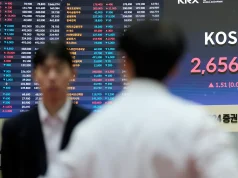
U.S. stock index futures held steady on Thursday evening as investors adopted a cautious stance ahead of upcoming ceasefire talks with Iran. Market participants also remained on the sidelines in anticipation of key consumer inflation data.
Wall Street Rally Supports Market Sentiment
Futures stabilized following a strong session on Wall Street, where optimism over potential de-escalation in the Middle East and a rebound in technology stocks helped the S&P 500 extend its winning streak to seven consecutive days.
S&P 500 Futures remained steady at 6,865.50 points. Nasdaq 100 Futures edged up 0.1% to 25,281.0 points, while Dow Jones Futures slipped 0.1% to 48,368.0 points.
US-Iran Talks in Focus Amid Rising Tensions
Attention is centered on upcoming ceasefire talks between the United States and Iran, expected to take place in Pakistan. The discussions follow a tentative two-week truce agreed earlier this week.
However, tensions remain elevated. Iran has accused both Israel and the U.S. of violating the ceasefire and has insisted that Lebanon be included in any broader peace agreement. Israel, meanwhile, stated it will pursue separate negotiations with Lebanon as hostilities continue.
Iranian state media also reported that no delegation has arrived in Islamabad, with Tehran refusing to engage in talks until assurances regarding Lebanon are provided.
Key Disputes Remain Unresolved
Even if negotiations proceed, significant disagreements persist between Washington and Tehran. Major sticking points include uranium enrichment and control over the Strait of Hormuz.
Iran has largely restricted access through the vital shipping route this week, despite earlier indicating it would allow safe passage during the ceasefire period.
U.S. President Donald Trump criticized Iran for limiting vessel movement through Hormuz, stating that such actions were not part of the agreement.
Markets Boosted by Ceasefire Hopes
Despite ongoing tensions, the possibility of direct U.S.-Iran negotiations—the first since the conflict escalated in late February—has supported financial markets. Wall Street has benefited from sustained buying interest throughout the week.
The S&P 500 rose 0.6% to 6,824.63 points on Thursday, while the Nasdaq Composite gained 0.8% to 22,822.42 points. The Dow Jones Industrial Average also advanced 0.6% to 48,185.80 points.
Tech Stocks Lead the Recovery
Technology stocks, particularly chipmakers, have driven much of the recent market rebound. Bargain buying followed sharp declines in March triggered by geopolitical uncertainty.
Investors are positioning ahead of key earnings reports from major semiconductor companies. Taiwan Semiconductor Manufacturing Company (TSMC) and ASML are both set to release their quarterly results next week.
CPI Data in Focus for Fed Policy Outlook
Markets are closely watching the release of U.S. Consumer Price Index (CPI) data for March, due on Friday. The report is expected to show a notable increase in headline inflation, largely driven by rising energy prices linked to the Iran conflict.
Higher oil and gas prices—partly caused by disruptions in the Strait of Hormuz—have translated into increased fuel and utility costs globally.
Inflation Concerns May Impact Rate Cuts
The upcoming CPI data follows the release of Federal Reserve meeting minutes, which highlighted concerns about inflationary pressures stemming from geopolitical tensions. Persistent inflation could reduce the likelihood of interest rate cuts in the near term.
Recent data also showed that the Fed’s preferred inflation gauge, the PCE price index, came in line with expectations. Meanwhile, U.S. GDP figures indicated that economic growth in the fourth quarter was weaker than initially estimated.